Some games win you over with miniatures and drama. Splendor does it with a satisfying clack. More than a decade after its release, this gem-collecting engine builder still sits near the top of most “best board games for beginners” lists—though it isn’t the right game for everyone.
In this review, we’ll look at how Splendor actually plays, where it falls short, and whether the original is still the version you should buy first.
As an Amazon Associate, BoardGame Journey earns from qualifying purchases.
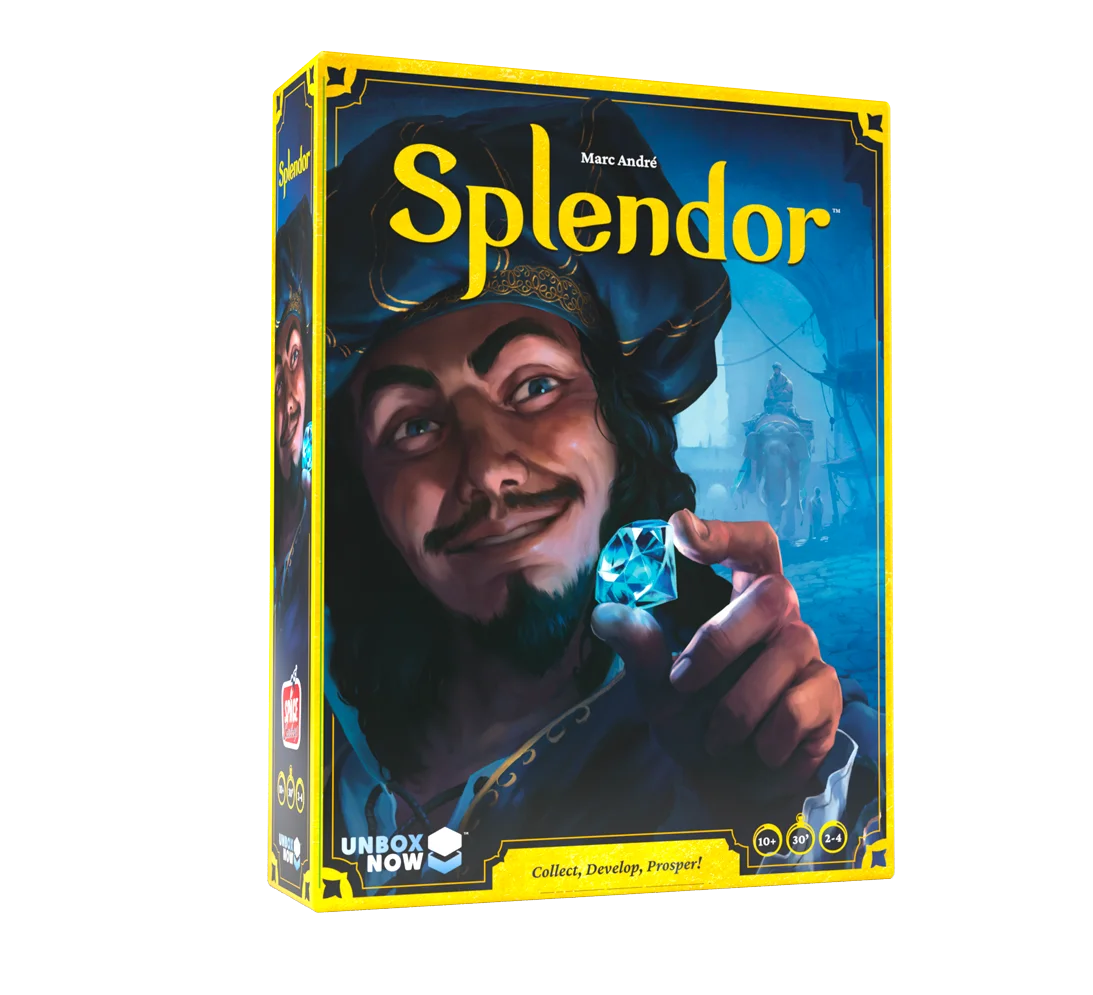
In Splendor, you play a Renaissance merchant collecting gem tokens, buying development cards, and attracting noble patrons. There’s no dice, no text on the cards, and no direct attacks—which also means the theme is little more than decoration. You’re optimizing an economy, not living a story.
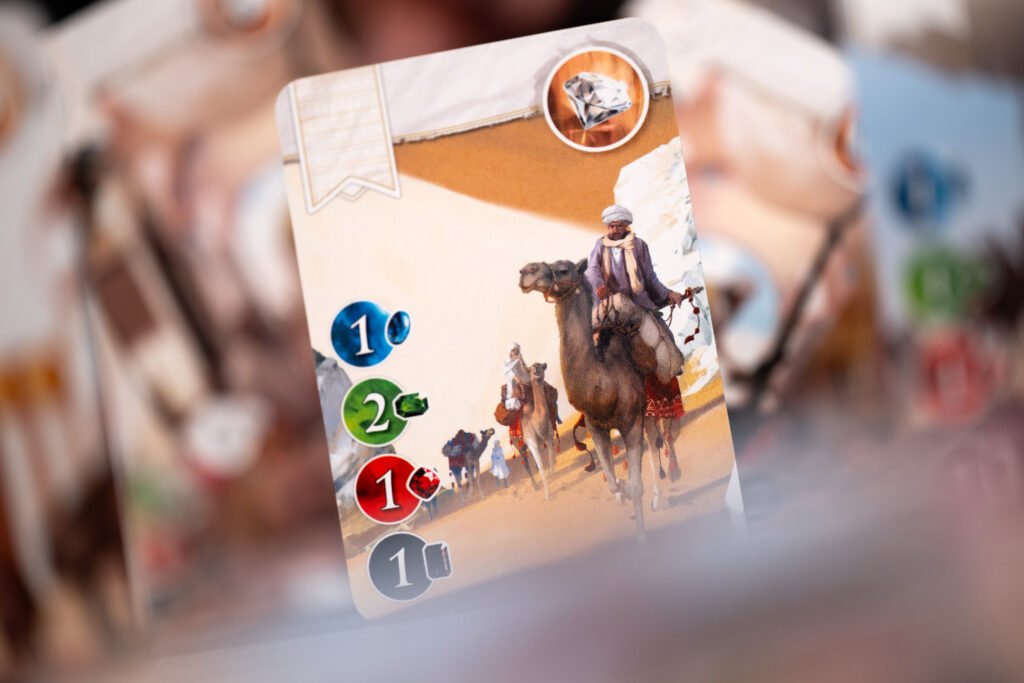
What that economy does brilliantly is reward momentum. Every development card you buy gives a permanent bonus in one gem color, making future cards that need that color cheaper. Early turns can feel slow and repetitive—you’re mostly counting tokens—but once your bonuses stack up, expensive cards suddenly come within reach, and the game starts to snowball.
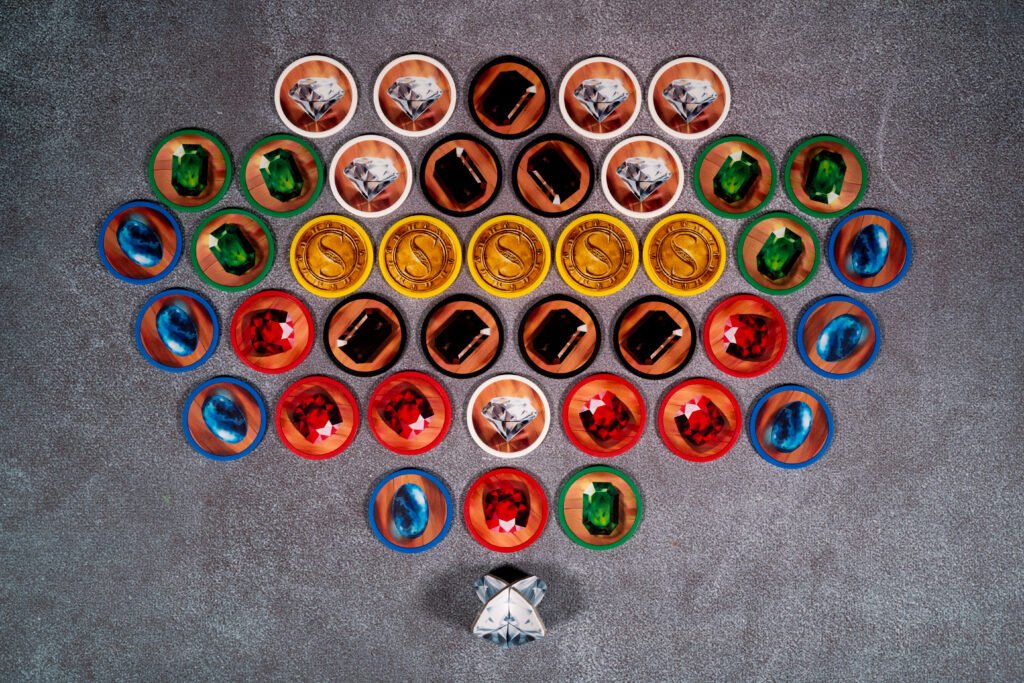
Pair that with hefty poker-style gem chips that are half the fun to handle, and you can see why the game has stayed in print since 2014. Award nominations helped put it on the map early on, but its real staying power comes from how often players finish a match and immediately ask for another.
How the Game Plays
Every turn is exactly one decision. You either:
Take gems — three tokens of different colors, or two of the same color (only allowed when at least four of that color remain in the supply)
Buy a development card — pay its gem cost and add its bonus to your tableau
Reserve a card — set it aside for later and take a gold token, which works as a wild
Cards in the higher tiers award prestige points, and collecting the right combination of bonuses attracts noble tiles worth extra prestige. Once a player reaches 15 prestige points, the round is played to the end so everyone gets an equal number of turns—then the highest total wins.
A full match takes around 30 minutes with experienced players. First-timers tend to run closer to 40 while they learn to read the card market.
Strategy and Interaction
The core tension is between speed and scale: rush cheap cards for quick points, or spend longer building bonuses and explode in the late game. Neither is always right. Overbuild your engine and someone faster will cross 15 points while you’re still buying discounts; rush too hard and you’ll run out of gas against stronger tableaus.
A common question is whether Splendor has any player interaction at all—and the answer is yes, just not the aggressive kind. There are no attacks. Instead, all purchases come from a shared market, so every card you take is a card someone else might have wanted. Watching which colors your opponents are hoarding matters, and reserving a card purely to deny it is a legitimate (and occasionally cruel) move that new players almost always underestimate.
Nobles add a final layer: their requirements are public from the start, so two players quietly racing toward the same noble creates tension the rulebook never needs to explain.
Components
Component
Quantity
Development Cards
90
Noble Tiles
10
Poker-style Gem Chips
40
Rule Book
1
The gem chips are the star: heavy, stackable, and satisfying in a way cardboard tokens never are. The cards deserve credit too—costs and bonuses are shown with clean, language-independent iconography that’s readable from across the table, which is a big part of why the game teaches so quickly. In 2025, Space Cowboys released a refreshed edition with updated artwork and presentation; the gameplay is unchanged, so there’s no need to replace an older copy.
Splendor vs. Splendor Duel
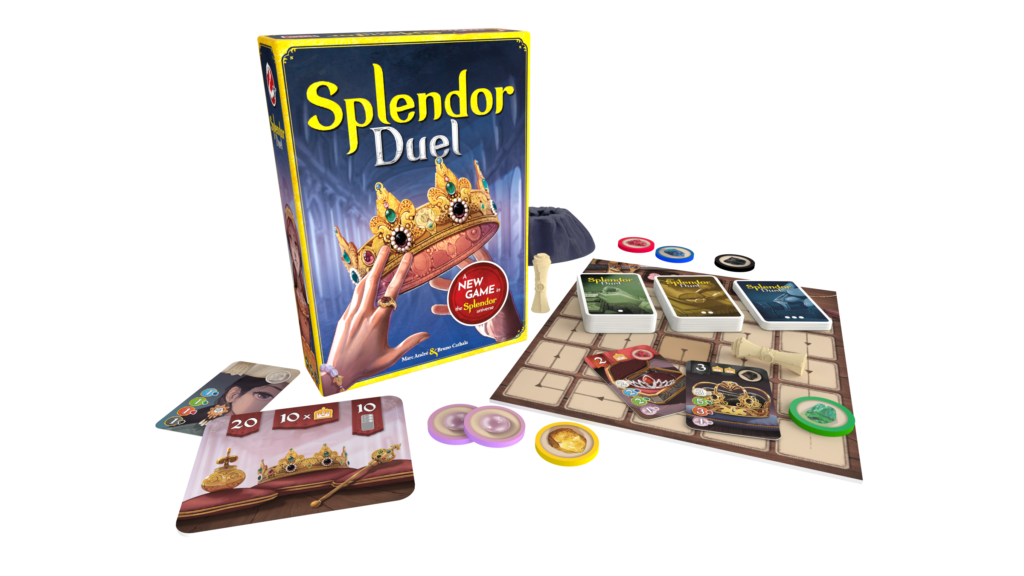
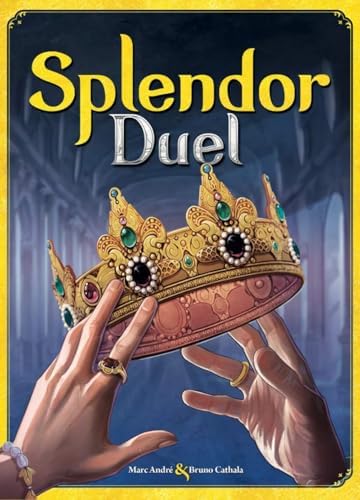
Playing mostly with a partner? There’s a real decision here. In 2022, Space Cowboys released Splendor Duel, a two-player-only version with a shared gem board, sharper interaction, and multiple paths to victory. It’s tighter and more aggressive—which is exactly why it made our Top 5 board games for couples.
Neither is simply “better.” The original is cleaner and easier to introduce to new players; Duel trades that simplicity for more tactical pressure. Our rule of thumb: playing with three or four people regularly, get classic Splendor. Almost always two of you, and you both enjoy competitive tension—go Duel.
No two games set up the same way. The 90-card deck comes out in a different order every time, only a handful of nobles are in play per game, and the shared market forces you to adapt rather than repeat a memorized plan. Strategies that dominated your last game may simply never show up in the next one.
The honest caveat: in a fixed group, once everyone knows the strongest openings, games can start feeling similar and the same one or two players may win consistently for a while. That’s the point where the Cities of Splendor expansion—one box with four different modules—earns its price by shaking up the formula.
Pros & Cons
Pros
✅ Teachable in five minutes, with decisions that stay interesting
✅ Turns rarely take more than 30 seconds—almost zero downtime
✅ Completely language-independent (icons only)
✅ No player elimination: everyone plays to the end
✅ Premium poker-chip gem tokens
✅ Works at every player count, including two
Cons
❌ The Renaissance theme is pure decoration
❌ A quiet game—wrong pick if your group wants table talk and chaos
❌ In fixed groups, strong players win consistently until others learn to block
❌ Early turns can feel repetitive before your engine takes shape
Is It Good for Beginners?
Few games do the job better. Splendor is one of the picks in our Top 10 entry-level board games because it teaches engine building—the idea of small purchases compounding into a powerful machine—without a single page of complicated rules.
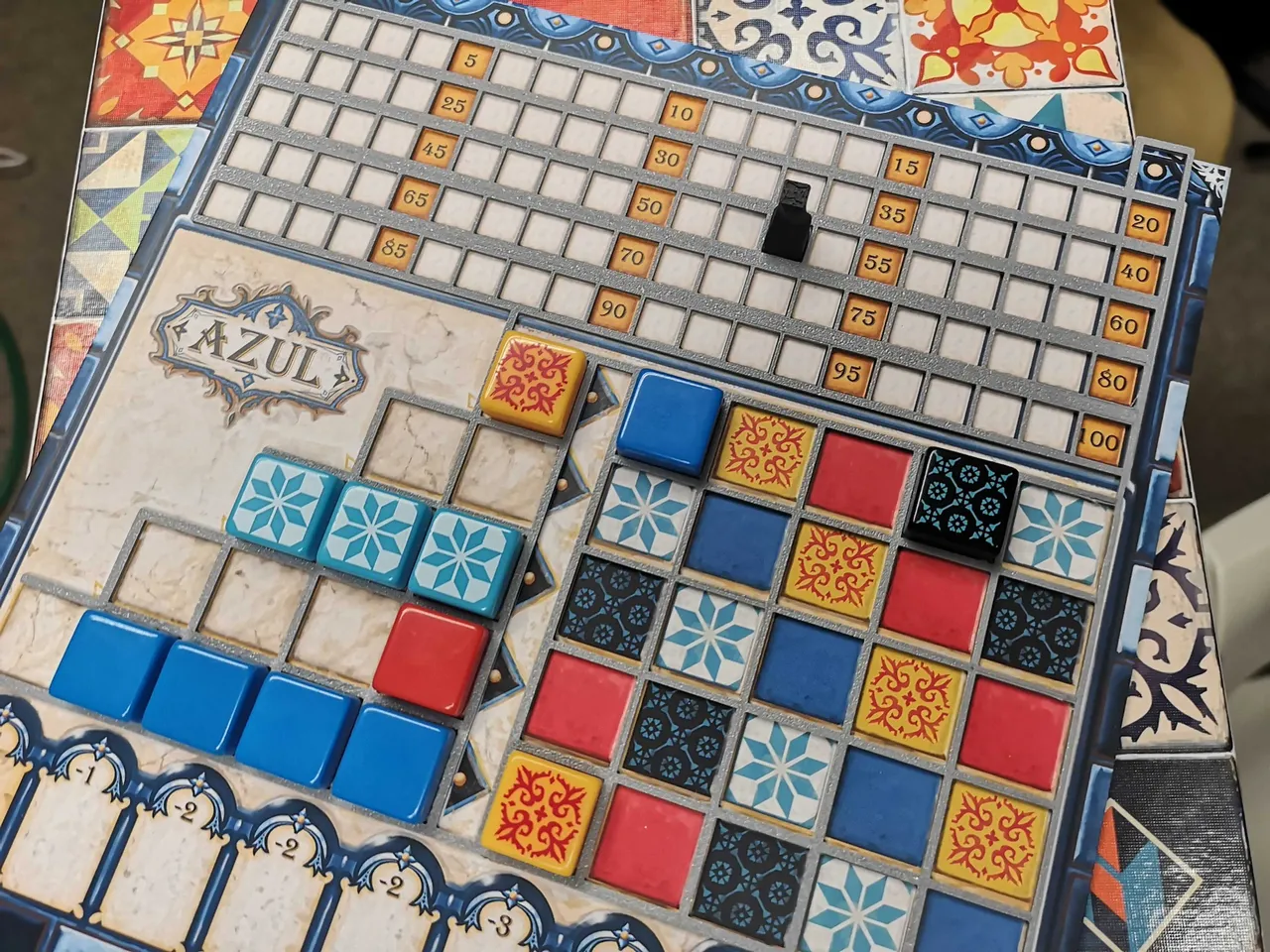
It also pairs naturally with other elegant abstracts. If you enjoy the calm, puzzly satisfaction of Azul, Splendor offers a similar feel with more long-term planning. Just know it’s competitive at heart: an experienced opponent who reserves aggressively can frustrate a first-timer, so treat the first game as a learning session.
Which Version Should You Buy?
Version
Why Buy It?
Splendor (classic)
The flexible 2–4 player version and the best starting point.
Splendor Duel
Two players only—more interaction and sharper tactical pressure.
Marvel Splendor
The same core game with superheroes—an easy sell for Marvel fans and kids.
Frequently Asked Questions
Is Splendor good for 2 players?
It plays well at two, with adjusted token counts keeping the market tight. That said, couples who play head-to-head every week should seriously consider Splendor Duel, which was designed from scratch for exactly that.
How long does a game of Splendor take?
Around 30 minutes. Veterans often finish in 20, while first-time players usually take closer to 40 as they learn the card market.
Is Splendor too simple for experienced gamers?
The rules are simple; the timing decisions are not. Many veterans keep it as their go-to filler. If it does start feeling solved, that’s the cue for the Cities of Splendor expansion rather than a reason to retire the game.
Do you need expansions to keep it interesting?
Not at first—the base game easily carries dozens of plays. The Cities of Splendor expansion (one box containing four separate modules) is worth adding once your group knows the base game inside out and wants new decisions.
Final Verdict
Rating: ⭐⭐⭐⭐⭐ (9.0/10)
Splendor isn’t flashy, its theme is thin, and it won’t fill your table with laughter. What it offers instead is rarer: a complete strategic experience in half an hour, taught in five minutes, that still rewards good decisions on the hundredth play.
Few games have stayed this relevant for over a decade. If you only own one engine builder, this is still the benchmark.
Where to Buy
You can find Splendor on Amazon and at most major board game retailers.
As an Amazon Associate, BoardGame Journey earns from qualifying purchases. This comes at no additional cost to you and helps support more in-depth board game reviews and guides.Product images courtesy of Space Cowboys / Asmodee.
Discover why Azul is the perfect board game for couples and families. Our review covers rules, strategy, and why this tile-laying game is a masterpiece.
There is one board game where Ahsoka Tano is a playable Jedi, and almost nobody talks about it. An honest look at what Star Wars: The Clone Wars changes about the Pandemic system, who it…
Unlock your imagination in our Dixit review. Find out why this award-winning board game is the perfect choice for creative fun with friends and family.