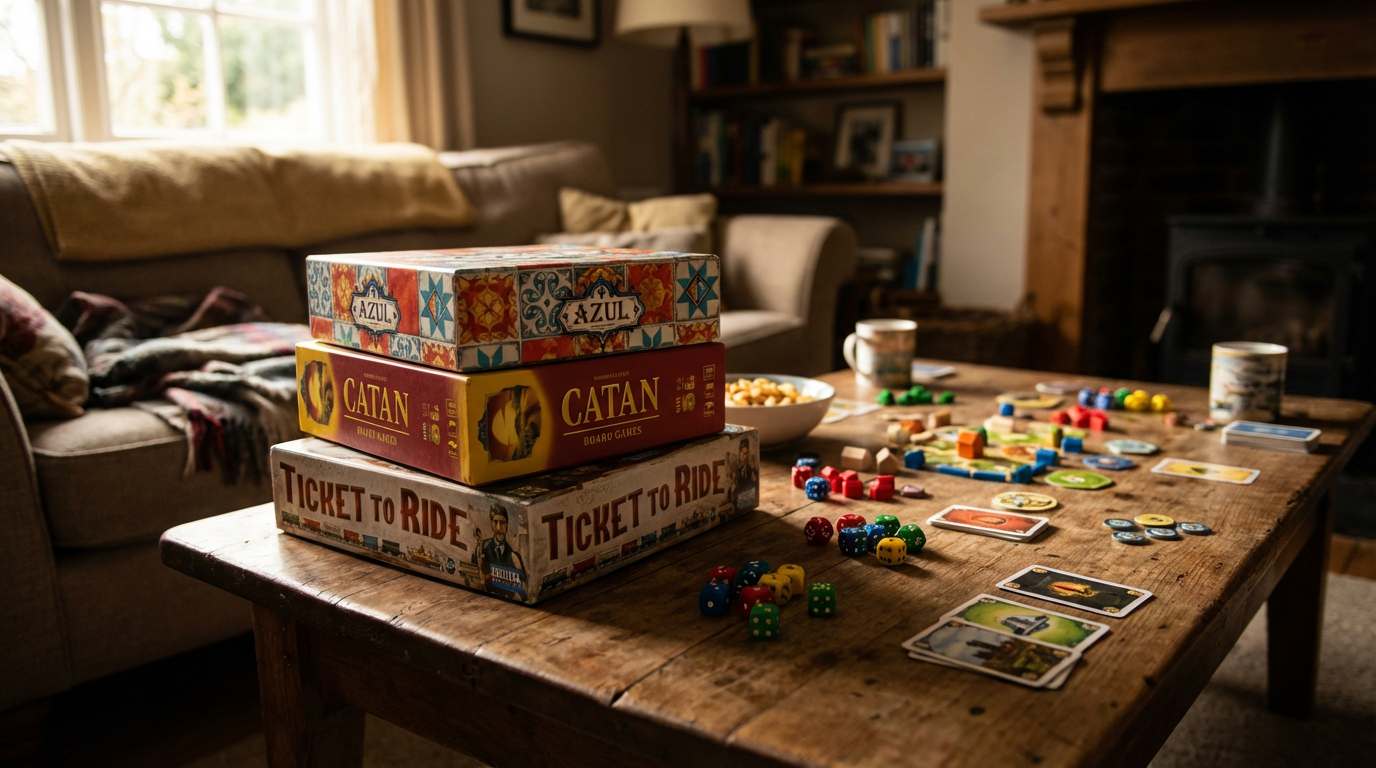
Remember the last time you played a board game? Maybe it was a dusty copy of Monopoly that ended in a fight, or a game of Uno that went on forever.
If that is your reference point, most beginner lists are not written for you. They are written by hobbyists thinking of their hobbyist friends, and they tend to open with Catan.
This list of entry level board games is ordered differently, by a single question: how long does it take before a new player makes a decision they understand?
Why Rules Weight Is the Wrong Measure
Almost every gateway list ranks games by complexity, usually borrowing a weight rating out of five. It is a reasonable number and it measures the wrong thing.
What actually ends a first game night is not the number of rules. It is the stretch of time where a new player is moving pieces without knowing why, waiting to be told what to do, and quietly deciding this is not for them. Research into why people bounce off the hobby keeps landing on the same thing, and it is not complexity. It is not wanting to look stupid in front of other people.
Two games can have a near identical rules count and behave completely differently here:
- Ticket to Ride. On turn one you either draw two cards or claim a route. Both options are visible on the table and both make sense immediately.
- Catan. Before turn one means anything, you need production, trading, building costs and placement to have clicked. Until they do, you are rolling dice and being handed cardboard.
Same evening, same group, completely different experience. That gap is what this ranking measures.
The Ranking at a Glance
| # | Game | Players | Time | What you do on your first turn |
|---|---|---|---|---|
| 1 | Sushi Go! | 2-5 | 15 min | Pick a card, pass the rest |
| 2 | Just One | 3-7 | 15 min | Write one word on a board |
| 3 | Codenames | 4-8 | 15 min | Point at a word you think fits |
| 4 | King of Tokyo | 2-6 | 30 min | Roll dice, keep the ones you like |
| 5 | Ticket to Ride | 2-5 | 30-60 min | Draw cards or claim a route |
| 6 | Azul | 2-4 | 30-45 min | Take every tile of one colour |
| 7 | Dixit | 3-6 | 30 min | Say a clue for a picture |
| 8 | Carcassonne | 2-5 | 35 min | Place a tile, maybe a meeple |
| 9 | Splendor | 2-4 | 30 min | Take gems or buy a card |
| 10 | Pandemic | 2-4 | 45-60 min | Choose four actions from a list |
The top of this list leans towards cards rather than boards, and that is deliberate. If the household reference point is Uno, a card game is a much shorter jump than a board with a rulebook. The boards start at number four and never stop.
1. Sushi Go!, the Shortest Distance to a Real Decision
2-5 players | 15 minutes | Ages 8+
You hold a hand of cards, pick one, and pass the rest to your neighbour. Everyone does it at the same time. Sets of sushi score points at the end.
The whole rulebook fits in a sentence, and the first decision is a genuine one: take the thing you want, or take the thing you do not want your neighbour to have. New players understand that tension on card one.
Worth knowing. Because everyone plays simultaneously, nobody sits watching. That single design choice removes most of the awkwardness of a first game.

2. Just One, the One That Removes the Fear
3-7 players | 15 minutes | Ages 8+ | Cooperative
One player has to guess a secret word. Everyone else writes a single clue on a little board. Any clue written by two people gets wiped before the guesser sees it, so the good move is to think of something nobody else will.
It won the Spiel des Jahres in 2019, which is the most prominent award in the hobby, and it is the closest thing on this list to a guaranteed first night.
Why it is this high. It is the only game here that attacks the real barrier directly. Nobody loses on their own, nobody is exposed, and a wrong answer is funny rather than embarrassing. For a table where someone has already said they are bad at games, this is the box to open.
Worth knowing. It needs three players minimum, so it is not a two person option. For couples, look further down at Azul or Carcassonne.

3. Codenames, Instant for Most of the Table
4-8 players | 15 minutes | Ages 10+
Twenty five words on the table. One player per team knows which ones belong to them and gives a one word clue plus a number. Everyone else guesses.
Why it is third and not first. For the guessers it is the most immediate game on this list. You point at a word. For the clue giver it is genuinely hard, and a nervous beginner put in that seat on their first night will have a bad time.
That is a seating problem, not a game problem, and it is easy to solve: let the experienced player give clues for the first two rounds. We go deeper on it in our Codenames review.
Worth knowing. It wants four players and really comes alive at six or more. There is a two player version, Codenames Duet, which we cover in our list of cooperative games for couples.

4. King of Tokyo, Yahtzee With Monsters
2-6 players | 30 minutes | Ages 8+
Roll six dice, keep the ones you want, reroll twice. Claws hurt other monsters, hearts heal you, numbers score points.
Why it works. Anyone who has played Yahtzee already knows the core action, and the icons on the dice mean you never have to remember what anything does. It is the first proper board game on this list where a beginner can win without help.
Worth knowing. It has player elimination, which almost nothing else here does. A knocked out player waits for the round to finish. Games are short enough that it rarely stings.

5. Ticket to Ride, the Safest Full Board Game
2-5 players | 30-60 minutes | Ages 8+
Collect coloured train cards, spend matching sets to claim routes on a map of the United States, and try to connect the cities on your secret tickets.
Why it works. Your turn is a choice between two visible options, and the board tells you how you are doing without anyone having to explain. Plastic trains going down on a map is a progress bar that a first time player reads instantly.
It is the game we would still hand to most households, and we said so in our Ticket to Ride review. What has changed is the reasoning. It is not the best starter because it is light. It is the best board game starter because the first turn already makes sense.
Worth knowing. At the full five players the map gets crowded and routes get taken out from under people. That is the game working as designed, but a first session with three is friendlier.

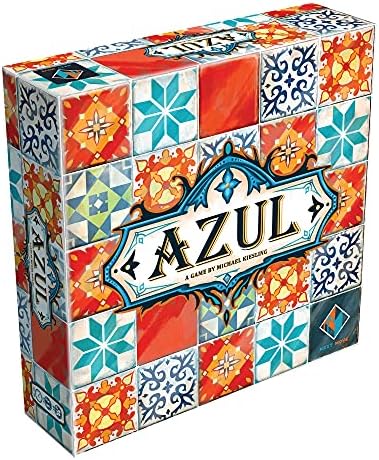
6. Azul, the One That Explains Itself
2-4 players | 30-45 minutes
Take every tile of one colour from a factory display, place them on your board, and complete rows to score. Tiles you cannot place cost you points.
Why it works. The first turn is one of the clearest on this list: pick a colour, take all of it. What makes Azul special is that the punishment teaches you. The first time you are forced to take tiles you cannot use, you understand the entire game.
More in our Azul review.
Worth knowing. It is quiet and it is a puzzle. If your table wants noise and interaction, King of Tokyo is the better opener and Azul is the better second purchase.
7. Dixit, Easy to Do and Hard to Judge
3-6 players | 30 minutes | Ages 8+
One player gives a clue for a dreamlike illustration. Everyone submits a card that could match it. Then everyone votes on which card was the original.
Why it is mid table. The action is trivially easy, but the scoring is deliberately awkward: you lose points if everyone guesses your card and if nobody does. New players almost always give a clue that is far too obvious on their first go, and it takes a round or two before that lands.
Our Dixit review goes further into how that scoring shapes play.
Worth knowing. It rewards imagination rather than tactics, so it is one of the few games here where being new is not a disadvantage at all.

8. Carcassonne, Simple to Play and Slow to Understand
2-5 players | 35 minutes | Ages 7+
Draw a tile, place it so the roads and fields line up, and optionally put a wooden meeple on it to claim what you build.
Why it is this far down, despite being famous. Placing a tile is one of the most immediate actions in the hobby. The scoring is not. Carcassonne is the classic case of a beginner playing an entire game competently and still not knowing why they lost, and the usual culprit is farmers, the rule where meeples lying in fields score at the very end.
The fix is simple and worth doing: ignore farmers for your first few games. Play with roads, cities and monasteries only. Nothing breaks, the game is still good, and you can add them once the rest is comfortable.
Worth knowing. It is one of the best two player games on this list, which is why it keeps appearing in couples recommendations.

9. Splendor, Where the Engine Takes a Few Turns to Start
2-4 players | 30 minutes | Ages 10+
Take gem chips, spend them on cards, and those cards act as permanent discounts on the next ones. First to fifteen points wins.
Why it is ninth. Turn one is easy to perform and hard to feel. You take three chips and nothing visibly happens. It usually takes three or four turns before a new player sees their purchases compounding, and that delay is exactly what this ranking penalises.
Once it clicks it is superb, and our Splendor review explains why it has lasted.
Worth knowing. A short verbal warning fixes most of it. Tell a new player that the first few turns are supposed to feel like nothing.

10. Pandemic, Brilliant and the Riskiest First Night
2-4 players | 45-60 minutes | Cooperative
The table works together to cure four diseases before they spread out of control. Everyone has a role with a special ability, and you either all win or all lose.
Why it closes the list. Two reasons, and neither is that it is a bad game. First, a turn is four actions chosen from a list of eight, which is the widest opening decision here. Second, and more important, cooperative games have a specific failure mode: because everyone can see everyone’s cards, the most confident person at the table starts directing everyone else. We wrote about that at length in our list of cooperative games, and it hits hardest when one player is brand new.
Worth knowing. House rule that fixes it: nobody is allowed to tell another player what to do, only to describe their own hand. Pandemic becomes a much better first game with that one sentence in place.

The One Every Other List Puts First
Catan is not on this list, and it is not an oversight.
It is the game that built the modern hobby, it is genuinely great, and it opens more beginner lists than anything else. It is also, in our view, the single most common reason somebody decides board games are not for them.
The problem is not the rules count, which is moderate. It is that four systems have to click at once before a turn means anything: what the numbers on the tiles do, why your starting placement mattered, what things cost, and how trading works. A new player can spend forty minutes doing legal moves without ever understanding their position. And then they lose to the person who has played before, because in Catan the opening placement decides a lot and the beginner made it blind.
None of that makes it a bad game. It makes it a bad first game. Our full look at whether Catan still holds up goes into what it does well.
Buy it third or fourth, once the table has a couple of evenings behind it. Bought first, it is a coin flip.
Where to Start
If you want one box and no further reading, buy Ticket to Ride. It is the most complete board game experience that a first time player can hold on turn one.
If someone at your table has already announced they are bad at games, buy Just One instead and start there. That sentence is the real obstacle, not the rulebook.
If it is just two of you, skip to Azul or Carcassonne. If you want to spend as little as possible to find out whether any of this is for you, Sushi Go! is a small card game and appears in our list of board games under $20.
Frequently Asked Questions
What is the best board game for a total beginner?
Ticket to Ride, for most people. It is a full board game where the first turn is a choice between two visible options, and the board shows a new player how they are doing without anyone explaining it.
Why is Catan not on this list?
Because several systems have to click before a turn means anything, and until they do a new player is making legal moves without understanding their position. It is an excellent third or fourth purchase and a risky first one.
Which of these work with two players?
Azul, Carcassonne, Splendor, Sushi Go!, King of Tokyo and Pandemic all play at two. Just One, Codenames and Dixit need three or more.
Are card games really board games?
For the purposes of a first purchase, the distinction matters less than the jump. If the household reference point is Uno, a card game is a far shorter step than a board with a rulebook, and it gets people to the table faster.
How many of these do I actually need?
Two or three covers almost everything. One quick game for a full table, one board game for a normal evening, and one that works with just two people.
What separates the top of this list from the bottom is not how much a game asks you to learn. It is how long it makes you wait before you feel like a player rather than a passenger. Rules weight is easy to measure and that is mostly why everyone uses it.
Get somebody through one evening where they made choices they understood, and the next box teaches itself.
Which one did your group start with, and did it stick? Tell us in the comments, especially if it was Catan and it went fine. We would like to hear it.
As an Amazon Associate, BoardGame Journey earns from qualifying purchases.