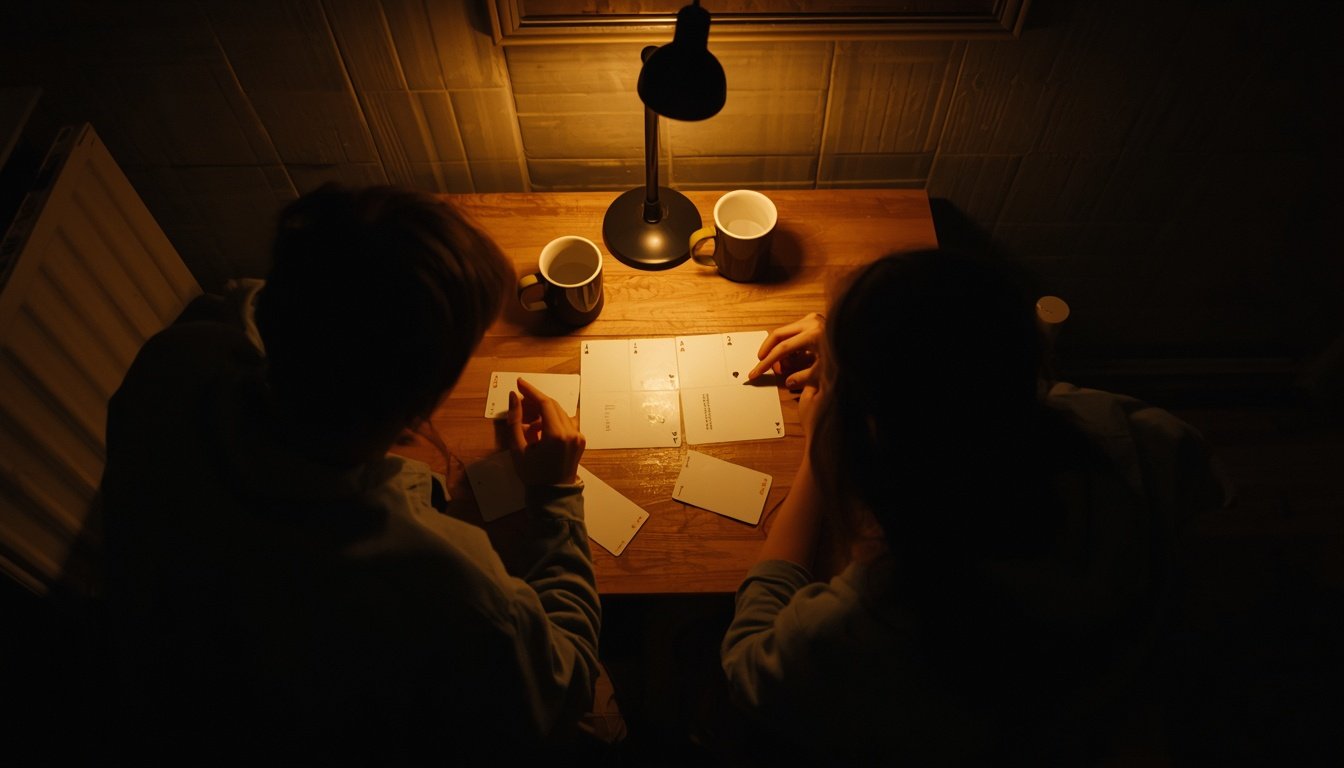
The advice is usually the same. Play something cooperative. Nobody loses to the other person, nobody sulks, everyone wins together.
That advice is half right, and the half that is missing is the half that ends game nights.
As an Amazon Associate, BoardGame Journey earns from qualifying purchases.
The Problem Nobody Mentions
Cooperative games have a well known failure mode. Board gamers call it the alpha player: one person who sees the whole board, works out the best move, and starts telling everyone else what to do. The group stops playing and starts taking instructions.
In a group of five this is annoying. Between two people it is something else entirely, because there is nowhere to hide. If one of you is quicker at this kind of puzzle, and you both stare at the same open board, the outcome can become close to inevitable. One of you plays and the other one follows.
Nobody says this out loud, so it usually gets diagnosed as something else. The other person just decides they are not really into board games.
The good news is that this is a design problem more than a personality problem, and some games are built in a way that heads it off.
The Fix Is Hidden Information
Here is the whole idea in one line: if you cannot see what your partner sees, you cannot play their turn for them.
A cooperative game where both players look at the same open board invites the alpha player. A cooperative game where each of you holds information the other one does not have makes it structurally much harder. Not merely discouraged, built out of the game.
That is how this list is sorted. It starts with the games where the design does that work for you, and ends with an excellent game that leaves the door wide open, along with what to do about it.
Quick Comparison
| Game | Players | Time | Age | Alpha player risk |
|---|---|---|---|---|
| Codenames: Duet | 2, box allows more | About 15 minutes | 11+ | Very low, by design |
| Fox in the Forest Duet | 2 | About 30 minutes | 10+ | Very low |
| The Crew: Mission Deep Sea | 2 to 5 | Short missions | 10+ | Low, blocked by the rules |
| Horrified | 1 to 5 | An evening | 10+ | High, open board |
The Quick Answer
- One of you always ends up running the game? Codenames: Duet. The design gets in the way.
- You want something quiet and beautiful for a weeknight? Fox in the Forest Duet.
- You want something you can keep playing for months? The Crew: Mission Deep Sea.
- You want a proper board with monsters on it? Horrified, with the house rule below.
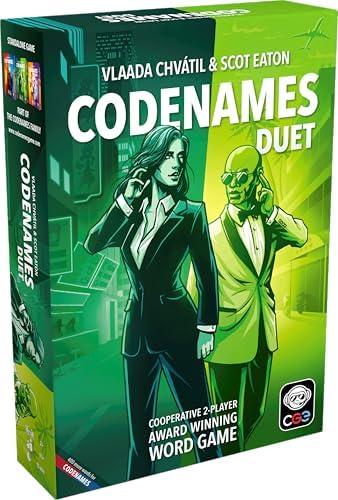
1. Codenames: Duet
2 players, though the box allows more | About 15 minutes | Ages 11+ | Word association
You lay out 25 words in a grid. Both of you are trying to find the same set of secret agents, giving each other one word clues. Familiar so far.
Here is the part that matters. The key card has two different sides. Your side shows nine words you must give clues for and three you must steer your partner away from. Their side is different. You are each holding a map the other one cannot see.
Why it works for couples: the alpha player problem is largely removed here, and not because the game asks nicely. You cannot simply take over, because you do not have the information to do it. Every round you have to trust the other person to interpret you, and they have to trust you back. That is the entire game.
Best if: you have noticed that one of you does most of the deciding, and you want that to stop without having a conversation about it.
Worth knowing: it is harder than regular Codenames, and losing feels different in a cooperative game. When a clue goes wrong the natural instinct is to explain what you meant. Some couples find that hilarious and some find it tense. It is worth knowing which one you are.
One useful detail the box does not shout about: Duet is compatible with the original Codenames. If you already own that, the two can be combined, which is worth knowing before you decide the word cards will run out.
Check the current price on Amazon
2. Fox in the Forest Duet
2 players | About 30 minutes | Ages 10+ | Cooperative trick taking
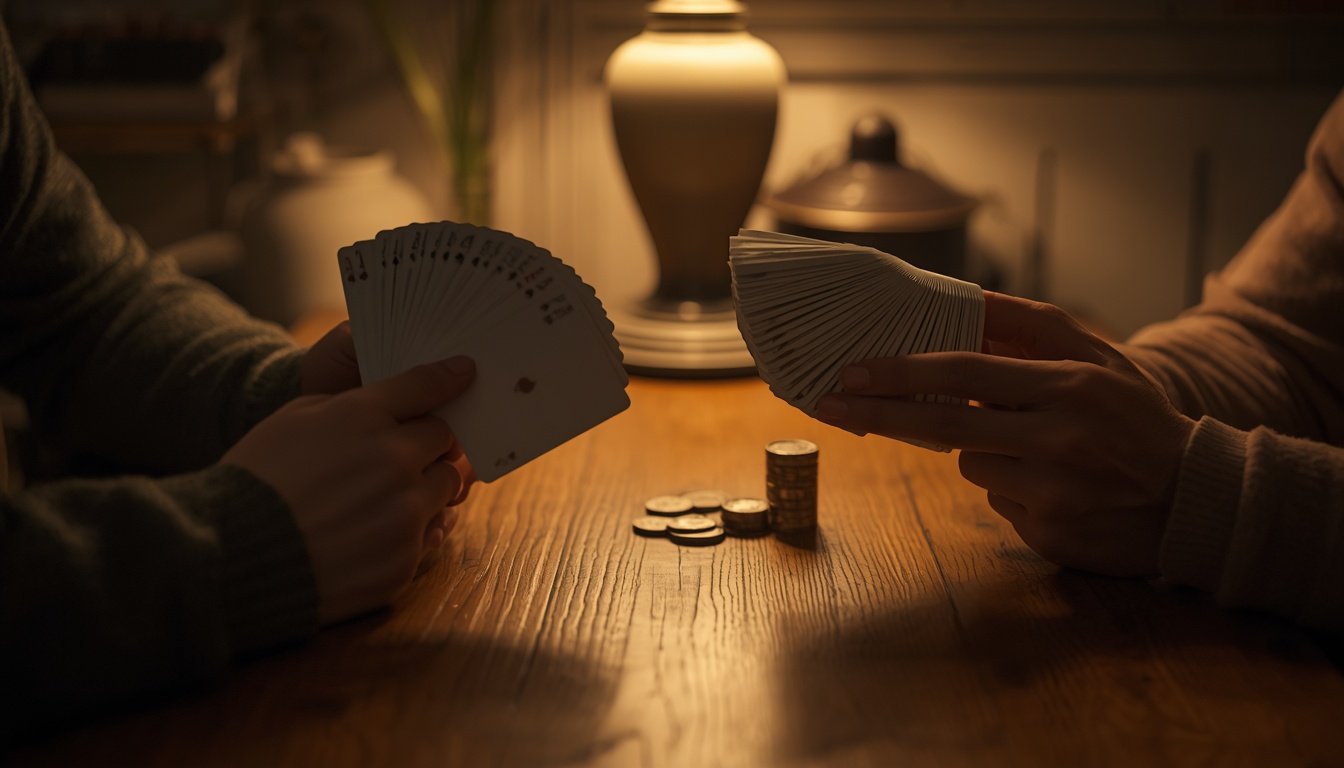
A trick taking card game, except you are on the same side. If that term is new: each round you both play a card, and the higher one in the leading suit takes the trick. Here you are working together to win specific tricks rather than competing to take the most. You move a shared marker across a forest, collecting gems, and you win or lose together.
Why it works for couples: you each hold your own hand of cards and neither of you can see the other’s. That single fact does most of the work. Your partner can suggest, but they cannot know what you are holding, so the decision stays yours. It also plays in half an hour and takes up almost no table, which matters more than people expect on a weeknight.
Best if: you want something calm and pretty rather than tense, and you have a small table or no table at all.
Worth knowing: if neither of you has played a trick taking game, the first game will be spent learning what a trick is rather than enjoying the puzzle. It is not difficult, but it is unfamiliar, and it is worth going in expecting the first session to be practice.
Check the current price on Amazon

3. The Crew: Mission Deep Sea
2 to 5 players | Short missions | Ages 10+ | Cooperative trick taking
Also trick taking, also cooperative, but built as a campaign. There are 32 levels of difficulty and a logbook, so you play a mission, and then another, and the box remembers where you got to.
Why it works for couples: limited communication is not a suggestion here, it is a rule. You cannot simply tell your partner what to do, because the game restricts what you are allowed to say. The alpha player is written out of the rulebook. And because each mission is short, it fits into the twenty minutes you actually have rather than the evening you wish you had.
Best if: you want one purchase that lasts months instead of a game you finish and shelve.
Worth knowing: at two players the game brings in an artificial third crew member called Tonoja, whose cards are partly face up and controlled by the captain. It is an elegant solution and it works, but a simulated partner is not the same as two people playing. Some couples do not notice, others would rather play something built for exactly two, which is why Fox in the Forest Duet is above it on this list.
Check the current price on Amazon

4. Horrified
1 to 5 players | An evening | Ages 10+ | Open board cooperative
You and the Universal monsters, on one board. Dracula, the Wolf Man, the Creature and the rest, each with a different way of being defeated. Choose how many to face and the difficulty scales with you.
Why it works for couples: it is the one on this list that feels like an event. There is a proper board, there are monsters closing in, and the theme carries an evening in a way a card game does not. It is also genuinely good, which is why it is here despite the warning below.
Best if: you want the satisfying version of a game night, with a table covered in pieces and a story you will remember.
Worth knowing, and this is the important one: everything is face up. Both of you see the whole board, every monster, every option. This is exactly the shape that produces the alpha player. It is not a flaw in the design, it is what makes the game work, but between two people it is the one on this list most likely to end with one person quietly directing traffic. The next section is how to stop that.
Check the current price on Amazon

One More Worth Knowing About
If the idea of hidden information appeals to you, there is a game that takes it further than anything on this list. The Mind gives every player a hand nobody else can see and then removes talking altogether. You play your cards in ascending order across the whole table without saying a word, judging by feel alone when it is your turn.
It did not make the four above because it is at its best with three or four players rather than two, and because it is closer to an experiment than a game night. But as an answer to the alpha player it is the most extreme version of the idea, and it costs very little. We covered it in our list of board games under $20.
If You Already Own an Open Board Cooperative Game
Most people reading this already have a Pandemic or a Forbidden Island on the shelf, and the answer is not to throw it away. Three house rules can fix most of it.
- Advice only when asked. The simplest and the hardest. You can say what you are worried about, but you do not tell the other person what to play. If they want input they ask for it.
- Nobody touches anybody else’s pieces. Sounds petty, works remarkably well. Physically moving someone’s piece is where taking over usually starts.
- Take turns being in charge of the plan. One game each. The person who is not in charge gets to be the one who suggests something reckless.
None of this is in the rulebook. All of it comes from the same place: a cooperative game only works when both people are actually making decisions.
Couples Guides for Specific Situations
The five above are the general answer. Over the last year we have written three more couples guides, each for a situation this list does not solve well.
If you have twenty minutes, not an evening, our guide to quick board games for couples sorts nine games by how much time you actually have, and explains why setup time matters more than play time.
If losing to each other is the problem, our list of cooperative board games for couples covers playing on the same side, and the one flaw in cooperative games that nobody warns you about.
If you want something to come back to for months, our guide to legacy and campaign board games for couples looks at six of them and asks whether the box survives the campaign.
Frequently Asked Questions
What is the alpha player problem?
It is when one player in a cooperative game works out the optimal move and starts directing everyone else. The game gets played well and the other people stop having any decisions to make. It happens most in games where all the information is visible to everybody.
What is the best cooperative board game for two players?
Codenames: Duet is the safest starting point for most couples, because its hidden information makes it much harder for one person to take over the game. If you want a full board game experience with a board and pieces rather than cards, Horrified is the better choice, with the house rules above.
Are cooperative games actually better for couples than competitive ones?
They solve one problem and can create another. Competitive games struggle when there is a skill gap, because the same person keeps winning. Cooperative games remove that, but if the board is open the same skill gap turns into one person running both turns. Games with hidden information avoid both.
Which one should we buy first?
Codenames: Duet, in most cases. It is the cheapest way to find out whether cooperative games work for the two of you, it teaches in about three minutes, and it is the one here where the design does the most to stop one person taking over.
Do any of these work if we have very different experience levels?
All four work better across different experience levels than a competitive game would. Codenames: Duet has the strongest built in protection, because clue giving rewards knowing the other person rather than knowing board games.
What if we want something longer?
The Crew is the one with the most built in progression, since the campaign structure gives you a long sequence of missions to work through. Horrified gives you the longest single evening.
Are there cooperative games with a bigger board that avoid this?
Some hide information deliberately, usually by giving each player a private hand or a secret role. The rule of thumb when shopping is simple: if the box art shows everything face up on a shared board, expect the alpha player, and go in with the house rules above.
Where to Start
If one of you has been quietly steering every game night, buy Codenames: Duet. It works at the level of the rules rather than asking anyone to behave differently.
If you want the gentlest thing on this list for a Tuesday, buy Fox in the Forest Duet. Half an hour, small table, no arguments.
If you want one box that lasts, buy The Crew: Mission Deep Sea, knowing that at two players you are managing a simulated third crew member.
If you want a real game night with a real board, buy Horrified, and agree the house rules before the first monster moves.
What these four have in common is that they are all easier on a relationship than a game where one of you has to lose. The difference between them is whether the design protects both of you, or whether you have to do that yourselves.
If you have found other ways to keep a cooperative game balanced between two people, they are worth sharing in the comments.
For games where you play against each other rather than together, see our guide to the best board games for couples on date night. If cooperative games are your thing more broadly, our review of Star Wars: The Clone Wars covers a bigger cooperative box, and our Christmas board game gift guide has more of them.
As an Amazon Associate, BoardGame Journey earns from qualifying purchases. This comes at no additional cost to you and helps support more in-depth board game reviews and guides.