The cheap shelf in a supermarket looks the same everywhere: Candy Land, Chutes and Ladders, a few boxes of Sorry. Those games have a real job, and they do it well, which is giving a four year old something they can win at. But the mechanics are almost entirely luck. You roll, you move where the dice tell you, you have no decision to make. That is fine when the point is teaching a small child to take turns. It gets long for everyone else at the table.
Here is the part most people never find out: the same small budget buys games with real decisions in them. Not complicated ones, not games that need an hour of setup, just games where the adults are playing rather than supervising.
These five were chosen on four things: they have to sit at the cheaper end of the shelf, teach quickly, finish in about half an hour, and stay interesting to an adult after the tenth play. Three of them clear that comfortably. Kingdomino Origins teaches fast in its basic mode and then has two deeper modes waiting in the same box. Rummikub runs longer, and it earns its place for a different reason explained below. All five are widely available, and none of them need an expansion to work properly.
As an Amazon Associate, BoardGame Journey earns from qualifying purchases.
Quick Comparison
| Game | Players | Time | Age | Type |
|---|---|---|---|---|
| Sushi Go! | 2 to 5 | 15 min | 8+ | Card drafting |
| Taco Cat Goat Cheese Pizza | 2 to 8 | 10 min | 8+ | Reflex, party |
| Kingdomino Origins | 2 to 4 | 15 min and up by mode | 8+ | Tile laying |
| The Mind | 2 to 4 | 20 min | 8+ | Cooperative |
| Rummikub | 2 to 4 | 30 to 60 min | 8+ | Tile rummy |
The Quick Answer
- Buying one game and want the safest pick? Sushi Go!
- Big group, mixed ages, lots of noise? Taco Cat Goat Cheese Pizza
- Want a real strategy game? Kingdomino Origins
- Tired of someone always losing? The Mind
- Want the one that lasts for years? Rummikub
1. Sushi Go!
2 to 5 players | 15 minutes | Ages 8+ | Card drafting
Everyone gets a hand of cards, picks one to keep, and passes the rest to the left. Do that until the cards run out, score, repeat for three rounds. That is the whole game, and it takes about two minutes to explain.
Why it works: the passing mechanic means you are always making a small decision with a real cost. Keep the card you want, or take the one that stops the person next to you from finishing their set. The rules are short enough for a child to follow, and the arithmetic about what is coming back around is what keeps an adult interested.
Best if: you are buying one cheap game and want the highest chance it gets played more than twice.
Worth knowing: the art is very cute, which is either the reason someone agrees to play or the reason they assume it is a children’s game and refuse. If your household leans towards the second reaction, lead with Kingdomino Origins instead.


2. Taco Cat Goat Cheese Pizza
2 to 8 players | About 10 minutes | Ages 8+ | Reflex
Players take turns flipping cards while saying the five words in order, over and over. When the card matches the word being said, everyone slaps the pile. Slowest hand takes the cards. First player to run out wins.
Why it works: almost nothing here rewards experience, which is unusual and useful. A seven year old and a forty year old start from the same place, because the game is testing reaction speed and the ability to not get confused, not strategy. It is also the only game on this list that handles eight people.
Best if: you have a big table, mixed ages, and want something loud that ends before anyone gets restless.
Worth knowing: there is hand slapping involved, and the game is built around shouting five words at speed. In a house with a very small child or someone who wants a calm evening, this is the wrong pick. The rules are also the thinnest here, so it works better as the game you open between other games than as the main event.

3. Kingdomino Origins
2 to 4 players | 15 minutes and up depending on mode | Ages 8+ | Tile laying
You draft domino shaped tiles showing two terrain types and add them to a five by five grid in front of you, matching terrain to terrain. At the end, each connected region scores its number of squares multiplied by the number of fire symbols inside it. The prehistoric setting is not decoration: one of the terrain types is a volcano, and volcanoes hand you fire tokens you can place into regions to raise that multiplier.
Why it works: this is the deepest game on the list. There is a clever tension in the drafting, because taking the best tile means going later in the next round, and the fire tokens give you a second lever that has nothing to do with which tile you took. A child can play it by matching colors while an adult plans three tiles ahead, at the same table.
Best if: you want the most game for the money and do not mind a slightly longer explanation.
Worth knowing: this box is really three games, and that is the single most useful thing to understand before buying. The publisher recommends playing the modes in order.
- Discovery is the basic mode and the one closest to a straightforward tile laying game. This is where you start, and where the fifteen minute figure comes from.
- Totem adds wooden resource tokens that sit on your tiles, and four totems awarded to whoever holds the majority of each resource. Fire destroys resources, so the two things you are chasing work against each other.
- Tribe adds cavemen you recruit by spending resources, each worth points depending on where you place them.
Discovery teaches in a few minutes. The other two do not, and they are noticeably more demanding than the light family game the Kingdomino name suggests. That is an argument for buying it, not against, but go in expecting a box you grow into rather than one you exhaust in a night.
Two other things. The original Kingdomino, by the same designer, Bruno Cathala, won the Spiel des Jahres in 2017, one of the most prestigious awards in the industry. Origins is a separate standalone game in that family rather than a reprint, and it is the one currently easy to buy: the original box had no active Amazon offer when we checked on September 13, 2026. The award belongs to the original, not to this box.
And the grid has a hard size limit. Tiles that do not fit are discarded, and younger players sometimes fill their grid badly early on and spend the rest of the game unable to place anything. A first game with a child usually goes better if an adult points out that the edges fill up fast.

4. The Mind
2 to 4 players | 20 minutes | Ages 8+ | Cooperative
The deck runs from 1 to 100. Everyone gets one card in the first round, two in the second, and so on. You have to play every card in ascending order across the whole table, and you are not allowed to communicate. No talking, no signals, no counting out loud. You just wait and feel when it is your turn. Play a card out of order and the group loses one of its shared lives, and that penalty is what turns a very simple idea into something genuinely tense.
Why it works: it is fully cooperative, which quietly removes the biggest problem with family game night. Nobody loses to anybody. When it goes wrong, it went wrong for everyone. It was nominated for the Spiel des Jahres in 2018 and won the French As d’Or, which for a deck of a hundred numbered cards is quite something.
Best if: someone in your house has stopped enjoying game night because they keep losing.
Worth knowing: this one divides people. There are almost no rules, and the whole game is the waiting. Some players find that thrilling and others sit down expecting a game and feel like they were handed a party trick. It also needs everyone to take it seriously for a few minutes. If one person at the table is determined to be silly, the tension that makes it work never builds.

5. Rummikub
2 to 4 players | 30 to 60 minutes | Ages 8+ | Tile rummy
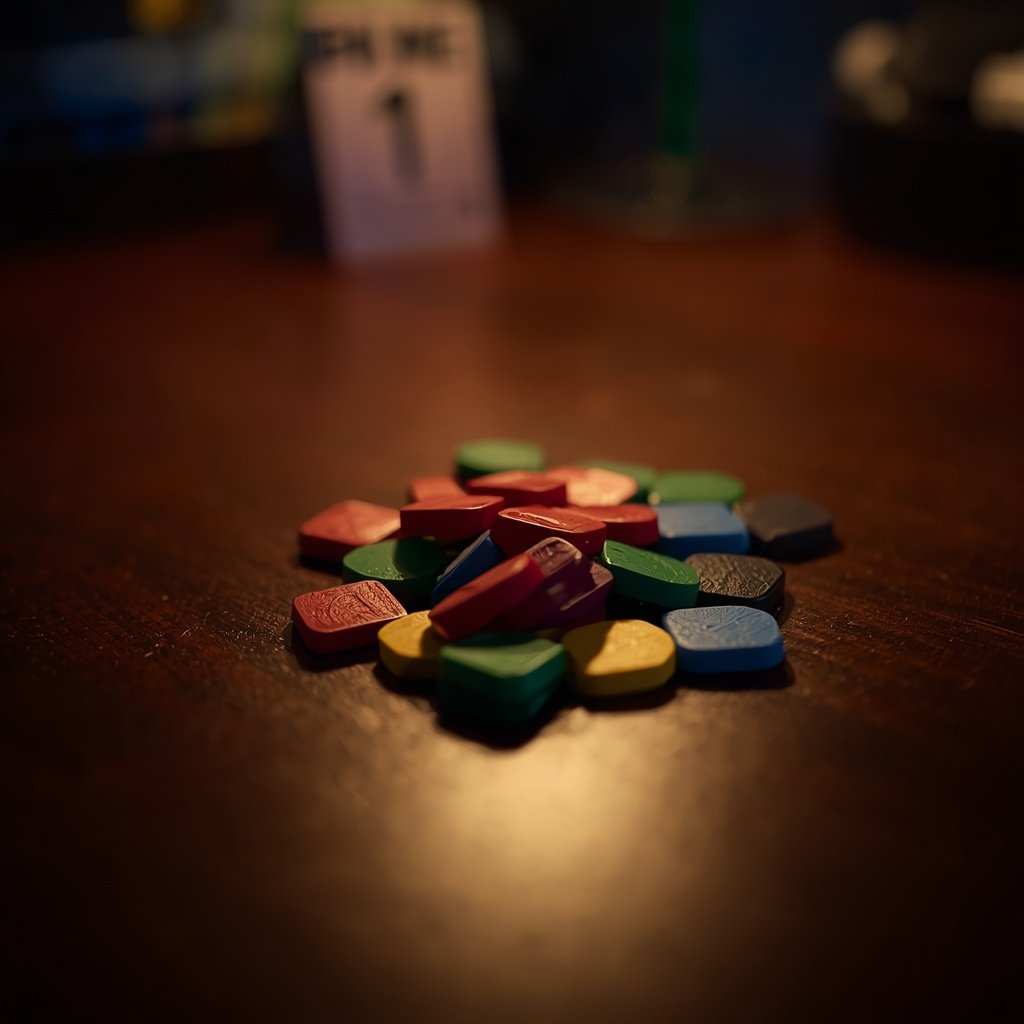
You draw numbered tiles and lay down runs and sets, the same idea as rummy with cards. The difference is that once tiles are on the table, anybody can rearrange them, as long as everything on the table is still valid when your turn ends.
Why it works: that rearranging rule is the whole reason this one has stayed in print for generations. Late in a game the table becomes a shared puzzle that everyone is allowed to break apart, and a single move can let you place six tiles at once. It is also the game on this list most likely to work with grandparents, because anyone who has played rummy already knows most of it.
Best if: you want one box that covers three generations and gets played for years rather than months.
Worth knowing: it is the longest game here by a wide margin. There is also an opening rule that catches younger players out: your first play has to add up to at least thirty points, so a child can sit through several turns drawing tiles without being allowed to put anything down. The game opens up once that first play happens, but the wait can be discouraging. It is also the least portable, since the tiles and racks take up real space. This is a table game, not a game for the car.

What About Monopoly, Sorry and Candy Land?
They are not on this list, and it is worth being clear about why, because they are the games most people picture when they think about a cheap board game.
Those games are built almost entirely on luck. You roll, you move, you do what the space says. That design exists for a reason: it lets a five year old genuinely beat an adult, which matters a lot when someone is learning to play games at all. For that job they are excellent, and there is a reason they have sold for decades.
The trouble is the adult side of the table. When there are no decisions to make, a long game becomes a long wait, and the grown ups end up managing the game rather than playing it. Every game on this list keeps that same low barrier to entry while giving everyone something to think about.
If you want the longer version of that argument, 10 Classic Board Games and Which Ones Still Hold Up goes through the whole nostalgia shelf and looks at which of them still deserve their reputation.
What to Look For in a Cheap Board Game
Three things worth knowing before you spend.
- Cheap almost always means cards or tiles, not a board. Printing a big board and moulding plastic pieces is what pushes a game into a bigger box and a higher bracket. Card games are cheap to make, which is why the best value in board games sits in small boxes.
- Short does not mean shallow. Most of the games here finish in twenty minutes, and that is a design choice, not a compromise. A game that ends while everyone still wants more gets played again next week.
- One good box beats three mediocre ones. This sounds obvious and almost nobody does it. Buying Sushi Go! and playing it thirty times will give your household more evenings than buying three different bargain boxes that each get opened once.
Frequently Asked Questions
What is the best cheap board game for a family with young children?
Taco Cat Goat Cheese Pizza, because it does not reward experience and a child can beat an adult honestly. Sushi Go! is the better long term purchase, but it asks for slightly more patience.
What is the best cheap board game for adults?
Kingdomino Origins, if you want something with real strategy in it, and its Totem and Tribe modes are aimed squarely at a table of adults. Sushi Go! if you want something quicker that still has decisions in every turn. Both hold up without feeling like a compromise.
Are cheap board games actually any good?
Some of the most respected games in the hobby come in small boxes. The original Kingdomino, the game Origins on this list descends from, won the Spiel des Jahres, one of the most prestigious awards in the industry, and it comes in a box the size of a paperback. What you pay for mostly reflects how much cardboard and plastic is in the box, not how good the design is.
Which one works best with just two players?
Kingdomino Origins or Rummikub. Both work well at two. Kingdomino Origins uses a slightly different setup for a two player game, which is explained in the rulebook and takes no extra time. Taco Cat Goat Cheese Pizza technically supports two but is much better with four or more.
What is the best cheap cooperative board game?
The Mind. Everybody plays on the same side, so nobody finishes last. If cooperative games work in your house, that is the one to try.
How much should I expect to pay?
It moves around by retailer and by week, so check the current listings above rather than trusting a number written into an article months ago.
Which of these travels best?
Sushi Go!, The Mind and Taco Cat Goat Cheese Pizza are all card games in small boxes that fit in a bag. Rummikub is the one to leave at home.
Where to Start
If you are buying one game and want it to work on the first try, buy Sushi Go!. It is the easiest to teach, the least likely to be rejected, and it plays from two to five people.
If you already know your household enjoys thinking, go straight to Kingdomino Origins. It is the deepest game here and the one most likely to still be on the shelf in five years, because the two advanced modes are still waiting after the basic one gets familiar.
If game night has been going badly because the same person keeps winning, start with The Mind and skip the rest for now.
If you are building a collection from nothing, our Top 10 Entry Level Games guide covers what to buy once you are ready to spend a little more. And if you are shopping for a young child specifically, we have a separate list of board games for 3 year olds.
As an Amazon Associate, BoardGame Journey earns from qualifying purchases. This comes at no additional cost to you and helps support more in-depth board game reviews and guides.