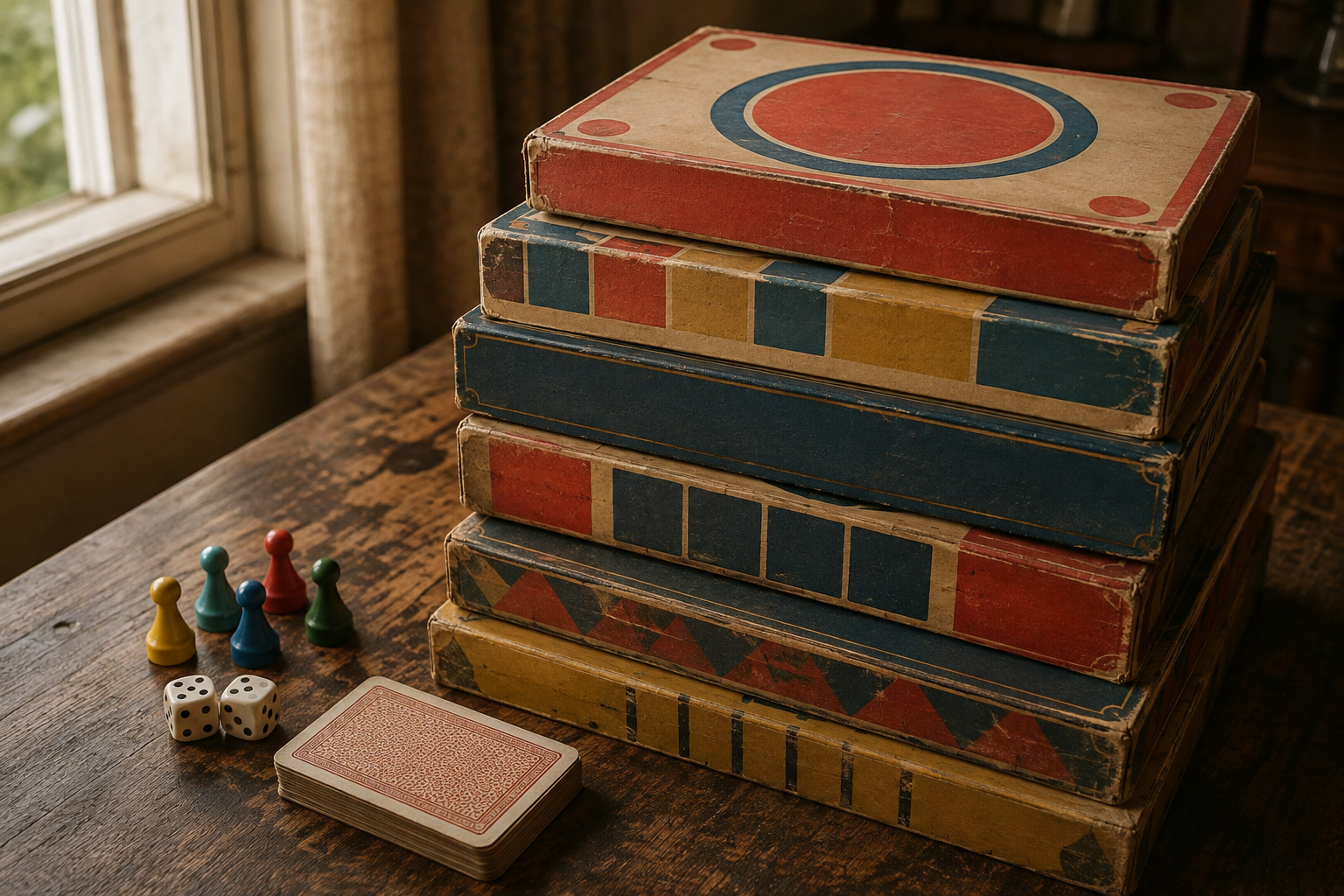
Everyone has a closet shelf with three or four of these on it. Most were bought decades ago, played to death one summer, and pulled out once a year since.
Some earned their reputation. Others are coasting on nostalgia and would struggle to find a publisher today. This is a quick tour of ten classic board games: what each one actually is, how it plays, and whether it still holds up.
The test used here is simple. Strip away the nostalgia and ask whether the game still gives you interesting decisions. Not luck, not spectacle, not memories. Decisions.
One caveat before the list: player counts and playing times vary between editions and printings, sometimes a lot, so treat the numbers here as the typical case rather than gospel.
As an Amazon Associate, BoardGame Journey earns from qualifying purchases.
Quick Comparison
| Game | Players | Time | Verdict |
|---|---|---|---|
| Monopoly | 2 to 8 | 1 to 3 hrs | Only with the real rules |
| Clue | 3 to 6 | 45 min | Holds up |
| Risk | 2 to 6 | 2 hrs or more | Better with a variant |
| Scrabble | 2 to 4 | 90 min | Holds up |
| The Game of Life | 2 to 4 | 1 hr | Mostly for children |
| Battleship | 2 | 30 min | Mostly for children |
| Connect 4 | 2 | 10 min | Holds up |
| Yahtzee | 2 or more | 30 min | Holds up |
| Sorry! | 2 to 4 | 30 min | Mostly for children |
| Trivial Pursuit | 2 to 6 | 1 to 2 hrs | Depends on the edition |
Four of the ten get a buying link on this page, and they are the four with a clean verdict. The ones we say do not hold up do not get one, because recommending a purchase we just argued against would be a strange way to run a list.
1. Monopoly
2 to 8 players, 1 to 3 hours
Roll, move, buy property, charge rent, bankrupt your family. Monopoly is probably the most widely owned board game in the world, and it is also the most misplayed. The official rules include a mandatory auction whenever a player lands on an unowned property and declines to buy it, and most tables skip it entirely.
That one omission changes the game. Auctions put every property into circulation early, which speeds up the point where players actually own enough to start trading. Skip them and properties sit unclaimed for laps, which is a big part of why games sprawl past three hours.
Does it hold up? Partly. Played correctly, with auctions and without the Free Parking jackpot that no rulebook has ever contained, it is a sharper trading game than its reputation suggests. Played the usual way, it is a long roll-and-move with early elimination. Worth relearning before you write it off, and almost certainly already in the house, which is why there is no link here.
2. Clue
3 to 6 players, about 45 minutes
Someone was murdered in the mansion. You move between rooms making suggestions, and every player who can disprove one shows you a card in secret. Cross off what you learn, and the first player to correctly name the culprit, weapon, and room wins.
Does it hold up? Yes, better than most on this list. The deduction core is real, and it is the game that taught a generation how to keep a logic grid. The weakness is the movement: dice rolls decide which rooms you can reach, so bad luck can stall a good deduction.

3. Risk
2 to 6 players, 2 hours or more
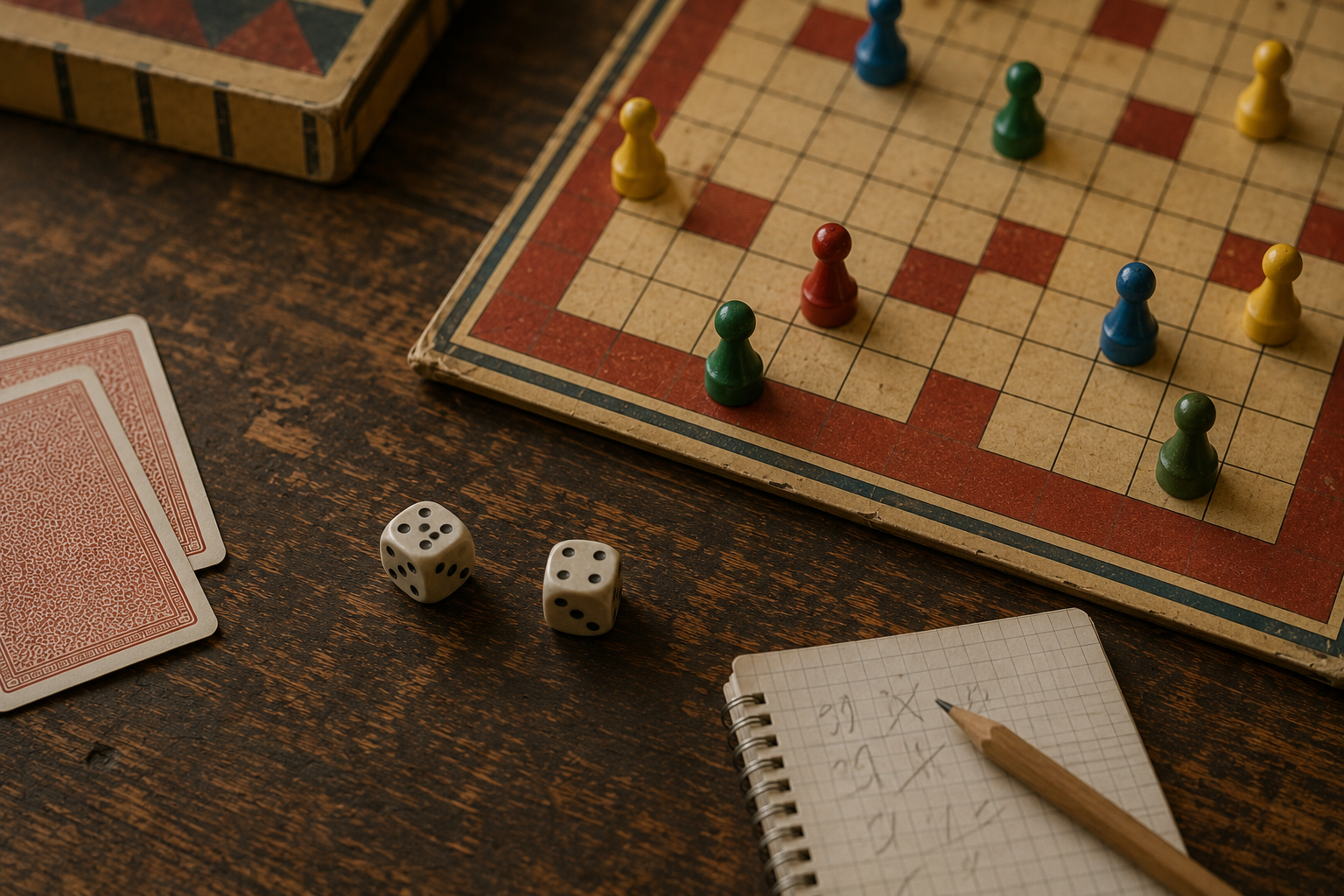
World conquest by dice. You collect armies each turn based on territory and continents held, then attack neighbors by rolling against them. Take every territory to win.
Does it hold up? As a spectacle, yes. As a game night pick, only with the right group, because the standard win condition demands total domination and that takes hours. Many editions include a Secret Mission variant, where each player draws a hidden objective instead of conquering the whole map. It ends games considerably faster, and it is worth checking whether your box has the cards before committing an evening to the long version. Not sure you are playing it right? Our complete Risk rules guide covers the five rules most groups get wrong, and has the current edition if you are buying rather than digging one out of a closet.
4. Scrabble
2 to 4 players, about 90 minutes
Build words on a grid, score by letter value, and chase the premium squares. It is the one game here where being good at it is a skill you can actually train.
Does it hold up? Completely. Scrabble has aged better than almost any game of its era, which is why it still has a competitive tournament scene. The caveat is that it punishes mismatched groups harshly. A strong player against a casual one is not a fun evening for either of them.

5. The Game of Life
2 to 4 players, about an hour
Spin the wheel, drive your little car through college, career, marriage, and retirement, and finish with the most money.
Does it hold up? Not really, if we are honest. There are almost no decisions in it. You spin, you move, the board tells you what happened to you. The story it tells is the appeal, and that counts for something with a young child, but there is no game underneath it for anyone older.
6. Battleship
2 players, about 30 minutes
Hide your fleet on a grid, call out coordinates, sink theirs before they sink yours.
Does it hold up? As a first game for a young child, yes. The moment of landing a hit and following it along the grid is the whole design working. Beyond that it is a search puzzle with no real decision to make, and there is not much left once you know how to search a grid efficiently.
7. Connect 4
2 players, about 10 minutes
Drop discs into a vertical grid and get four in a row. Rules explained in one sentence, games over in minutes.
Does it hold up? Yes, on its own terms. It is a small, sharp abstract with real tactics hiding under a toy exterior. It is also a solved game, cracked back in 1988, which means the first player can force a win with perfect play. That is a fine piece of trivia and it matters exactly zero at a kitchen table.

8. Yahtzee
2 or more players, about 30 minutes
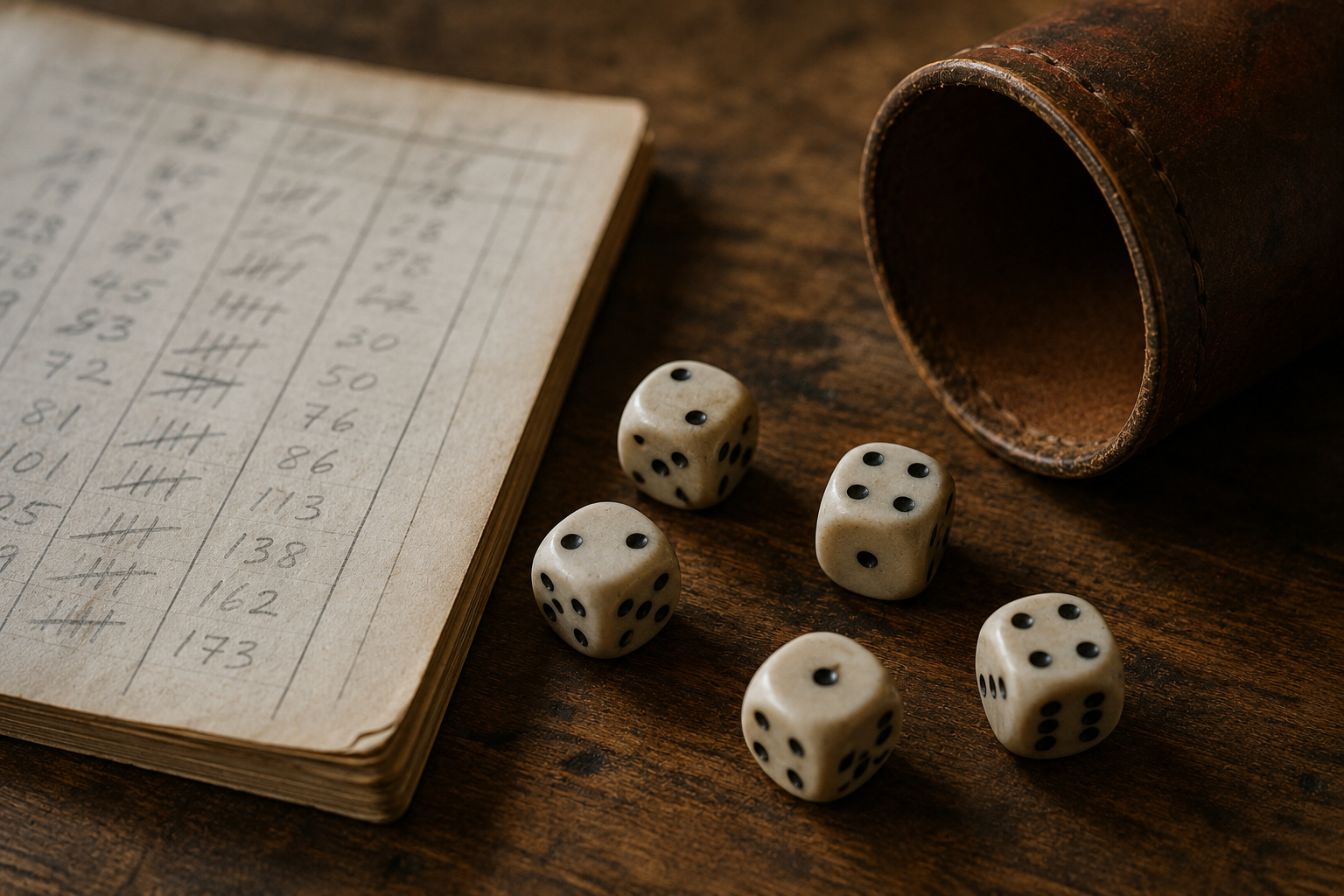
Roll five dice up to three times per turn, then commit the result to a category on your scoresheet. Fill every category, highest total wins.
Does it hold up? Surprisingly well. The push-your-luck decisions are real: do you chase the large straight or bank the safe points now? It also sits at the root of a whole family of modern dice games. King of Tokyo, which appears on our entry-level list, is essentially Yahtzee with monsters and a fight attached.

9. Sorry!
2 to 4 players, about 30 minutes
Race your four pawns around the track, and send opponents back to start when you land on them.
Does it hold up? Only for younger children. The cards give you a sliver more choice than pure dice movement, but the design is built around knocking someone back to the beginning, and having it done to you. Which, depending on the family, is either the best or worst thing about it.
10. Trivial Pursuit
2 to 6 players or teams, 1 to 2 hours
Answer questions across six categories, collect a wedge for each, then answer a final question to win.
Does it hold up? Depends entirely on the edition, which is why there is no single link here. The original Genus questions have aged into obscurity, and nothing kills a game faster than a table where nobody knows any of the answers. Play a recent edition, or one themed to something your group actually knows, and it works well as a team game.
So Which Ones Are Actually Worth Playing?
- Still good: Scrabble, Clue, Yahtzee, Connect 4.
- Good with the right rules or variant: Monopoly with auctions, Risk with Secret Missions.
- Mostly for children: Battleship, Sorry!, The Game of Life.
- Depends on the edition: Trivial Pursuit.
The pattern is that the classics which survive are the ones where your decisions matter. The ones that feel hollow now are the roll-and-move designs, where the board tells you what happens and you mostly watch.
If the Classic Did Not Sell You
Finding out that a childhood favorite does not hold up is only useful if you know what to reach for instead. Three swaps worth making, and one warning about the order you make them in.
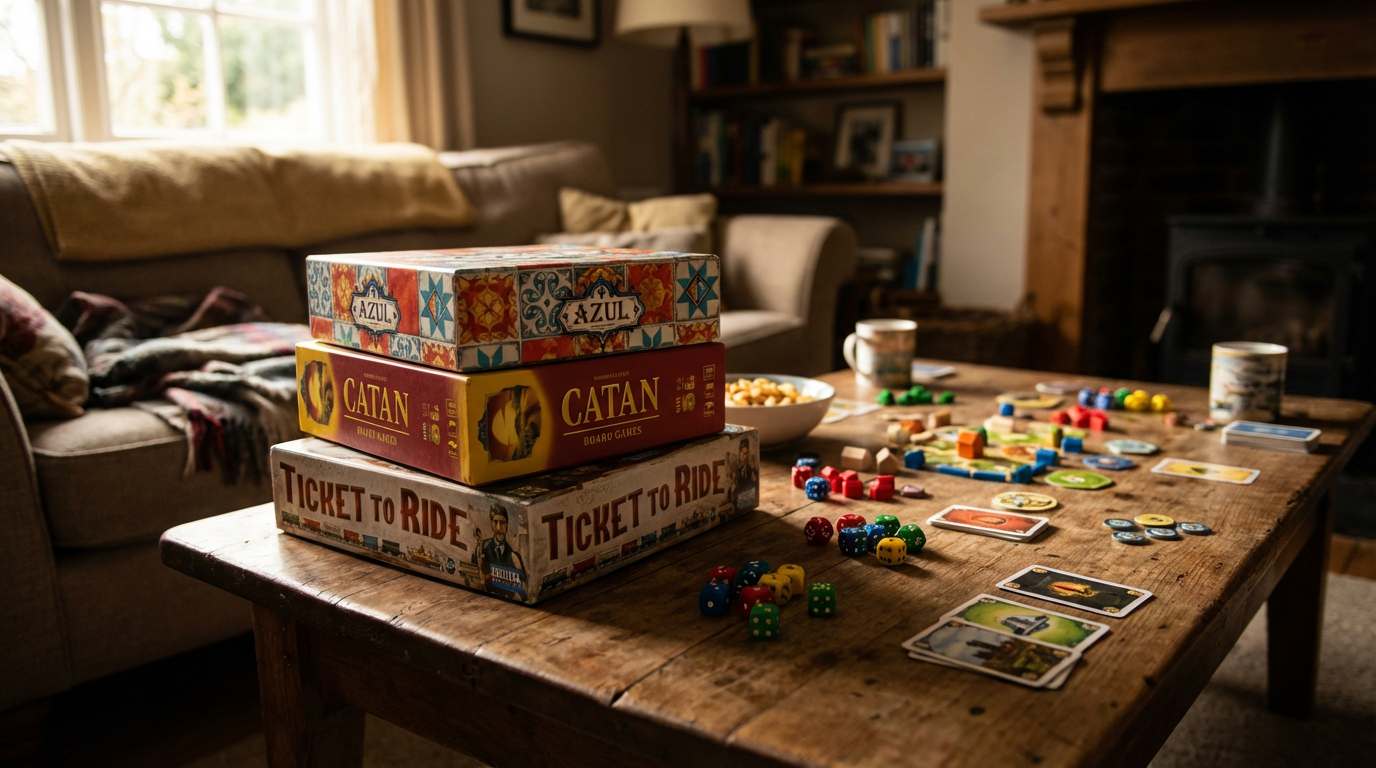
Instead of Sorry! or The Game of Life: Ticket to Ride
A family game where everyone still has something to decide every turn. You collect colored train cards and spend matching sets to claim routes on a map, and the board shows a new player how they are doing without anyone explaining it. It is the swap we would make first, because it replaces a roll-and-move with something the same table can learn in five minutes.

Instead of Trivial Pursuit: Codenames
A party game that does not depend on knowing the capital of Burkina Faso. One player per team gives a one word clue plus a number, and everyone else guesses which words on the table belong to them. It handles a crowd, it takes fifteen minutes, and nobody is eliminated. Our Codenames review goes further into where it works and where it does not.

Instead of Monopoly: Catan, but not first
Catan is the trading and negotiation game Monopoly is usually mistaken for, and it finishes in about an hour rather than three.
The warning matters more than the recommendation. Several systems have to click before a turn in Catan means anything, and a brand new player can spend forty minutes making legal moves without understanding their position. We say so at length in our entry-level list, where Catan is deliberately absent.
So buy it, but buy it after Ticket to Ride rather than before. Once your table has a couple of modern evenings behind it, Catan is excellent, and our full look at whether Catan still holds up covers what it does well.

Frequently Asked Questions
What is the oldest game on this list?
Monopoly, which Parker Brothers began selling in 1935. Scrabble has a stranger history: the architect Alfred Butts designed it during the 1930s under the names Lexiko and then Criss-Cross Words, but it only became Scrabble in 1948, when James Brunot bought the manufacturing rights and renamed it.
Which classic is best for young children?
Connect 4 and Battleship are the easiest entry points, because the rules take seconds to explain and a game is over quickly. Sorry! works too if your family tolerates the knocking-back.
Which one works best for a big group?
Trivial Pursuit played in teams handles a crowd better than anything else here. Most of the others cap out at four to six players and slow down noticeably at the top end.
Are the newer editions the same games?
Usually the core rules are unchanged, but components, player counts, and question sets do get revised. Trivial Pursuit in particular is a different experience depending on which edition you own, and Scrabble, Clue and Connect 4 all have junior and travel versions that are not the standard game. Check the box before you buy.
Why do these games feel slower than modern ones?
Most were built around roll-and-move, where dice decide your options before you make any choice. Modern designs tend to give players something to decide every turn, which is why a 45 minute modern game can feel busier than a two hour classic. It is a tendency rather than a rule, and there are plenty of slow modern games too.
As an Amazon Associate, BoardGame Journey earns from qualifying purchases. This comes at no additional cost to you and helps support more in-depth board game reviews and guides.