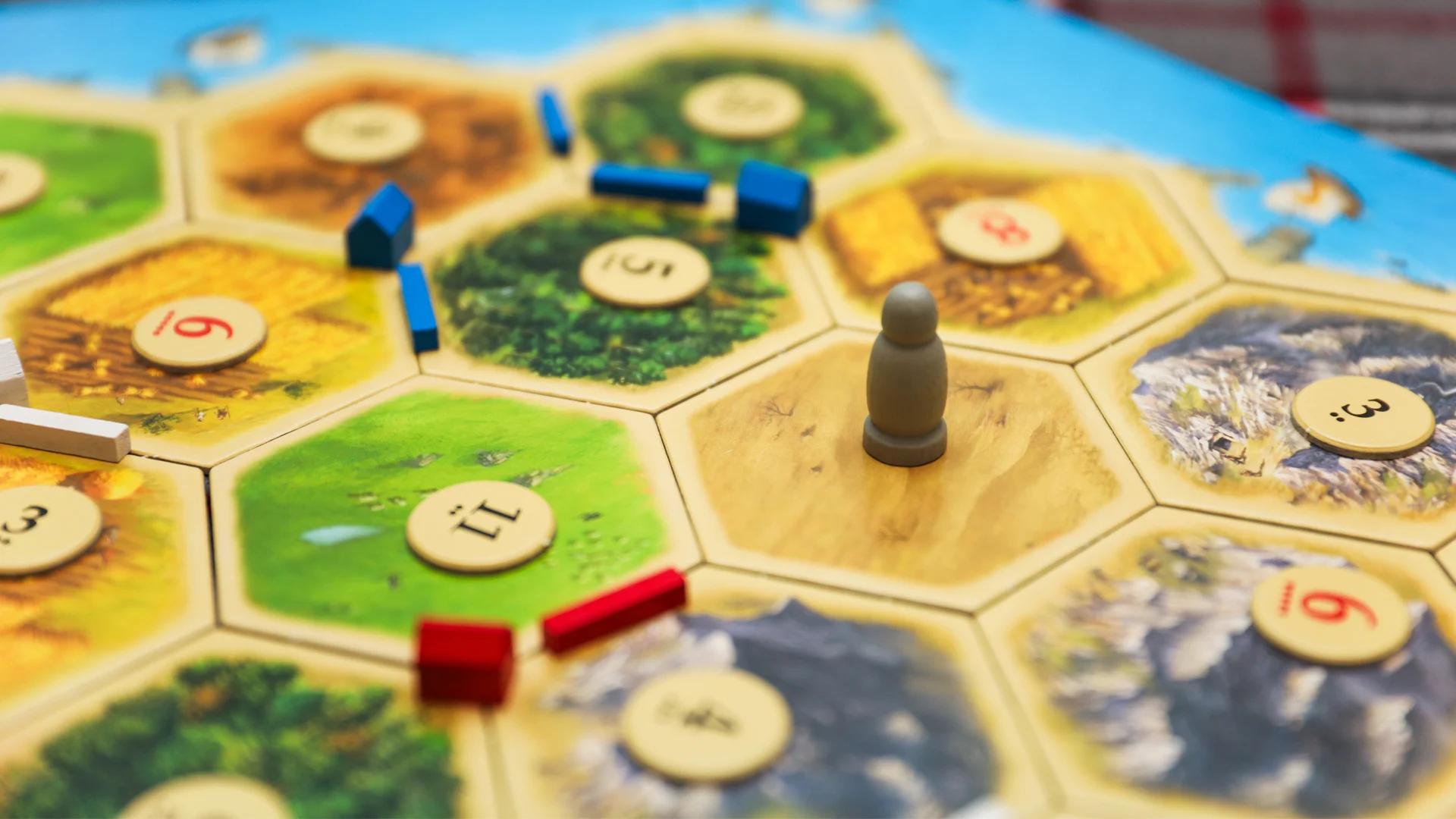
What Catan Is About
Picture this: You have a hand full of sheep cards. You don’t need sheep. You need brick to build your next settlement and block your friend from taking the longest road. You look across the table and ask the most famous question in board gaming history: “Does anyone have wood for sheep?”
Catan isn’t just about moving pieces on a board; it is about the tension of negotiation. It is the groan of frustration when someone rolls a 7 and moves the robber onto a hex beside your settlement and takes a card from you. It is the pure joy of secretly holding a Victory Point card and revealing it to win just when your opponents thought they were safe. If you want a game that gets people talking and bargaining, Catan is built around exactly that.
As an Amazon Associate, BoardGame Journey earns from qualifying purchases.
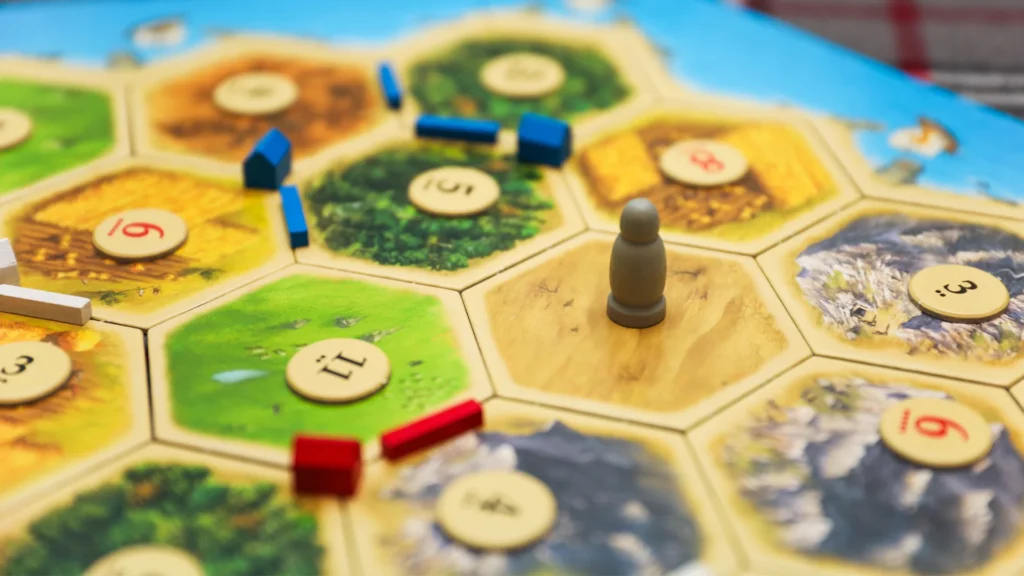
Quick Stats
| Feature | Details |
| Player Count | 3 to 4 players |
| Play Time | 60 to 90 minutes |
| Age Rating | 10+ |
How It Plays (The Core Loop)
Catan has a short rulebook for a modern game. Each turn follows the same three steps:
- Roll: You roll two dice. Every resource hex on the board has a number. When that number is rolled, every player with a settlement or city on a corner of that hex takes its resource: lumber, brick, wool, grain or ore (most players just say wood and sheep). On a 7 nobody produces, and the robber moves instead.
- Trade: You can trade with the other players, or with the bank at four to one. “I’ll give you two grain for one ore!” Every building needs a specific mix of resources, so trading is how you fill the gaps.
- Build: Spend your resources to build roads, settlements (1 point), or cities (2 points). Development cards and the Longest Road and Largest Army bonuses add more. The first player to reach 10 victory points on their turn wins.

Who Is This For?
Catan is one of the best-known “gateway games”: the modern games people usually play first.
If you grew up playing Monopoly or Risk but felt bored by the luck or how long they take, Catan is for you. It still has dice, but you choose where to build, so you can plan around them. It is a good fit for families with kids 10 and up, groups of three or four friends who host dinner parties, or anyone looking to dip their toes into the modern board game hobby without getting overwhelmed by complex rules. With younger children, see our Catan vs Catan Junior comparison first.
If you are choosing between Catan and Ticket to Ride for a first game, we compared the two side by side in Ticket to Ride vs Catan.
The current box is the 6th edition. If you are not sure which box to buy, or what the expansions add, our guide to which Catan box to buy covers the base game and its expansions.
Pros and Cons
Here is the honest breakdown of why you should buy it, and what you need to look out for.
- Pro: Less Waiting Than Most. Every roll can produce resources for everyone, and the player whose turn it is can trade with you, so you are rarely just watching.
- Pro: A Different Board Every Game. The island is built from separate hex tiles and number tokens that can be laid out differently each time, so the best spots change from game to game.
- Con: Strict Player Count. The base game is strictly for 3 or 4 players. If you have a larger family or friend group, the base box will not seat everyone. The Catan 5-6 Player Extension adds what you need for five or six, and it requires the base game.
- Con: Can Get Aggressive. The robber, and having your trades refused, can feel personal. That is part of the design. If your group wants more to think about once the base game feels familiar, Catan: Cities & Knights is the expansion most often named. It requires the base game, and it adds more interaction, not less.
Frequently Asked Questions
Is Catan difficult to learn for beginners?
Not at all. If you can play Monopoly, you can play Catan. Each turn is the same three steps, which keeps the rules manageable for a first modern game.
Is Catan good for 2 players?
The base game is designed for 3 or 4 players, because trading needs more than one partner. The Traders & Barbarians expansion includes official rules for two players, and our guide to which Catan box to buy explains what the two-player rules need.
How long does a game of Catan actually take?
The box says 60 to 90 minutes. A first game, while everyone learns what each resource is worth, can run toward the longer end.
Is Catan Still Worth It?
Some hobbyists argue that Catan is “old,” but “classic” is the better word. It changed the world of board gaming for a reason. It is accessible, and it gets new players trading and managing resources.
For groups of three or four, yes. It is one of the games most often used to bring non-gamers into the hobby. It belongs on your shelf because, sooner or later, you’re going to need to trade that sheep for some wood.
To see how Catan ranks historically against thousands of other titles, you can visit its profile on BoardGameGeek.
If you are buying it, the card above links to the 6th edition base game. Just watch out for the robber.
As an Amazon Associate, BoardGame Journey earns from qualifying purchases. This comes at no additional cost to you and helps support more in-depth board game reviews and guides.