Most lists of board games for 3 year olds are really lists of games rated 3 and up, which is not quite the same thing. A box can say 3+ and still ask a child to wait several turns, keep track of a score, and take losing in their stride. Three year olds vary enormously in which of those they’re ready for.
So this list is sorted by what a three year old can comfortably manage, and every game on it carries an age on the box that a three year old already meets.
One thing worth knowing before you buy anything: at this age, cooperative games tend to give a smoother experience than competitive ones. Handling a loss is something that usually clicks between four and five. A game where everyone wins together sidesteps that question entirely, which is why three of the five here are co-ops. Competitive games can absolutely work at three, they just come with a bit more risk of the evening ending early.
A quick note on small parts. A 3+ rating is not only about difficulty. It often exists because the box contains pieces too small for younger children, and plenty of homes with a three year old also have a toddler crawling nearby. Of the games here, only My First Orchard has pieces chunky enough not to think about it. The rest contain small components, so it’s worth a look in the box before it becomes a free-for-all on the living room floor.
As an Amazon Associate, BoardGame Journey earns from qualifying purchases.
Quick Comparison
| Game | Age on box | Players | Time | Type |
|---|---|---|---|---|
| My First Orchard | 2+ | 1 to 4 | 10 min | Cooperative |
| The Sneaky, Snacky Squirrel Game | 3+ | 2 to 4 | 15 min | Competitive, gentle |
| Count Your Chickens | 3+ | 2 to 4 | 15 min | Cooperative |
| Hi Ho! Cherry-O | 3+ | 2 to 4 | 15 min | Competitive |
| Feed the Woozle | 3+ | 2 to 5 | 15 min | Cooperative |
The Quick Answer
- Just turned three, or still learning to take turns? My First Orchard.
- Want them building fine motor skills without noticing? The Sneaky, Snacky Squirrel Game.
- Prefer to keep the mood light every time? Count Your Chickens.
- Want the classic your parents played? Hi Ho! Cherry-O.
- Got a child who would rather move than sit? Feed the Woozle.
1. My First Orchard
Ages 2+, 1 to 4 players, about 10 minutes, cooperative
Skills built: turn-taking, color recognition, early counting
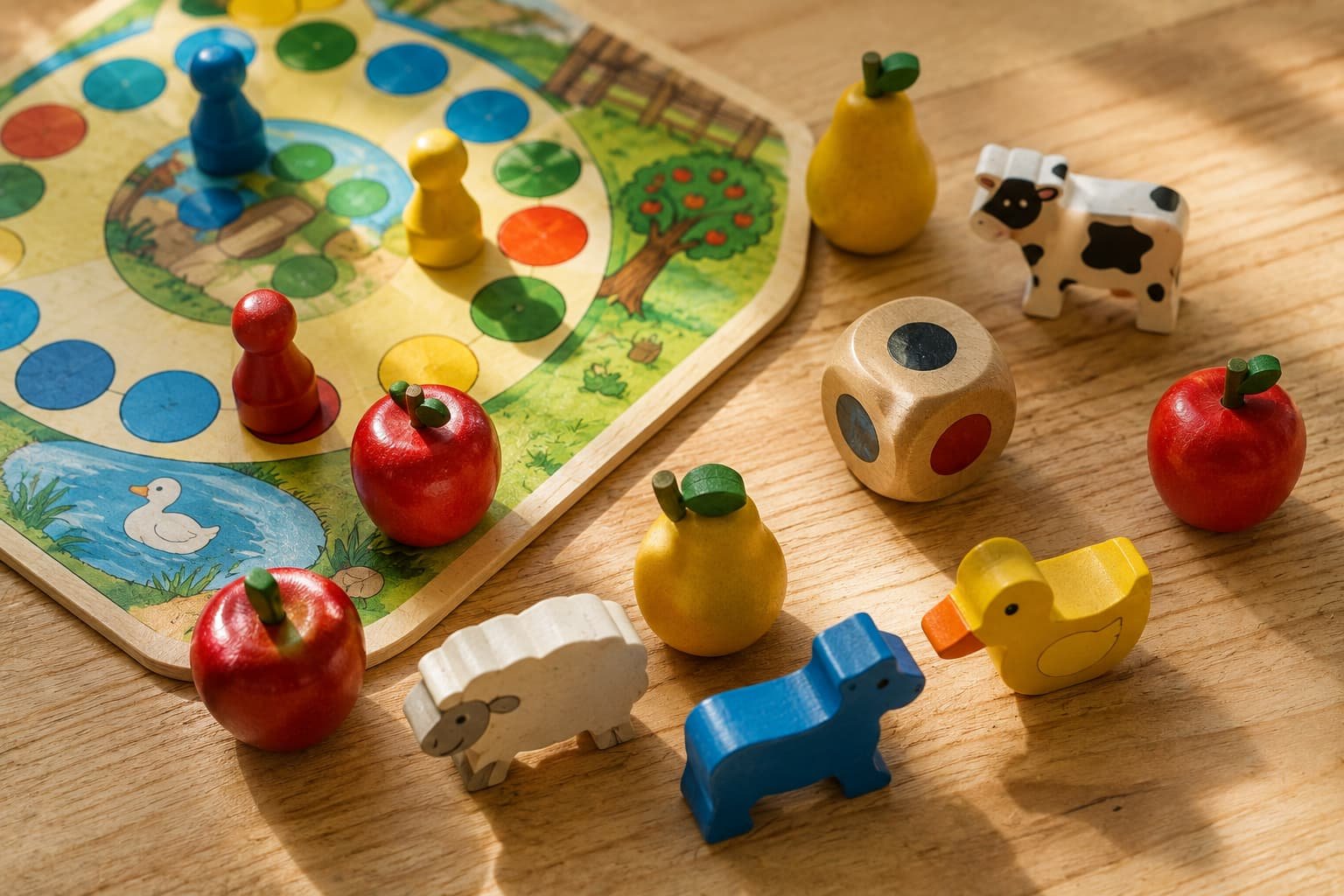
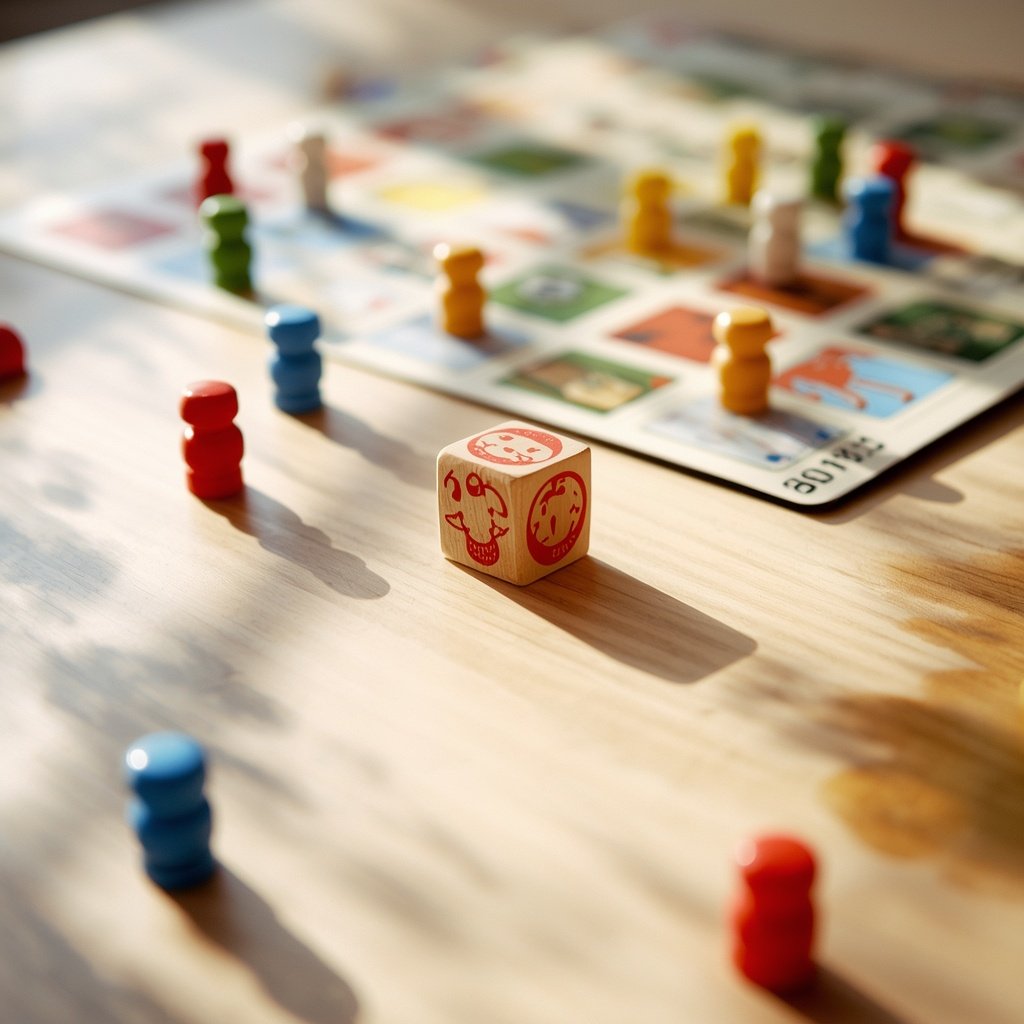
This is one of the first real board games a child can play, and it’s the most reliable first purchase on this list. Everyone works together to pick fruit from four trees before a raven reaches the orchard gate. Roll the color die, pick that fruit. Roll the raven, move the raven one step closer. If the fruit is in the basket before the raven arrives, everyone wins.
What makes it work at this age is that there’s nothing to lose. No scores, no elimination, and a turn that lasts about four seconds. The pieces are chunky wooden fruit, which matters when you’re handing them to a toddler who still puts things in their mouth. It’s the only game here you can leave on the floor without thinking twice.
HABA has sold it since 2009, and the reason it has lasted is simple: it has children taking turns, matching colors and counting without any of that feeling like a lesson. They think they’re picking apples.
Best for: the very first game, ages 2 to 4, and keeping every session relaxed.
Skip it if: your child is closer to five, when it will feel too simple.

2. The Sneaky, Snacky Squirrel Game
Ages 3+, 2 to 4 players, about 15 minutes
Skills built: fine motor strength, color matching, hand-eye coordination
Spin the spinner, then use a pair of squirrel-shaped tongs to pick up an acorn of the matching color and fill your log. First to fill wins.
The tongs are the whole point. Every turn is a small squeeze-and-carry job, and to a three year old it is simply a squirrel collecting acorns.
It is competitive, but gently so. Games are short, the lead changes constantly, and there’s no way to attack another player. If your child is just getting used to the idea of winning and losing, this is a softer introduction than most.
The acorns are small plastic pieces, so keep an eye on younger siblings.
Best for: fine motor practice, color matching, and children who like fiddling with things.
Worth waiting on if: winning and losing is still a sensitive subject at home, in which case one of the co-ops here will land better first.
3. Count Your Chickens
Ages 3+, 2 to 4 players, about 15 minutes, cooperative
Skills built: counting, teamwork, following a sequence
The mother hen has to collect all forty of her chicks and get them back to the coop, and everyone plays on her side. Spin, move the hen to the next matching space, and gather every chick you pass along the way.
This is a co-op in its simplest form: there’s no player to lose to, only the game itself, and the rules lean toward the team winning. That sounds like a flaw, but for a three year old the point is that the whole table is on their team.
The counting is real, too. Gathering chicks one at a time and saying the numbers out loud is good counting practice, and it happens naturally rather than as a drill.
Best for: a low-pressure table, and practicing counting without it feeling like practice.
Skip it if: you want a game with real tension. There isn’t any, by design.

4. Hi Ho! Cherry-O
Ages 3+, 2 to 4 players, about 15 minutes
Skills built: counting up and down, number recognition
Spin, pick that many cherries off your tree and drop them in your bucket. Land on the dog or the bird and some cherries go back. First to empty their tree wins.
This one has been in print since the 1960s, which tells you it works. The counting is the entire game: your child picks up two cherries, then three, then puts four back, and by the end of a few rounds they’ve done more number practice than any worksheet would manage.
Two things to weigh up. It’s fully competitive, so someone finishes last. And the setbacks, where cherries go back on the tree, are the moments most likely to take the shine off an otherwise happy session. Plenty of three year olds take that in their stride, and some find it genuinely deflating. You’ll know which yours is.
Worth noting that the cherries are very small pieces, the smallest on this list, so this is one to keep off the floor if there’s a baby in the house.
Best for: counting practice and families who want the classic.
Worth waiting on if: losing ground mid-turn tends to upset your child. It lands much better a few months later.

5. Feed the Woozle
Ages 3+, 2 to 5 players, about 15 minutes, cooperative
Skills built: steady hands, counting, working as a team
The Woozle is a standing monster with an open mouth, and everyone works together to feed him twelve snacks before the snacks run out. On your turn you roll the die, load that many snacks onto a spoon, and walk them over to the Woozle’s mouth. Anything that falls off on the way stays on the floor, so a wobbly walk costs the whole team.
The rules come in three levels, so the game can get harder as your child grows. The first is just the roll, the spoon and the walk. The second adds a spinner that tells the player how to move, walking backwards, for example. The third has the player walk with their eyes closed while the rest of the table guides them.
It earns its place here for two reasons. It is cooperative, so the whole table wins or loses together, and it has three year olds up and moving rather than waiting in their seats, which suits a child who finds sitting still harder than taking turns.
Best for: active three year olds, groups of up to five, and keeping the whole table on one side.
Skip it if: you want a quiet game for a small space. This one needs room to walk.

What to Expect From a Three Year Old at the Table
Buying the right game is half of it. The other half is having realistic expectations, which no product page will give you.
- Ten to fifteen minutes is a full session. If a game claims twenty minutes, there’s a fair chance you’ll be finishing it alone. Short is a feature here, not a compromise.
- Turn-taking is the hard part, not the rules. Waiting while someone else plays is a big ask at three. Games where turns take seconds flow beautifully; games where they take a minute get restless.
- Comfort with losing arrives later. Most children settle into it somewhere between four and five. Before that, competitive games can still be lovely, they just have a rougher landing when things go wrong.
- They will want to play it eight times in a row. Buy something you can happily hear again. This is a real criterion, not a joke.
- Rules will get bent. Letting a three year old rearrange things is completely fine. At this age the win is sitting at a table together, not competitive integrity.
- Check the pieces if there’s a younger sibling. Most games in this bracket contain small parts, and a three year old will not think twice about leaving them within reach of a one year old.
Frequently Asked Questions
Can a 3 year old really play board games?
Yes, as long as the game is built for it. A three year old can roll a die, match a color, count a few objects and take a short turn. Waiting a long time, keeping score, and shrugging off a loss usually come a little later. Games designed for this age keep those parts small or leave them out.
Cooperative or competitive at this age?
Cooperative is the safer bet. When everyone plays on the same side there’s no losing player, which removes the most common reason a session with a preschooler winds up early. Competitive games still work, and many three year olds enjoy them, they just ask a bit more of everyone.
Are these games safe for a toddler in the house?
My First Orchard is, with large wooden pieces designed for two year olds. The others carry a 3+ rating partly because they contain small components, so if you have a younger child who still mouths things, either supervise or keep those boxes on a high shelf.
What if the box says 3+ but it looks too hard?
Trust your instinct over the box. Age ratings are broad guidance and vary between publishers, and they tend to assume a confident, older three year old. There’s no harm at all in buying something rated 2+ for a three year old, and it will usually get played more.
How long should a game for this age last?
Ten to fifteen minutes. Anything longer leans on unusual patience. Shorter games also get played more often, which is what you actually want.
Which one should I buy first?
My First Orchard, if you’re starting from nothing. It’s the gentlest introduction, it works from two years old, and there’s nothing in it that can go sideways socially.
Final Verdict
The best board game for a three year old is the one that ends before their attention does, and that doesn’t lean on skills they’re still growing into.
My First Orchard is the one to buy first. It works from two, it’s cooperative, and a round is over in ten minutes.
The Sneaky, Snacky Squirrel Game is the next one to buy, once a loss no longer upsets your child: short, gently competitive, and built around tongs that give small hands something to do on every turn.
Feed the Woozle is the pick for a child who would rather move than sit, and its three levels give it room to grow.
Where to Go Next
Three is a fast-moving year, and the right box changes quickly.
If your child is not quite there yet, our list of board games for 2 year olds covers the ones that work before turn-taking has really landed.
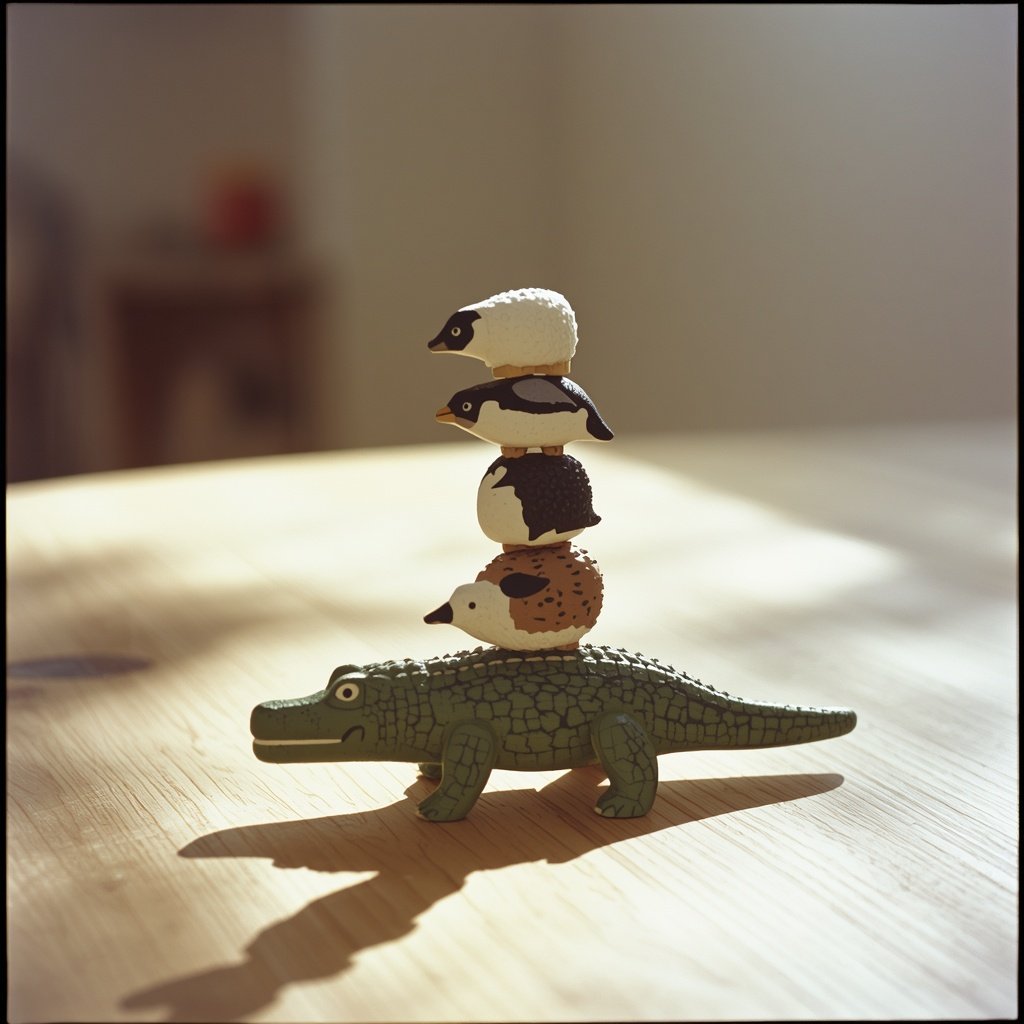
If they are already ahead of this list, our list of board games for 4 year olds is the next rung, and it is where you will find Animal Upon Animal, the wooden stacking game rated 4+.
If you want the whole picture, our guide to board games by age explains what actually changes at two, three, four and five, and why the age on the box is only half the answer.
As an Amazon Associate, BoardGame Journey earns from qualifying purchases. This comes at no additional cost to you and helps support more in-depth board game reviews and guides.