Most lists of board games for 3 year olds are really lists of games rated 3 and up, which is not quite the same thing. A box can say 3+ and still ask a child to wait several turns, keep track of a score, and take losing in their stride. Three year olds vary enormously in which of those they’re ready for.
So this list is sorted by what a three year old can comfortably manage. Four of the five are designed squarely for that age. The fifth is the one they grow into next, and I’ve flagged that clearly rather than stretching the truth.
One thing worth knowing before you buy anything: at this age, cooperative games tend to give a smoother experience than competitive ones. Handling a loss is something that usually clicks between four and five. A game where everyone wins together sidesteps that question entirely, which is why three of the five here are co-ops. Competitive games can absolutely work at three, they just come with a bit more risk of the evening ending early.
A quick note on small parts. A 3+ rating is not only about difficulty. It often exists because the box contains pieces too small for younger children, and plenty of homes with a three year old also have a toddler crawling nearby. Of the games here, only My First Orchard has pieces chunky enough not to think about it. The rest contain small components, so it’s worth a look in the box before it becomes a free-for-all on the living room floor.
As an Amazon Associate, BoardGame Journey earns from qualifying purchases.
Quick Comparison
| Game | Age on box | Players | Time | Type |
|---|---|---|---|---|
| My First Orchard | 2+ | 1 to 4 | 10 min | Cooperative |
| The Sneaky, Snacky Squirrel Game | 3+ | 2 to 4 | 15 min | Competitive, gentle |
| Count Your Chickens | 3+ | 2 to 4 | 15 min | Cooperative |
| Hi Ho! Cherry-O | 3+ | 2 to 4 | 15 min | Competitive |
| Animal Upon Animal | 4+ | 2 to 4 | 15 min | Dexterity |
The Quick Answer
- Just turned three, or still learning to take turns? My First Orchard.
- Want them building fine motor skills without noticing? The Sneaky, Snacky Squirrel Game.
- Prefer to keep the mood light every time? Count Your Chickens.
- Want the classic your parents played? Hi Ho! Cherry-O.
- Nearly four and ready for more? Animal Upon Animal.
1. My First Orchard
Ages 2+, 1 to 4 players, about 10 minutes, cooperative
Skills built: turn-taking, colour recognition, early counting
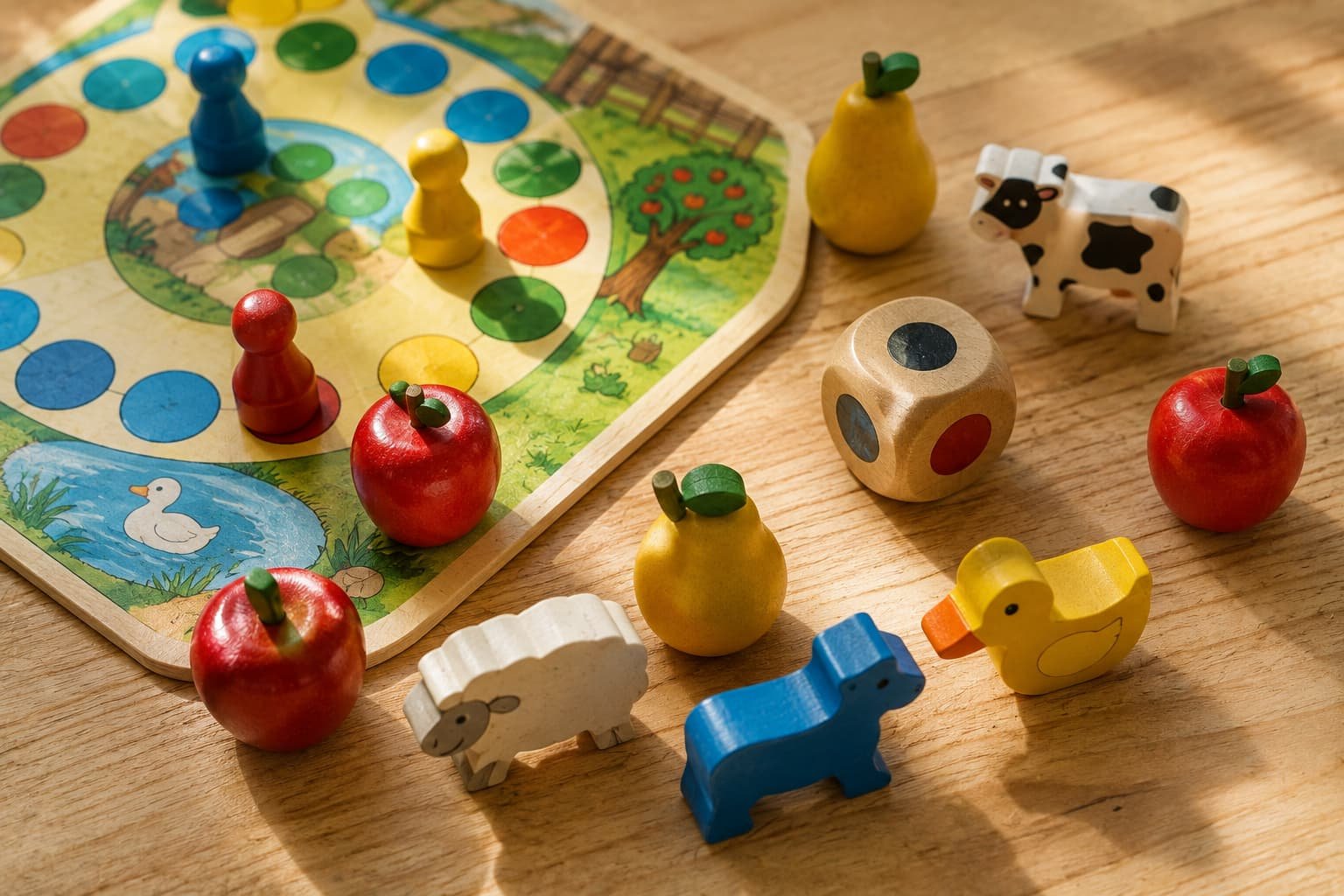
This is the first real board game most children can play, and it’s the safest purchase on this list. Everyone works together to pick fruit from four trees before a raven reaches the orchard gate. Roll the colour die, pick that fruit. Roll the raven, move the raven one step closer. If the fruit is in the basket before the raven arrives, everyone wins.
What makes it work at this age is that there’s nothing to lose. No scores, no elimination, and a turn that lasts about four seconds. The pieces are chunky wooden fruit, which matters when you’re handing them to a toddler who still puts things in their mouth. It’s the only game here you can leave on the floor without thinking twice.
HABA has been selling this for close to forty years, and the reason is simple: it teaches turn-taking, colour recognition and counting without any of that being visible to the child. They think they’re picking apples.
Best for: the very first game, ages 2 to 4, and keeping every session relaxed.
Skip it if: your child is closer to five, when it will feel too simple.
2. The Sneaky, Snacky Squirrel Game
Ages 3+, 2 to 4 players, about 15 minutes
Skills built: fine motor strength, colour matching, hand-eye coordination
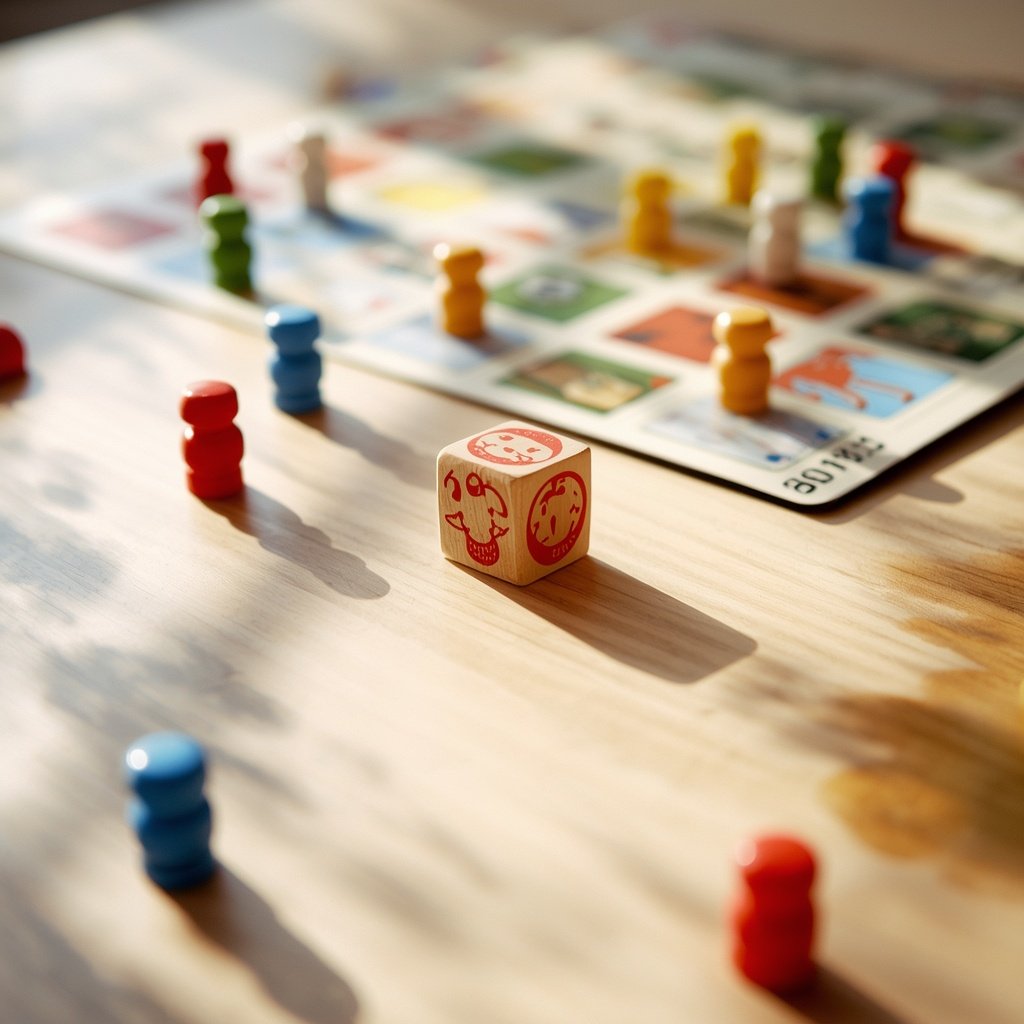
Spin the spinner, then use a pair of squirrel-shaped tongs to pick up an acorn of the matching colour and fill your log. First to fill wins.
The tongs are the whole point. Squeezing them builds the same pincer grip a child needs later for holding a pencil, and no three year old has ever noticed this is happening. It’s a game that turns up often in occupational therapy recommendations for exactly that reason, and it’s also the one children ask to play again.
It is competitive, but gently so. Games are short, the lead changes constantly, and there’s no way to attack another player. If your child is just getting used to the idea of winning and losing, this is a softer introduction than most.
The acorns are small plastic pieces, so keep an eye on younger siblings.
Best for: fine motor practice, colour matching, and children who like fiddling with things.
Worth waiting on if: winning and losing is still a sensitive subject at home, in which case one of the co-ops here will land better first.
3. Count Your Chickens
Ages 3+, 2 to 4 players, about 15 minutes, cooperative
Skills built: counting, teamwork, following a sequence
The mother hen has to collect all forty of her chicks and get them back to the coop, and everyone plays on her side. Spin, move the hen to the next matching space, and gather every chick you pass along the way.
This is the purest cooperative game here. There’s no player to lose to, only the game itself, and the design is forgiving enough that you usually win. That sounds like a flaw until you’ve watched a three year old realise the whole table is on their team.
The counting is real, too. Gathering chicks one at a time and saying the numbers out loud is exactly the practice that early maths needs, and it happens naturally rather than as a drill.
Best for: a guaranteed good mood at the table, and practising counting without it feeling like practice.
Skip it if: you want a game with real tension. There isn’t any, by design.
4. Hi Ho! Cherry-O
Ages 3+, 2 to 4 players, about 15 minutes
Skills built: counting up and down, number recognition
Spin, pick that many cherries off your tree and drop them in your bucket. Land on the dog or the bird and some cherries go back. First to empty their tree wins.
This one has been in print since the 1960s, which tells you it works. The counting is the entire game: your child picks up two cherries, then three, then puts four back, and by the end of a few rounds they’ve done more number practice than any worksheet would manage.
Two things to weigh up. It’s fully competitive, so someone finishes last. And the setbacks, where cherries go back on the tree, are the moments most likely to take the shine off an otherwise happy session. Plenty of three year olds take that in their stride, and some find it genuinely deflating. You’ll know which yours is.
Worth noting that the cherries are very small pieces, the smallest on this list, so this is one to keep off the floor if there’s a baby in the house.
Best for: counting practice and families who want the classic.
Worth waiting on if: losing ground mid-turn tends to upset your child. It lands much better a few months later.
5. Animal Upon Animal
Ages 4+, 2 to 4 players, about 15 minutes
Skills built: steady hands, spatial reasoning, patience
Being straight with you: the box says 4+, and that rating is fair. It’s here because it’s the game your child grows into next, and because plenty of steady-handed three year olds manage it happily with a bit of help.
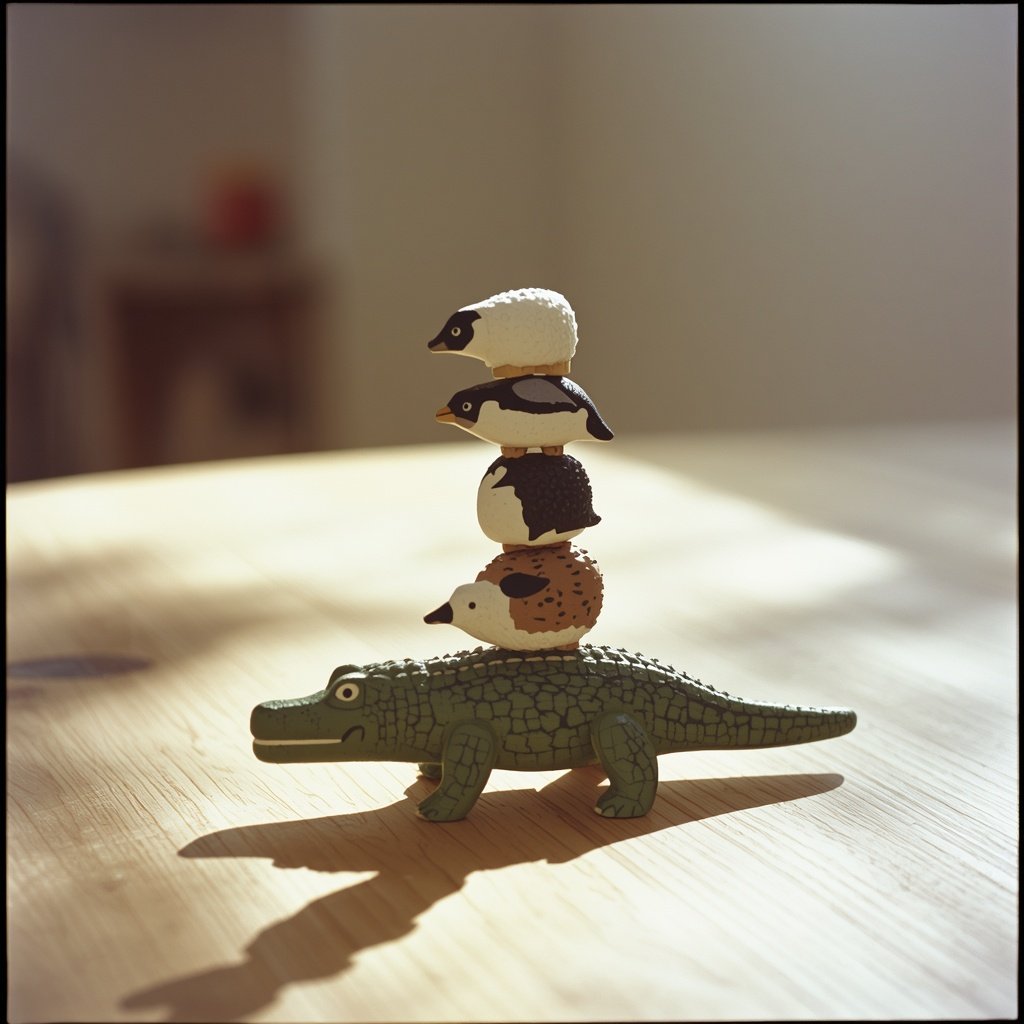
You take turns stacking beautifully made wooden animals into a wobbling tower, rolling a die to decide how many and which way. Knock the tower over and you take pieces back. It’s tactile, it’s tense in the best way, and adults genuinely enjoy it, which is rarer than it should be in this category.
What makes it a good next step is that it stays interesting. A four year old plays it for the wobble, a seven year old plays it for the strategy of where to place a difficult piece, and it doesn’t get put away when the toddler shelf gets cleared out.
Best for: children approaching four, and families who want a game that lasts several years.
Worth waiting on if: your child is newly three. Come back to it in a few months and it’ll click.
What to Expect From a Three Year Old at the Table
Buying the right game is half of it. The other half is having realistic expectations, which no product page will give you.
- Ten to fifteen minutes is a full session. If a game claims twenty minutes, there’s a fair chance you’ll be finishing it alone. Short is a feature here, not a compromise.
- Turn-taking is the hard part, not the rules. Waiting while someone else plays is a big ask at three. Games where turns take seconds flow beautifully; games where they take a minute get restless.
- Comfort with losing arrives later. Most children settle into it somewhere between four and five. Before that, competitive games can still be lovely, they just have a rougher landing when things go wrong.
- They will want to play it eight times in a row. Buy something you can happily hear again. This is a real criterion, not a joke.
- Rules will get bent. Letting a three year old rearrange things is completely fine. At this age the win is sitting at a table together, not competitive integrity.
- Check the pieces if there’s a younger sibling. Most games in this bracket contain small parts, and a three year old will not think twice about leaving them within reach of a one year old.
Frequently Asked Questions
Can a 3 year old really play board games?
Yes, as long as the game is built for it. A three year old can roll a die, match a colour, count a few objects and take a short turn. Waiting a long time, keeping score, and shrugging off a loss usually come a little later. Games designed for this age simply leave those parts out.
Cooperative or competitive at this age?
Cooperative is the safer bet. When everyone plays on the same side there’s no losing player, which removes the most common reason a session with a preschooler winds up early. Competitive games still work, and many three year olds enjoy them, they just ask a bit more of everyone.
Are these games safe for a toddler in the house?
My First Orchard is, with large wooden pieces designed for two year olds. The others carry a 3+ rating partly because they contain small components, so if you have a younger child who still mouths things, either supervise or keep those boxes on a high shelf.
What if the box says 3+ but it looks too hard?
Trust your instinct over the box. Age ratings are broad guidance and vary between publishers, and they tend to assume a confident, older three year old. There’s no harm at all in buying something rated 2+ for a three year old, and it will usually get played more.
How long should a game for this age last?
Ten to fifteen minutes. Anything longer leans on unusual patience. Shorter games also get played more often, which is what you actually want.
Which one should I buy first?
My First Orchard, if you’re starting from nothing. It’s the gentlest introduction, it works from two years old, and there’s nothing in it that can go sideways socially.
Final Verdict
The best board game for a three year old is the one that ends before their attention does, and that doesn’t lean on skills they’re still growing into.
My First Orchard is the one to buy first. It works from two, it’s cooperative, and a round is over in ten minutes.
The Sneaky, Snacky Squirrel Game is the one to buy alongside it, because the tongs quietly build the hand strength they’ll need for writing, and because children keep asking for it.
Come back for Animal Upon Animal in a year. It’s the one that stays on the shelf long after the others have been passed on.
Where to Go Next
Three is a fast-moving year, and the right box changes quickly.
If your child is not quite there yet, our list of board games for 2 year olds covers the ones that work before turn-taking has really landed.
If they are already ahead of this list, our board games for 4 year olds is the next rung, and it is where Animal Upon Animal properly belongs.
If you want the whole picture, our guide to board games by age explains what actually changes at two, three, four and five, and why the age on the box is only half the answer.
As an Amazon Associate, BoardGame Journey earns from qualifying purchases. This comes at no additional cost to you and helps support more in-depth board game reviews and guides.