
Every guide to buying board games for children sorts by the number on the box.
That number is real, and it is doing a job. But it is measuring one thing, and parents are usually trying to answer a different one.
The box is telling you whether your child can follow the rules.
What you actually need to know is whether your child can lose.
The Two Ladders, and They Move at Different Speeds
A child climbs two separate staircases in these years, and almost nobody separates them.
The rules ladder. Can they take a turn? Can they wait for yours? Can they follow an instruction with two steps in it? This is the one the box measures, and it moves fairly predictably.
The losing ladder. Can they watch somebody else win and stay at the table? This one moves at its own pace, and it is almost never in sync with the first.
That gap is why so many game nights go wrong. A bright four year old can absolutely follow the rules of a game rated six, and still put their head on the table when they lose it. The rules were never the problem.
So the honest way to shop is to buy for the lower of the two ladders, not the higher one. Below is what each year actually changes, and which of our lists matches it.
Age Two: Can They Take a Turn at All?
At two, losing usually lands softly or not at all, which is why almost every good game at this age simply avoids it. Plenty of two year olds still mind when the raven wins. Losing together is easier than losing alone, not absent.
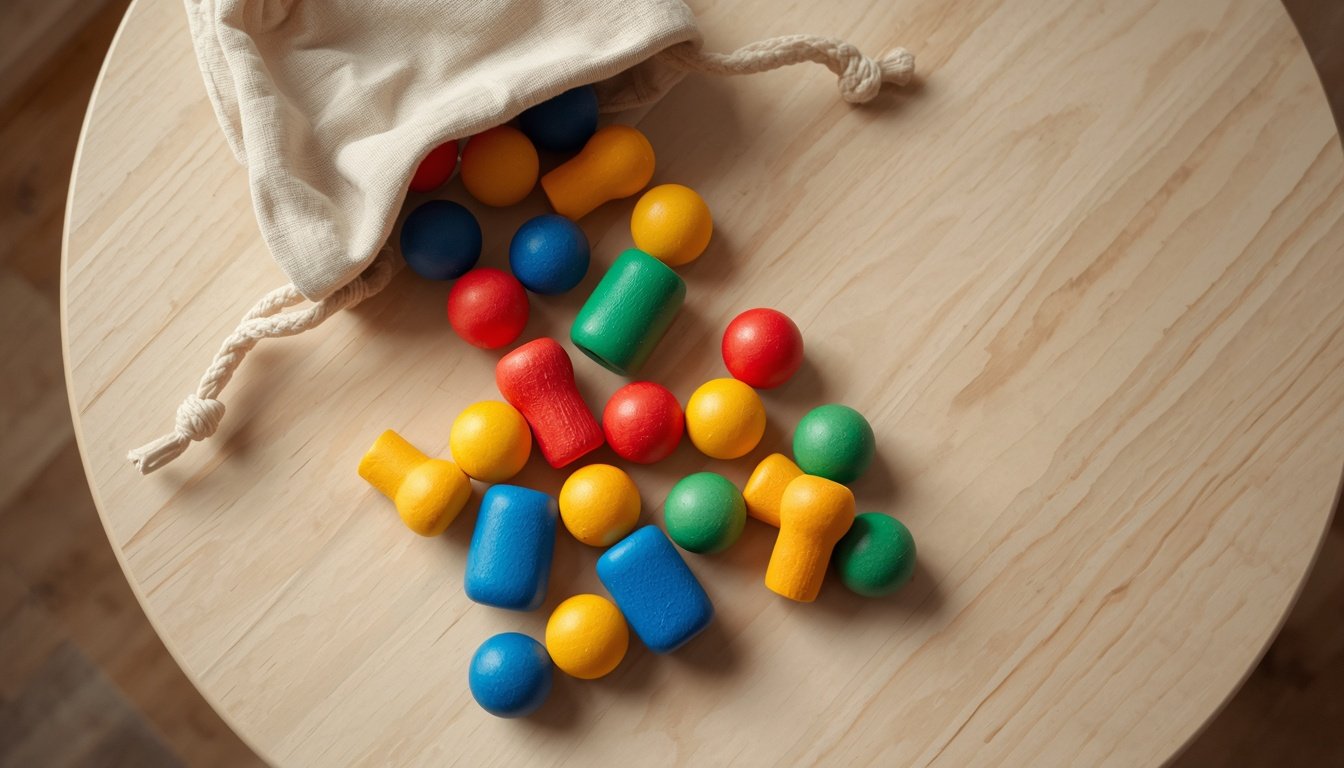
The whole category is cooperative or barely competitive on purpose. You are teaching one thing: that a turn belongs to someone, then it belongs to someone else, and waiting is survivable. That is genuinely difficult at two, and it is the entire curriculum.
What that means when you shop: at two, the outcome matters much less than the taking of turns. Most of the good boxes at this age have no winner at all, and the one that does on our list, a simple race, is flagged there as the pick for a child closer to three.
Our board games for 2 year olds list is built entirely around boxes actually rated 2+, which is a smaller set than the internet suggests.
The one to start with: First Orchard. It is cooperative, the pieces are chunky fruit, and everybody either beats the raven or does not.

Age Three: Can They Accept That Somebody Won?
Three is where a winner appears, and where the design of the game starts doing emotional work.
The good games at this age are almost all luck. That is not laziness. If the game is decided by a spinner or a die, then losing is not a verdict on the child. Nobody outplayed them. The spinner did it.
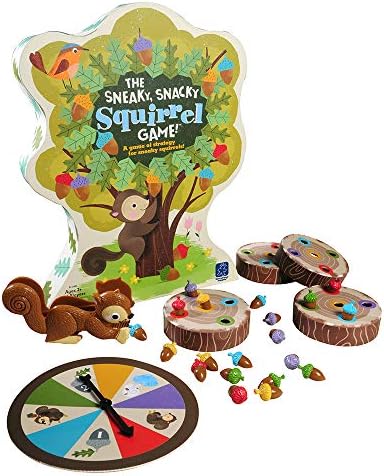
That distinction is the whole reason Hi Ho! Cherry-O and The Sneaky, Snacky Squirrel Game have survived for decades while cleverer games for this age have not.
What that means when you shop: at three, luck is a feature. A game with real decisions in it will produce a real loser, and three is early for that.
Our board games for 3 year olds list covers the five that hold up.
The one to start with: that list opens with First Orchard, which is also the age two pick above, because the same box grows with the child. If you already own it, start instead with The Sneaky, Snacky Squirrel Game: colour matching, a spinner, and a squirrel-shaped pair of tweezers that does more for fine motor skills than most toys sold for that purpose.
Age Four: Can They Lose Without the Evening Ending?
Four is the hardest year, and it is the one most guides skip past.
The child can now follow real rules. They can also now understand, properly and painfully, that they lost. Those two arrive together, and the second one is louder.
What changes at four is not what the child can do. It is what the game has to do for them. A good four year old game handles losing in one of three ways: it removes losing entirely by making everyone one team, it makes the loss slapstick so the whole table laughs, or it makes the loss cost about two minutes so the rematch is immediate.
Our board games for 4 year olds list is organised around exactly those three strategies, because at four the mechanism matters more than the theme.
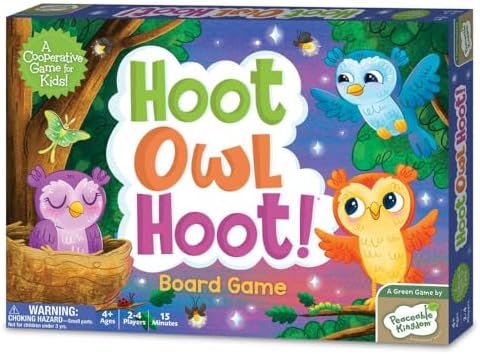
The one to start with: Hoot Owl Hoot!, which is where that list opens for a reason. It is cooperative, so at the hardest year for losing, nobody loses alone. Save My First Carcassonne, the fourth pick on that page, for when your child starts asking for a game with real decisions in it.
Age Five: Can They Hold Two Steps, and Lose to a Better Player?
Five is where both ladders finally meet.
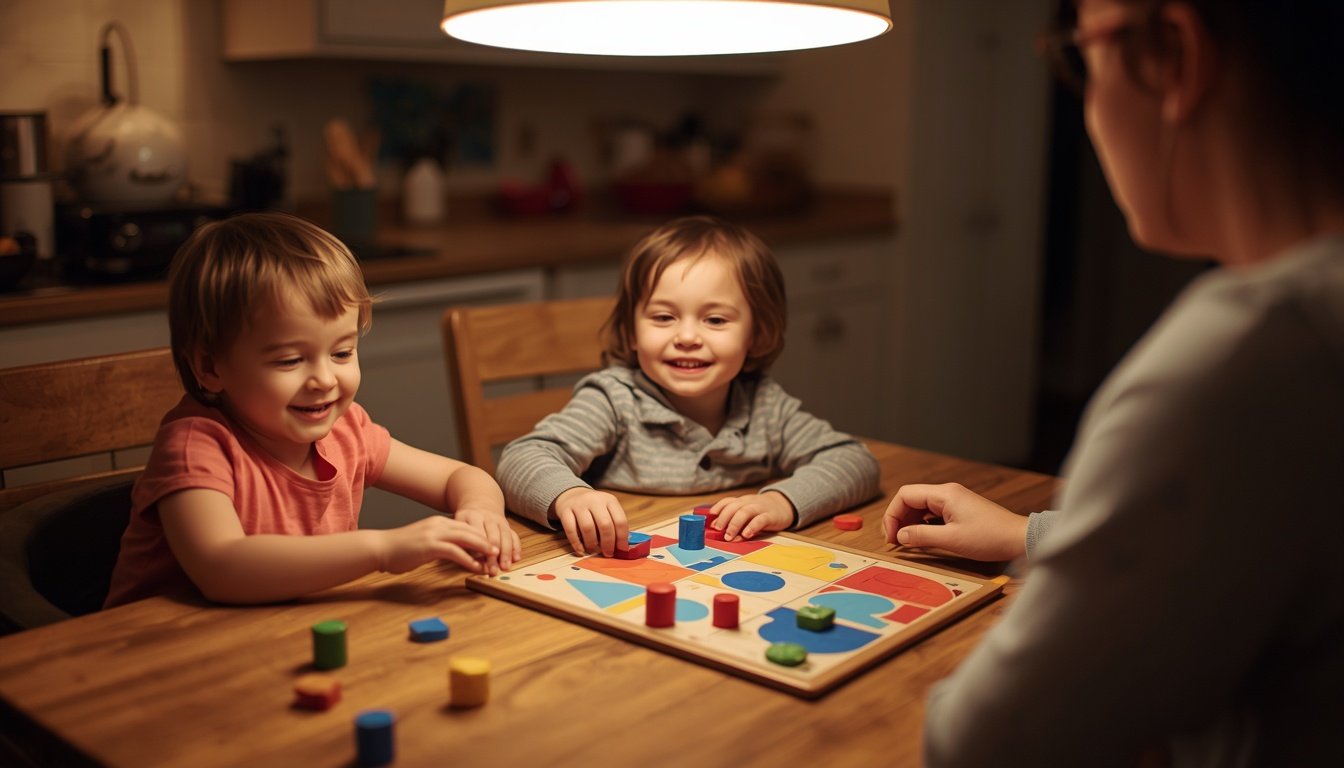
On the rules side, an instruction can have two steps now. “Roll, move that many, then check what you landed on” survives the whole game rather than falling apart at turn three.
On the losing side, a defeat can be followed by “again” rather than by someone leaving the table. Not always, and not for every child. But often enough that competitive games become possible.
That combination is what unlocks deduction, dexterity under pressure, and games where the adult does not have to quietly play badly.
Our board games for 5 year olds list is chosen against those two shifts rather than against a marketing age.
The one to start with: Dragomino. It won the Kinderspiel des Jahres in 2021, it is the children’s version of Kingdomino, and it is the pick most likely to still be played at seven.

The Two Games That Appear Twice, and Why That Is Useful
Across our four lists, two games show up in more than one year. That is not an oversight. They are the bridges, and they are the safest purchases on this whole page.
First Orchard appears at two and at three. At two it is a cooperative game about taking turns. At three the same box is a game about colours and a little bit of tactics, because the child starts noticing which fruit is running out.
Animal Upon Animal appears at three and at four. At three it is a stacking toy with rules attached. At four it becomes a game you can genuinely lose, which is exactly when it starts teaching the thing the four year old list is about.
If you are buying for a child who sits between two ages, or you have two children a year or two apart, those are the boxes that stretch.
The Two Mistakes, and They Are Opposites
Buying a year early is the famous one. The child cannot hold the rules, the adult ends up playing for them, and the box goes in the cupboard with a bad memory attached to it.
Buying a year late is quieter and just as common. Nothing visibly goes wrong. The child plays it, enjoys it, and never asks for it again, because the game gives them nothing to be good at. Children notice that faster than adults expect.
If the games from last year have gone quiet in your house, that is usually not a child losing interest in board games. It is a child who has finished with those particular ones.
How to Tell Which Ladder Your Child Is On
Two questions, and you probably already know the answers.
For the rules ladder: when you explain something with two steps in it, does the second step survive? Not the first time, but by the third or fourth turn.
For the losing ladder: when they lose, what is the next sentence out of their mouth? “Again” and “that is not fair” are different years, and they are not always the years on the box.
Buy for the lower answer. A child who can handle the rules of five but the losing of three will have a better evening with a game rated three, and everybody at the table will too.
Frequently Asked Questions
What age should a child start playing board games?
Around two, with cooperative games that have no winner. The skill being learned at that age is taking a turn and waiting for someone else to take theirs, which does not require a game to be competitive.
Are the ages on the box reliable?
They are reliable about rules complexity and choking hazards, and they are silent about temperament. That is not the publisher being careless. It is that they can measure one and not the other.
My child is advanced. Can we skip ahead a year?
On the rules ladder, often yes. On the losing ladder, rarely, and that is the one that decides how the evening goes. Reading early does not make losing easier.
What if I have children two years apart?
Look at the two bridge games above, or at cooperative games generally, because a game where everybody is on the same team removes the age gap instead of highlighting it. Worth knowing that it is usually the older child’s losing ladder that sets what the house can play, not the younger child’s rules ladder.
What comes after five?
Six, and it is a real step rather than a rounding error. Around six a plan starts surviving a turn that goes badly, which is what makes longer and more decision-heavy games possible. Our board games for 6 year olds list is chosen against that shift.
Somewhere around eight, most families move into games adults want to play too. Our board games for 8 year olds list is the next step up, and it is where the children’s shelf and the family shelf start overlapping. After that, our top 10 entry-level board games stops being organised by age at all.
Where to Start
If your child is two, buy First Orchard and do not overthink it. It is the default first board game for a reason.
If your child is three or four, the specific box matters less than whether the game handles losing in a way your particular child can take. Our lists for three and four are both organised around that rather than around themes.
If your child is five, buy Dragomino, because it is the one on any of these lists that they will still be choosing in two years.
Which age did board games finally click in your house? Tell us in the comments below.
As an Amazon Associate, BoardGame Journey earns from qualifying purchases. This comes at no additional cost to you and helps support more in-depth board game reviews and guides.