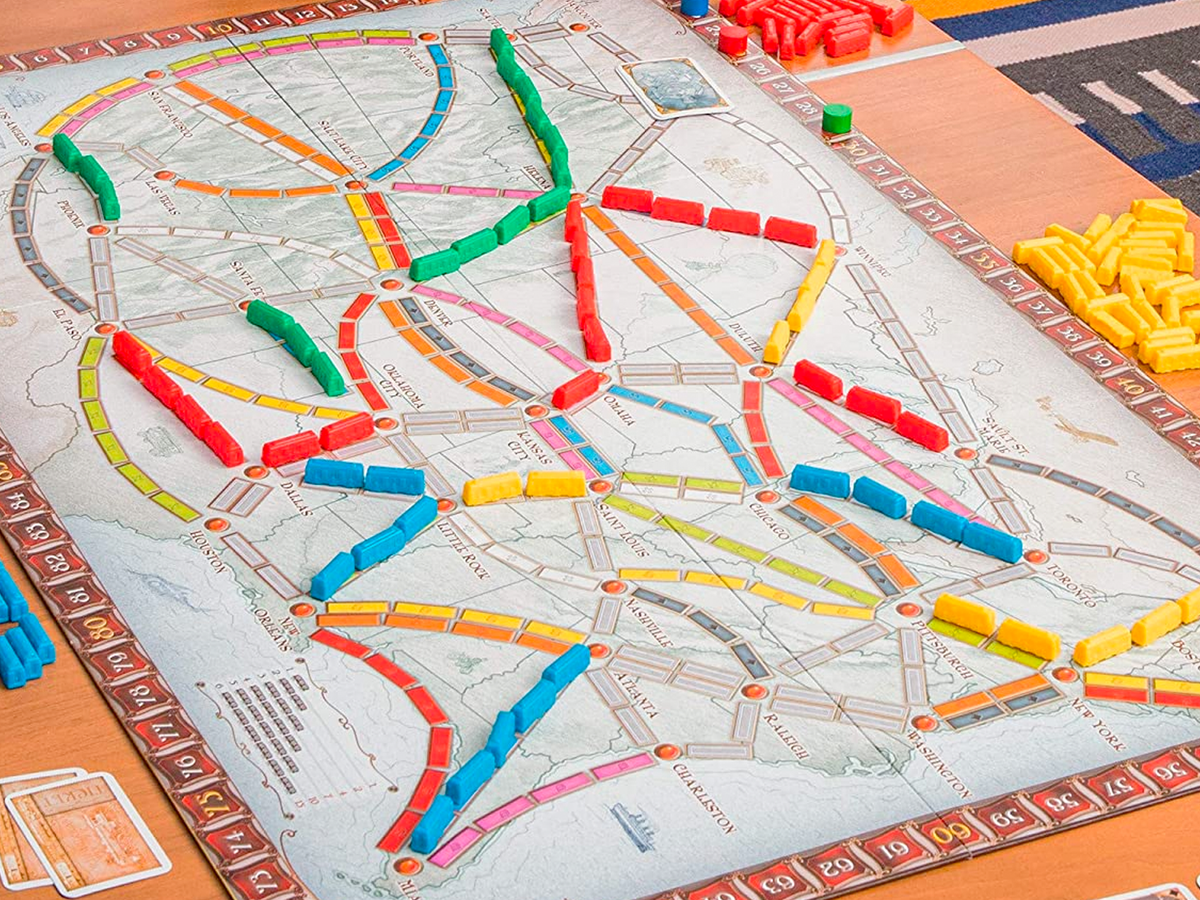
The Experience
Imagine racing across a map of North America, trying to connect New York to Los Angeles before your friends cut you off. The tension doesn’t come from complicated rulebooks or math; it comes from looking at your opponent’s eyes and wondering, “Are they going to take the route I need?”
Ticket to Ride is widely considered the king of “Gateway Games.” It transforms the terrifying idea of learning a new board game into a relaxing, colorful, and surprisingly cutthroat experience. It replaces the boredom of Monopoly with fast-paced strategy and the simple joy of placing little plastic trains on a map. If you want to introduce someone to the hobby, this is where you start.
As an Amazon Associate, BoardGame Journey earns from qualifying purchases.
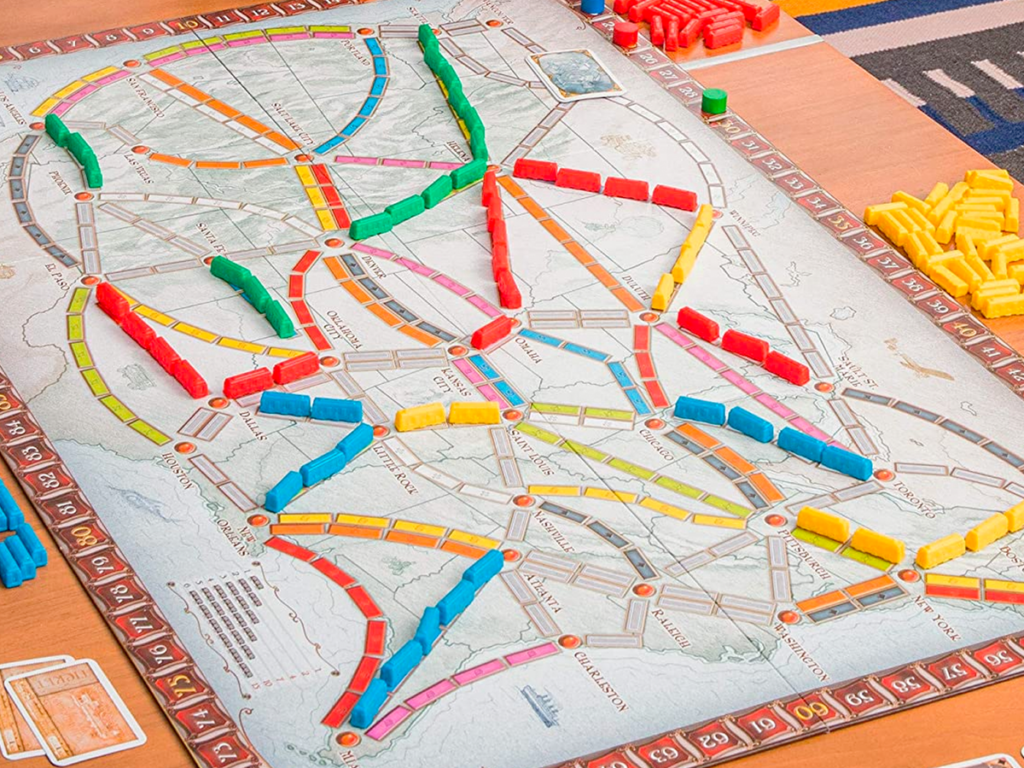
Quick Stats Table
| Feature | Details |
| Player Count | 2-5 Players |
| Play Time | 30–60 Minutes |
| Age Rating | 8+ |
| Learning Curve | Three actions on your turn, about 5 minutes to teach |
How to Play This Board Game
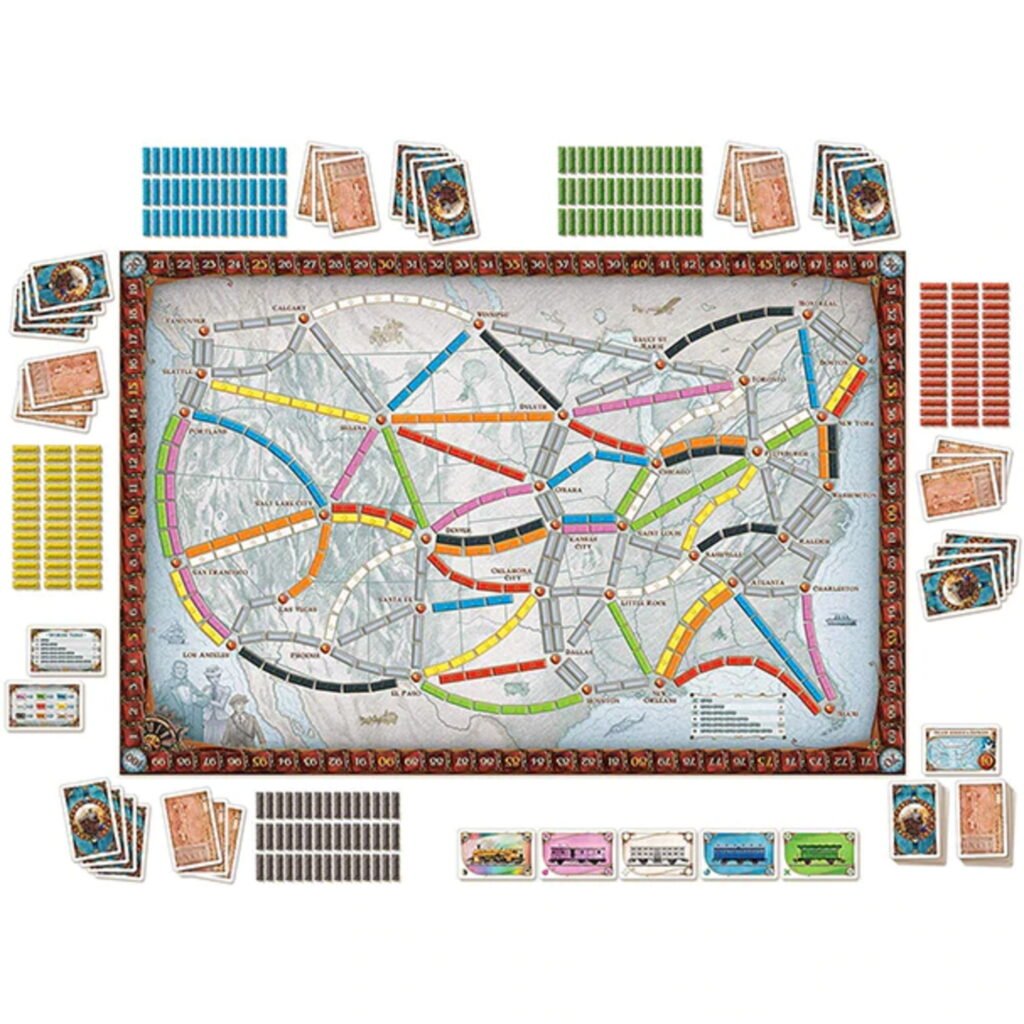
The best part about Ticket to Ride is that you can teach it while you are setting up the table. On your turn, you do just one of three things:
- Draw Cards: Pick up two colored Train Car cards from the market (or the deck).
- Claim a Route: Play a set of matching cards (e.g., 4 Blue cards) to place your trains on a blue route on the board and score points.
- Draw Tickets: Pick up new Destination Tickets (secret goals like “Miami to Seattle”). If you complete them, you get big points. If you fail, you lose points!
If you want the full rules, including the ones tables argue about, we wrote them out in our complete Ticket to Ride rules guide.

Who Is This Board Game For?
This game is for anyone who claims they “don’t like board games.”
- For Families: The colors help younger kids (8+) understand the matching mechanics instantly, and the map teaches a bit of geography without feeling like school.
- For Couples: It plays surprisingly well at 2 players, becoming a tight tactical duel where blocking your partner is a valid (if dangerous) strategy.
- For Hosts: If you are hosting a dinner party, this is the perfect after-dinner activity. It keeps people chatting and laughing without requiring total silence to think.
Pros and Cons
Here is the breakdown of why it works, and what to watch out for.
- Pro: Beautiful Table Presence. The colorful map and the tactile feel of the plastic trains make the game look inviting immediately.
- Pro: Fast Turns. You usually know exactly what you want to do. Turns take seconds, so no one gets bored waiting.
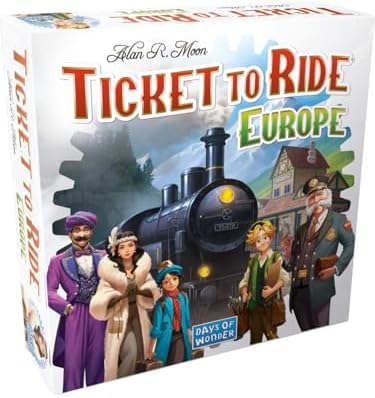
- Con: The “Take That” Element. In the USA map, players can easily block you, ruining your plans. If your group hates aggressive blocking, buy Ticket to Ride: Europe instead. It adds Stations, which let you use an opponent’s route when you are locked out.
- Con: Tiny Cards. The original version comes with very small cards that are hard to shuffle. The USA 1910 Expansion fixes it, replacing the deck with standard-sized cards and adding new objectives. Note that 1910 is an expansion and needs this box to work, which is true of more Ticket to Ride products than most people expect. We sorted out which ones in our guide to Ticket to Ride Map Collections and the base game each one needs.
Why It Belongs on Your Shelf
Every home needs a copy of Ticket to Ride. It is the universal language of board gaming. When you have guests over who aren’t “gamers,” you pull this off the shelf, and within 45 minutes, they will be asking to play again.
It belongs on your shelf because it is timeless. It manages to be relaxing and tense at the same time, making it the perfect board game to bridge the gap between casual fun and serious strategy.
FAQ
Is Ticket to Ride hard to learn?
No. It is one of the easiest modern games to learn. If you can match colors (like in Rummy or Uno), you already understand the core mechanic. It takes about 5 minutes to explain.
Which version is better: Ticket to Ride USA or Europe?
The USA version is simpler and more aggressive, making it better for beginners who want a fast game. Ticket to Ride: Europe is slightly more complex (adding tunnels and stations) and is better for players who want more options to avoid getting blocked.
Is Ticket to Ride good for 2 players?
Yes, it is very good. While the map is large, the game scales by closing off double-routes, forcing players into conflict. If two players is your only table, the small-box Ticket to Ride: London is the in-print alternative: Days of Wonder sells it as a standalone game, and the listing puts it at 2 to 4 players, ages 8 and up, in 10 to 15 minutes, on a map small enough that you are competing from the first turn. Ticket to Ride: Nordic Countries, the 2-3 player box usually recommended here, has drifted out of print and is hard to buy new. For the same Scandinavian map at up to 5 players, look at Ticket to Ride: Northern Lights instead.

If you’d like to learn about another great entry-level game, check out our review of Catan.
Short routes or long ones? The scoring table answers it: a six-space route is worth more than six one-space routes, and it costs you one turn instead of six. The risk is that somebody claims it first.
As an Amazon Associate, BoardGame Journey earns from qualifying purchases. This comes at no additional cost to you and helps support more in-depth board game reviews and guides.