
Black Friday is a good time to buy board games. It is also the week when the most people pay full price for something they think is discounted, buy an expansion believing it is a game, or end up with an edition that does not work where they live.
None of that is bad luck. Every one of those outcomes comes from something visible on the listing, if you know which part to look at. Most of this page is about the looking, so it is worth the same in November as it is in March. There is also a short list of games worth watching, if you want somewhere to start.
As an Amazon Associate, BoardGame Journey earns from qualifying purchases.
Black Friday 2026: The Dates
Thanksgiving falls on Thursday, November 26 this year, so Black Friday is Friday, November 27 and Cyber Monday is Monday, November 30. Amazon has run its Black Friday deals over a longer stretch than the day itself in recent years, so check the dates on its own deals page rather than assuming the sale lasts one day.
Games Worth Watching This Black Friday
If you want somewhere to start, these are eight well established games that stay in print and in stock most of the year, so their price history is long enough to judge a discount against. The cards show the current Amazon price. Run each one through the four checks further down before you buy.
Ticket to Ride
2 to 5 players, ages 8 and up. The usual first modern board game: a race to claim train routes across a map of the United States. If you are choosing between this and Catan, see Ticket to Ride vs Catan.

Catan
3 to 4 players, ages 10 and up. Trading and building on an island that is laid out differently every game. It is also the line where buying the wrong box is easiest, so read which Catan box to buy first.

Codenames
A word game for two teams, at its best with four or more players. The usual pick for a party or a big family table, and our Codenames review covers who it suits.

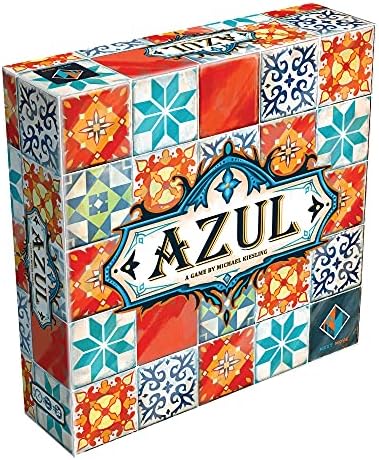
Azul
2 to 4 players, ages 8 and up. A tile drafting game that is recommended for couples as often as for families. More in our Azul review.
Sky Team
Exactly 2 players, ages 12 and up. A cooperative game where the two of you land a plane together without talking about your dice. It is one of our quick board games for couples.

Splendor
2 to 4 players, ages 10 and up. Collect gems, buy cards and build up an engine in about half an hour. Our Splendor review has the detail.

Cascadia
1 to 4 players, ages 10 and up. Build a landscape of habitats and wildlife, with no direct conflict between players. It is one of our picks in board games like Ticket to Ride.

Sushi Go!
2 to 5 players, ages 8 and up. A small card game that fits in a stocking, which makes it an easy add on to a bigger order. More in small board games adults enjoy too.

Start With the Price History, Not the Discount
The percentage on a listing is calculated against a reference price, and that reference is not the same thing as what the game has been selling for. Amazon uses two kinds. A List Price is the recommended retail price supplied by a manufacturer or seller, and Amazon says it only displays one when the product has been bought or offered at that level recently. A Was Price is calculated by Amazon itself, from the median price customers actually paid over the previous ninety days.
Amazon tightened both of those rules during 2026, with stricter validation for supplied retail prices and a change that pulls the Was Price down when a product has spent much of the last three months discounted. That is a real improvement. It still does not mean the badge on the page answers your question, because a reference price can be accurate and the discount against it can still be ordinary.
The way to know is to look at the price itself over time, which takes about fifteen seconds. CamelCamelCamel is a free Amazon price tracker you use in a browser, with nothing to install. Paste the product link into it, or search the product name, and you can see what that item has cost over time.
Three things on that chart are worth reading:
- The average over the last three months. A useful baseline for what the game has actually been selling for. If the sale price sits at or above that baseline, the discount is not doing much.
- The all-time low. If the current price is close to it, the offer is a strong one. If the low sits well below what you are being shown, the price has been cheaper before, so this discount is not exceptional.
- A rise shortly before the sale. A sharp increase in the weeks before a sale event makes the advertised saving look larger than the recent price history supports.
One thing worth knowing about the tool: CamelCamelCamel earns affiliate commission on purchases made through its own links. That does not change the data, which comes from Amazon’s price record, but it explains why the site is free.
Keepa is another option if you want more detail, including third-party seller prices. For checking one box before you buy, the simpler tool is enough.

The Four Listing Traps
Price is only half of it. The other half is buying the wrong object, and these four account for most of it.
1. The expansion that looks like a game
This is one of the easiest expensive mistakes to make in the hobby, and it happens because expansions carry the base game’s name at the front of their title, the same logo and the same style of box art.
An expansion needs its specific base game. Not a related one, not another game in the same series. Buy the wrong pairing and the box opens into something you cannot play.
How to check: look for the words Core Game, Base Game or Standalone, and read the component list for a rulebook and a board or tiles. If the title has a subtitle after a colon, read the listing properly rather than assuming the box stands alone. When a listing says it requires anything, believe it.
The wrinkle: some boxes are described as a standalone expansion, which sounds like a contradiction and is not. It means the box plays on its own but also combines with a related game. Those are complete games, and the component list will show it.
For a worked example of this, our guide to Ticket to Ride Map Collections goes through a whole product line where every box carries the game’s name and none of them plays on its own.
Catan has the same problem: four expansions and a player extension for each box, none of which plays without the base game. Our guide to which Catan box to buy sorts them out.
2. The edition from another country
Board games are published market by market, and the boxes look nearly identical. Search results do not respect borders, especially during a sale week when sellers push inventory from wherever they have it.
Usually the difference is language, and a box of cards you cannot read is a box you will not play. Occasionally it goes further: games that depend on an app or a streaming service can have content tied to the market they were sold in, and cards from a foreign edition may not play at all.
How to check: open the product details, not the title, and look for an edition or a country. If nothing is stated anywhere on the listing, treat that as a question rather than an answer. If the publisher or distributor name is unfamiliar for a game you know, check which market that edition was made for.
The clearest case we have written up is which Hitster edition to buy, where the publisher states outright that cards from another market may not play.
3. The listing with no real offer
Some listings look alive and are not. A page with several sizes or versions in a dropdown is a parent listing, holding a family of related products, and the price you see belongs to whichever variation the page selected for you. Pick a different one and the offer can disappear.
Others show no Amazon offer at all, only third-party sellers, sometimes well above the normal price. During a sale week those listings sit alongside genuine ones and look no different.
How to check: add it to the cart. That single step tells you whether there is an offer, what it actually costs, and who is selling. If the page shows no featured offer, or the only sellers are third parties at an odd price, close the tab.
4. The box that is out of print
A discontinued game does not vanish from search. It keeps its listing, keeps its reviews, and keeps appearing in results long after the publisher has stopped making it.
What becomes less certain is everything behind the box: future expansions, replacement components, and sometimes continued support for an app the game depends on.
How to check: look at the publisher’s own store. A game that has disappeared from their catalog is a stronger signal that it may be discontinued than a sold out badge on a retailer page, though it is not proof, since catalogs also change for licensing and distribution reasons. It does not mean you should not buy it. It should change what you are willing to pay.
Two Things That Are Not Traps
Worth saying, because a guide like this can make everything look like a scam.
A small discount is still a discount. Board games rarely move as far as electronics do. A modest reduction on a game you already wanted is a normal, honest outcome, and waiting for a dramatic drop that never comes is its own kind of loss.
Third-party sellers are not automatically a problem. Plenty of them are ordinary retailers with real stock. The warning sign is not the seller, it is a price that does not match the product’s own history, which brings you back to the chart.

The Four Checks, in Order
Before you buy anything during a sale week, four questions, and they take about a minute together:
- Is this the base game? Read past the first few words of the title, and check the component list for a rulebook and a board or tiles.
- Is this the edition for my country? Open the product details and look for a language, a region or a local publisher.
- Who is actually selling it? Add it to the cart and look at the seller and the final price.
- Does the price match its own history? Check the chart against the three month baseline and the all-time low.
Decide What to Buy Before the Sale Starts
The single biggest saving is not a percentage. It is walking in with a list.
Sale weeks are built to make you choose quickly, and quick choices are how people end up with three cheap boxes that get opened once instead of one game that gets played thirty times. If you already know what you want, the traps above are much easier to spot, because you are checking a specific listing rather than browsing.
Our guides are a reasonable place to build that list from:
- Top 10 entry level games, if you are starting a collection from nothing.
- Small board games adults enjoy too, for small boxes with real decisions in them, three of which fit in a stocking.
- Quick board games for couples and escape room games that work with two players, if the table is usually two people.
- Which Exploding Kittens to buy, if it is usually a full room. The Party Pack takes up to ten players.
- The best EXIT games to start with, if the person likes puzzles, and our guide to EXIT Advent calendars, which start on December 1.
- Which Risk game to buy, if you know someone wants Risk but not which box.
- Board games for non-gamers, for the person who says they do not like board games.
- Ticket to Ride vs Catan, if you are choosing a first big game, and board games like Ticket to Ride if they already own it.
- Our Christmas board game gift guide, if you are buying for someone else, sorted by who they are.
- Classic board games and which ones still hold up, if you are buying nostalgia.
Frequently Asked Questions
When is Black Friday 2026?
Friday, November 27, the day after Thanksgiving on November 26. Cyber Monday is November 30. Retailers often start their deals earlier in the week, so the useful prices can appear before the Friday itself.
Are board games actually cheaper on Black Friday?
Some are. The category does not discount as steeply as electronics, and a listing can show a reduction against a reference price rather than against what the game has been selling for. Comparing the sale price to its own recent history is the only way to tell which is which.
How do I check if an Amazon discount is real?
Look the product up on a free price tracker such as CamelCamelCamel and compare the sale price to the three month baseline and the all-time low. That tells you more than the crossed-out price on the listing.
Are Black Friday deals worth waiting for?
Sometimes. The useful question is not whether the page says Black Friday, but whether the current price is low against the game’s own recent history. If it is near the all-time low, waiting gains you little.
How can I tell if a board game is an expansion?
Read past the first few words of the title and check the component list. Expansions lead with the base game’s name and usually add a subtitle. A complete game lists a rulebook and a board or tiles, while an expansion often lists only cards or miniatures.
Is it safe to buy from a third-party seller?
Often, yes. Judge the price against the product’s own history rather than judging the seller. A third-party price well above the normal range usually means there is no proper offer on that listing.
What is the most common mistake people make?
Buying an expansion instead of a base game. It is the one that ends with an unplayable box rather than simply wasting a little money.
Where This Leaves You
Check the chart before the badge. Read the component list before the title. Add it to the cart before you trust the price. And know what you want before the week starts, because the sale is designed to decide for you.
None of that is specific to one November. It is how to buy a board game online at any time of year, which is the only reason this page is worth keeping.
As an Amazon Associate, BoardGame Journey earns from qualifying purchases. This comes at no additional cost to you and helps support more in-depth board game reviews and guides.


One thought on “Black Friday Board Game Deals 2026: How to Spot a Real One”
Comments are closed.