Search Amazon for Ticket to Ride and a lot of what comes back will not play on its own.
The Map Collections look like games. They carry the name, the artwork and the same box shape. They are expansions, and Days of Wonder says so on their own page for the range: they require an original copy of Ticket to Ride or Ticket to Ride Europe to play.
If you already own one of those two, a Map Collection adds new maps to a game you can already play. If you do not, buying one is buying a board you cannot use.
As an Amazon Associate, BoardGame Journey earns from qualifying purchases.
The Short Answer
| Are Map Collections standalone games? | No. Every one needs a base game. |
| Which base game? | Ticket to Ride or Ticket to Ride Europe, per the publisher |
| What comes in one? | A board and destination tickets, plus whatever that map needs |
| What has to come from your base game? | The plastic trains, the train card deck and the scoring markers |
| Buying your first box? | Buy a base game, not a collection |
What Is Actually in the Box
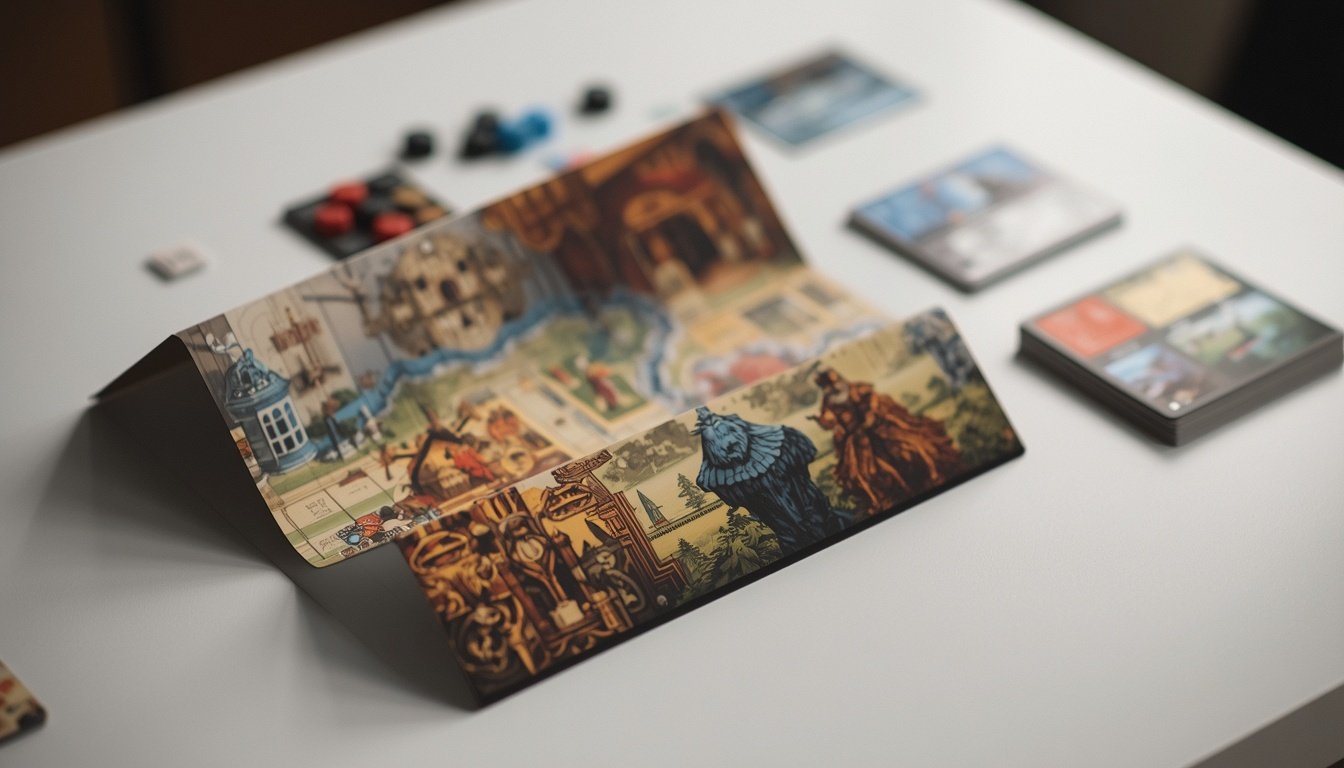
A Map Collection is a board, a set of destination tickets, a rules booklet, and whatever extra pieces that particular map needs. Some boxes hold two maps on one double-sided board, and some hold a single map.
What has to come from somewhere else is the equipment: the colored plastic trains, the deck of train car cards and the scoring markers. That is why the publisher requires a base copy, and it is the whole reason a collection bought on its own does not work.
Component lists do vary between boxes, and some collections include extra cards of their own, so read the list on the back before assuming what is in there.
Start Here If You Do Not Own One Yet
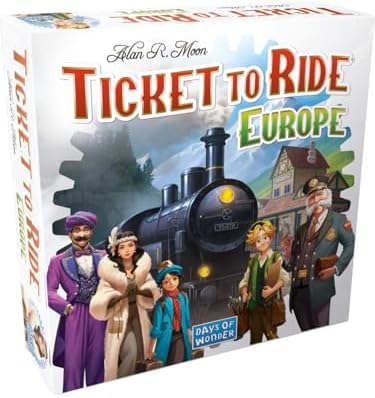
Two boxes qualify as the base game the collections ask for. If you are buying your first Ticket to Ride, buy one of these and nothing else.
Ticket to Ride
The original North America map, 2 to 5 players, and the game that won the Spiel des Jahres in 2004. It is the simplest version of the system: collect cards of one color, spend matching sets to claim routes, connect the cities on your tickets. No tunnels, no ferries, no stations.
If someone at the table has never played, this is the one to start on. Our complete Ticket to Ride rules guide walks through setup, the three actions and the rules most groups get wrong.

Ticket to Ride Europe
A separate complete game rather than an expansion, and the publisher names it as the other box the collections accept. Europe adds tunnels, which can cost you more cards than you expected, ferries that need locomotives, and train stations that let you borrow somebody else’s route.
Those additions are why a lot of people own Europe rather than the original. They are also why it is slightly harder to teach.
The Map Collections, One by One
A note on names before the list. The publisher’s own page lists these collections by place name rather than by number, while the boxes and most retail listings still carry a volume number. Both refer to the same range, and either one tells you that you are holding an expansion.
Asia: Team Asia and Legendary Asia
The one to look at if you want team play. Team Asia is played in teams of two, so it seats four or six rather than any number in between, and each pair shares a cardholder that either teammate can draw from and use. You keep a private hand as well, so the game becomes about what you choose to make available to your partner.
Legendary Asia, on the other side of the board, is the conventional map of the pair: everyone plays for themselves, and mountain routes cost you a train car permanently when you claim them.

India and Switzerland
India introduces the Grand Tour: complete a destination ticket by a route that forms a loop and you score it twice. Switzerland is the small, tight map of the pair, built for fewer players and for tickets that name countries rather than cities.

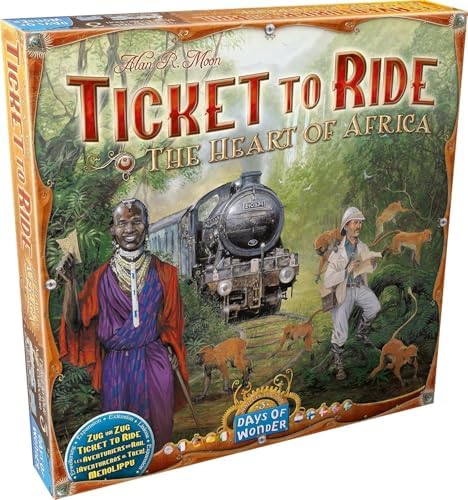
The Heart of Africa
A single map rather than a pair, and the one that changes how you spend cards. Certain routes are terrain routes, and playing extra cards of the matching color on them scores you bonus points. It rewards hoarding a color rather than spending the moment you can.
Nederland
Also a single map, built around bridge tolls. Routes carry a toll you pay in coins, and the player who has paid the least is rewarded at the end. It is the collection where the cheap route is not automatically the good one.

United Kingdom and Pennsylvania
The United Kingdom map starts you unable to build most of the board, and you spend money on technology upgrades through the game to unlock regions and abilities. Pennsylvania adds shares in railway companies, so claiming a route also decides which company you gain a stake in.
Of the whole range, this is the pair we would call the biggest departure from the base game. That is a judgement rather than a rule.

France and Old West
France makes you lay the track before you can claim it, on a map that starts mostly empty, and what you lay can then be used by your opponents as well. Old West handles up to six players, each starting from a home city, and includes the Roswell Mystery for players who want a target beyond points.
If your table is regularly six people playing individually, this is the one.

Japan and Italy
Japan is the one with a shared network, which is unusual for this series but does not make it a cooperative game. Some routes belong to the Bullet Train network, and once a player claims one it becomes available to everybody for completing tickets. The players who invested most in it score a bonus at the end, so you are still competing, while deciding how much to build something your opponents will also use.
Italy is built around regions and a new kind of ferry route, scoring you extra for connecting cities across different regions in one network. The publisher lists this box as 2 to 5 players, with 54 destination tickets and an oversized double-sided board.

Iberia and South Korea
One of the newest in the range, covering the Iberian Peninsula and South Korea. We have not read the rules booklet for this one, so we are not going to tell you what it changes. What we can say is that the publisher lists it as a Map Collection like the rest, so it needs a base game.

Poland
The one most lists of this range leave out, and a single map rather than a pair. The publisher puts you in the role of a railway magnate in 1950s Poland, running routes from the Gulf of Gdansk down to the mountain trails around Zakopane.
We have not read this booklet either, so we are not going to describe its rules. It is on the publisher’s Map Collection page, which means it needs a base game like the others.
How to Tell an Expansion From a Game on the Shelf
There is one check that works every time and a few that help.
- Look for the plastic trains in the component list. This is the reliable one. A base game lists colored plastic train cars and a deck of train car cards. An expansion lists a board and destination tickets.
- Look for the words Map Collection or Expansion. They are usually in the listing title, just not at the front where you would see them.
- Look for a volume number. Map Collection Volume anything is an expansion, every time.
The check that does not work is counting place names. It is tempting to assume that two countries joined by “and” means an expansion and a single name means a complete game, and it is wrong in both directions. The Heart of Africa, Nederland and Poland are single-name expansions.
Two groups of boxes are complete games despite sitting next to the collections:
- The city boxes. Berlin, London, New York, San Francisco and Paris are standalone games that play in about fifteen minutes and need nothing else.
- The other standalone maps. Germany, Nordic Countries, Northern Lights, Rails and Sails and Legends of the West are full games rather than collections, even though they are named after places the same way.
Frequently Asked Questions
Do I need the original Ticket to Ride or Ticket to Ride Europe?
Either one, according to the publisher’s own page for the range. Individual maps can be more specific about which they expect, and the number of trains a map needs is not always the same, so check the back of the box for the one you are buying.
Can I play a Map Collection on its own?
No. The plastic trains, the train card deck and the scoring markers come from your base game. Without one you have a board and a stack of tickets.
Which Map Collection should I buy first?
If your group is regularly six people playing individually, France and Old West. If you want team play, Asia, which seats four or six in pairs. If you want the biggest change to how the game plays, United Kingdom and Pennsylvania. If you want two more maps without learning much that is new, India and Switzerland.
Are the 1910 and 1912 expansions the same thing as a Map Collection?
No. Those are card expansions rather than new maps, and they are tied to a specific base game: 1910 to the original and 1912 to Europe. They add destination tickets and alternative ways to play on the map you already own.
Is Ticket to Ride Europe an expansion?
No. Europe is a complete game and does not require the original. It is one of the two boxes the Map Collections accept as a base game.
How many Map Collections are there?
Nine are listed on the publisher’s Map Collection page: Asia, India, the United Kingdom, Nederland, the Heart of Africa, Poland, Japan, France and Iberia. Retail listings usually add a volume number and the name of the second map in the box. Anything not on that page, like Germany or Nordic Countries, is a standalone game rather than a collection.
Where to Start
If you own nothing yet, buy Ticket to Ride or Ticket to Ride Europe. A Map Collection bought first is a board you cannot play.
If you own a base game and your table is big, buy France and Old West for six players individually, or Asia if you want to play in pairs.
If you own a base game and want the system to feel different, buy United Kingdom and Pennsylvania. The technology upgrades change what a turn is for.
If you want a short game rather than a bigger one, skip the collections entirely. The city boxes are complete games in fifteen minutes, and they are covered in our quick board games for couples list.
As an Amazon Associate, BoardGame Journey earns from qualifying purchases. This comes at no additional cost to you and helps support more in-depth board game reviews and guides.


One thought on “Ticket to Ride Map Collections: What You Need Before You Buy One”
Comments are closed.