The Street Fighter film lands on October 16, 2026, and a certain kind of person is going to walk out of it wondering whether that feeling exists on a table.
It does, but not where you would expect, and the games built most deliberately to capture it are not the ones Amazon will show you.
As an Amazon Associate, BoardGame Journey earns from qualifying purchases.
First, What Actually Makes a Fighting Game
Strip away the characters and the health bars and a fighting game runs on one thing: you commit before you know what the other person chose. You throw the attack, they throw the block, and both decisions were made blind. The skill is not in reflexes alone. It is in reading a person.
Very few board games do this. Most games that call themselves battles are take turns, roll, react. That is a fine design, and it is not the same feeling at all.
So the useful question is not which board games have fighters on the box. It is which ones reproduce the blind commitment.
The Two Easiest to Buy
Both are in print and easy to find. They go after the fighting game feeling from opposite directions, and only one of them gives you the blind read. The difference decides which one belongs on your table.
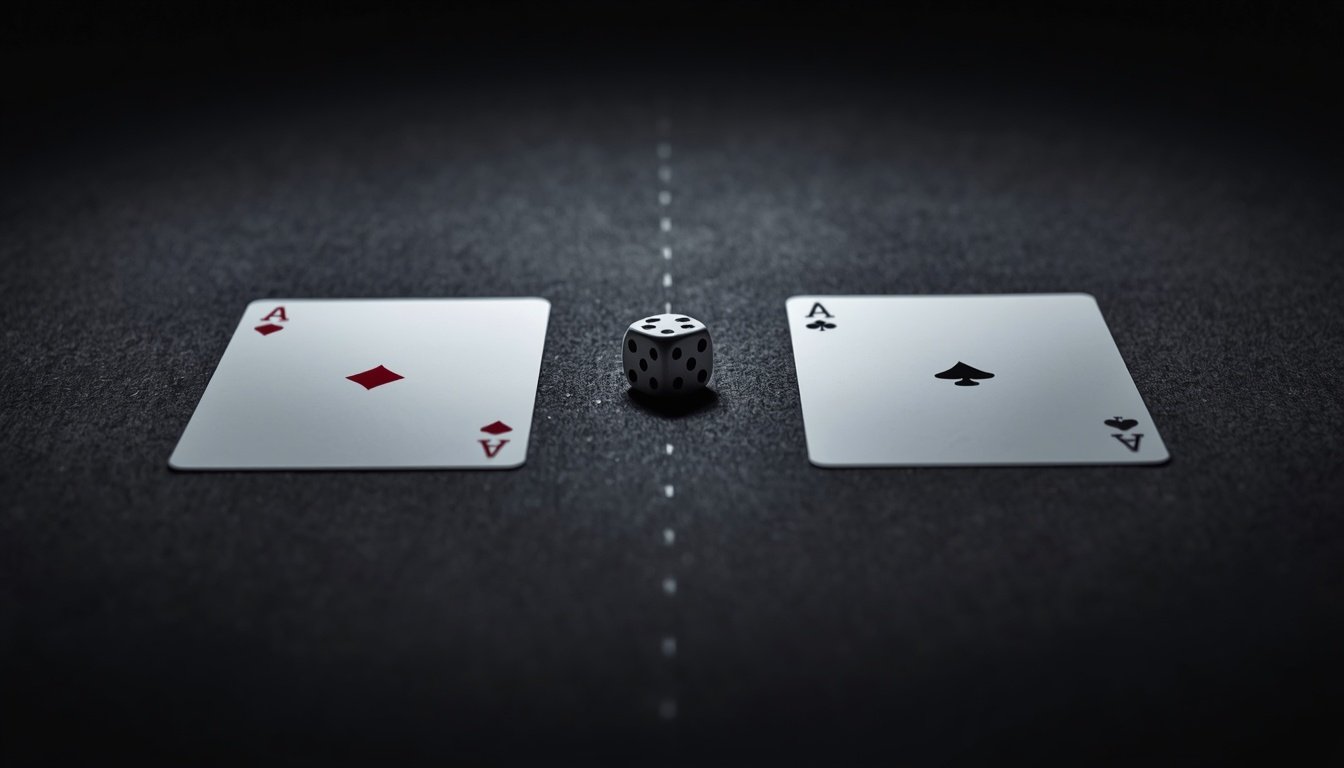
Unmatched: The One That Nails the Blind Read
Restoration Games describes Unmatched as an asymmetrical miniatures dueling game with tactical movement and no-luck combat resolution. That second half is the important part, and the rulebook backs it up: there are no dice in a fight.
Here is what happens when you attack, straight from the rules:
“As the attacker, you must choose an attack card from your hand and play it face down in front of you… Then the defender may (but is not required to) choose a defense card from their hand and place it face down in front of them… Once both players have chosen their cards, reveal them at the same time.”
That is the fighting game moment, printed in a rulebook. You pick your card not knowing theirs. They pick theirs not knowing yours. Damage is your attack value minus their defense value, and everything else is what each card does on top.
How a turn works
You take exactly two actions per turn and you cannot skip. You may take the same one twice. The three options are:
- Maneuver. Draw a card, which is mandatory, then optionally move your fighters.
- Attack. The face down reveal described above.
- Scheme. Play a scheme card face up for its effect.
Hand limit is seven at end of turn. Melee fighters can only hit an adjacent space; ranged fighters can hit anyone in the same zone of the board. You win by reducing the opposing hero to zero health.
The rule that changes how you play
Your deck does not recycle. From the rulebook: when the deck is empty your fighters are exhausted, and if you need to draw while exhausted, “do not reshuffle your discard pile. Instead, each of your fighters immediately takes 2 damage.”
The damage only arrives once the deck is dry and you still have to draw, so this is not a timer ticking from turn one. But every card you burn to move faster is a card missing from the reveal later, and the end of the deck stops being abstract once you can see it coming. That is a real fighting game pressure: what you spend now decides what you have left.
What is in the box
Battle of Legends, Volume One holds a double-sided board with two battlefields, four hero miniatures, 120 action cards at thirty per hero, four character cards, seven health dials and six sidekick tokens. The heroes are King Arthur, Alice, Medusa and Sinbad, and the publisher sums up the four hooks like this: Arthur sacrifices cards to pump up his attacks, Alice gets big or small, changing her attack and defense, Medusa strikes from range and can kill with a single glance, Sinbad gets stronger as the game goes on.
One piece of trivia that explains a lot: the credits page says Unmatched was restored from Star Wars: Epic Duels, the Milton Bradley game designed by Craig Van Ness and Rob Daviau. If you owned that one years ago, this is where Unmatched comes from.
We looked at this box on its own in our Unmatched: Battle of Legends review.

Dice Throne: The One That Nails the Rhythm
Dice Throne comes at the fighting game feeling from the opposite side. There are dice, and plenty of them, but the publisher’s own line is “this isn’t an ordinary dice game, strategic card play puts you in control”, and the structure explains what they mean.
How a turn works
On your turn you get three roll attempts. Roll, keep what you want, roll the rest, and the official rules are explicit that nothing is locked: dice you kept on the first roll can be thrown again on the third. You are hunting a combination that activates one of your hero’s abilities.
You are also not obliged to attack. The official rules say plainly that choosing not to activate an ability is sometimes the right play.
Then, if your attack is defendable, the defender activates their defensive ability and gets one roll attempt to reduce or redirect it.
Where the interaction lives
Attack and defense are sequential here, not simultaneous, so this is not the blind read that Unmatched gives you. The interaction lives somewhere else, in the cards.
Dice Throne has two kinds of action card. Main Phase cards can only be played on your own turn. Roll Phase cards can be played during any player’s turn, which means the pressure never fully leaves you. Your opponent is rolling and you are sitting there deciding whether this is the moment to spend a card and wreck it.
That is a different tension from Unmatched. Instead of a simultaneous read, the question is when to spend the card that interrupts somebody else’s roll.

Which One Should You Buy
They are not competing for the same evening.
Buy Unmatched if the appeal is the mind game. No dice touch the fight. Every hit and every miss traces back to a decision one of you made blind. It also has the wider ceiling: the publisher says heroes and maps from any set mix freely, so the collection grows sideways instead of upward.
Buy Dice Throne if the appeal is the swing. Three rolls to assemble a combination, a defender who gets one roll back, and cards that can interrupt either player’s roll. The Gunslinger versus Samurai box is a complete two player game in its own right rather than a sampler.
If you only ever play with one particular person and you want the game that rewards learning them, it is Unmatched. If you would rather shape your luck across three rolls than read a face down card, it is Dice Throne, with one caveat: the Gunslinger versus Samurai box holds two heroes, so a bigger group means buying more of them.
The Purest Versions Are Not on Amazon
Here is the part that made this article worth writing.
The two board games designed most explicitly around fighting game theory are BattleCON and Exceed, both from Level 99 Games. They are not adaptations of a video game. They are attempts to build the simultaneous read from first principles, with attacks and responses chosen in secret and revealed together.
Neither is straightforward to buy. But they are not in the same situation as each other, and the difference is the useful part.
Exceed is in print, just not where you are looking
On September 8, 2026, four Exceed base boxes from the Seventh Cross line were listed as available to order directly from Level 99 Games: Church vs Empire, Guardians vs Myths, Hunters vs Demons, and Magic vs Monsters. Each is a complete two player game.
What we could not find was Exceed on Amazon. That includes the Street Fighter sets that put Ryu and Chun-Li on the table, which were not in the publisher’s own store either.
So if the simultaneous reveal is what you are chasing and Unmatched is not enough of it, go to Level 99 Games directly rather than a marketplace. We earn nothing from that link. We are pointing at it because it is where the game actually is.
BattleCON is the harder one
BattleCON did not appear in Level 99’s store at all on that date. Searching Amazon returned single-fighter expansions, Victor, Rheye Cal and Lucius, plus an Armory expansion, with stock counts in the low single digits on each. No base box in either place.
Stock moves, and this is exactly the kind of claim worth re-checking rather than trusting a page you found months later. That is why the date is on it.
Whichever of the two you go looking for, read the box for the words expansion or solo fighter before you buy, because that is what most of the remaining listings are.
Frequently Asked Questions
What is the best fighting board game for two players?
Unmatched, if you want the closest thing to the blind read of a video game fighter, because attack and defense cards are revealed simultaneously and no dice are involved in combat. Dice Throne if you prefer dice you can reroll and cards that interrupt the other player’s turn.
Does Unmatched use dice?
No. The publisher describes combat as no-luck resolution, and the rulebook confirms it: an attack is your card’s value minus the defender’s card value, with card effects on top.
How many players does Unmatched support?
Two to four. The rulebook covers two player games as the default and includes team play for four, with teammates sitting together and alternating turns. Some battlefields only have two starting spaces and cannot be used for team games.
Is Dice Throne random?
There is dice rolling, but you get three roll attempts per turn and you choose what to keep between them, and nothing is locked in. You also do not have to attack. The randomness is a resource you shape rather than a result you accept.
Can I play Dice Throne with more than two people?
The system supports more, and the official rules describe multiplayer turns where heroes complete the early phases simultaneously and then say “ready to attack” before resolving. The Gunslinger versus Samurai box specifically contains two heroes, so out of the box it is a two player purchase.
Where do I buy Exceed or BattleCON?
Exceed is sold directly by Level 99 Games, where four Seventh Cross base boxes were listed as available when we checked on September 8, 2026. BattleCON was not in the publisher’s store that day, and Amazon showed expansions and single-fighter packs rather than base boxes. We are not going to guess at the reason for that. For either game, the publisher or a physical game shop beats a marketplace.
Is there an Unmatched Street Fighter set?
No. Unmatched draws its heroes from myth, literature and other licenses, and Street Fighter is not among them. Level 99 Games did make Street Fighter sets for Exceed, and those were not available on Amazon or in the publisher’s store when we checked on September 8, 2026.
Is there a Street Fighter board game?
Yes. Besides the Exceed sets, Jasco Games published Street Fighter: The Miniatures Game, which uses miniatures, cards and dice. It is not covered on this page, and we have not checked its current stock, so treat any listing as something to verify before buying.
Where to Go From Here
If two players is your normal table, our guide to quick board games for couples covers boxes built for exactly that, most of which finish faster than either game here.
If this would be your first modern board game, start with our top 10 entry-level board games instead. Both games on this page assume you are comfortable reading card text mid-argument.
If the license is what brought you here, our look at licensed board games that are good games first asks the question that decides whether a branded box is worth it.
As an Amazon Associate, BoardGame Journey earns from qualifying purchases. This comes at no additional cost to you and helps support more in-depth board game reviews and guides.