
Ticket to Ride is the game people are handed when someone decides they should try modern board games properly. Three choices on your turn, only one of which you will use most of the time, and a brand new player is up and running in minutes.
The catch is what a quick teach leaves out. Wild cards, the face up row, and what a double route does at different player counts are all easy to skip, and they are exactly the things a table ends up arguing about in game four.
Everything below follows the rulebook Days of Wonder publishes for this box, and where a rule is the kind that starts arguments, this guide spells out exactly what that rulebook says so you can settle it on the spot.
As an Amazon Associate, BoardGame Journey earns from qualifying purchases.
Quick Facts
| Players | 2 to 5 |
|---|---|
| Time | 30 to 60 minutes |
| Age | 8 and up |
| Goal | Score the most points |
| Designer | Alan R. Moon |
| Publisher | Days of Wonder |

What Is in the Box
A board of North American rail routes, 45 plastic trains per player in five colors, five scoring markers, 33 tickets, one longest path bonus card, and 110 train cards: twelve each in eight colors, plus fourteen locomotives that act as wilds.
The box includes a few spare trains in each color, and the rulebook is explicit that you should start each game with exactly 45 per player. Count them once when you first open it, because your train supply is also the game’s clock.
Which Ticket to Ride this guide covers
This is the original North America map, the blue box, and everything here follows the rulebook Days of Wonder publishes for it today.
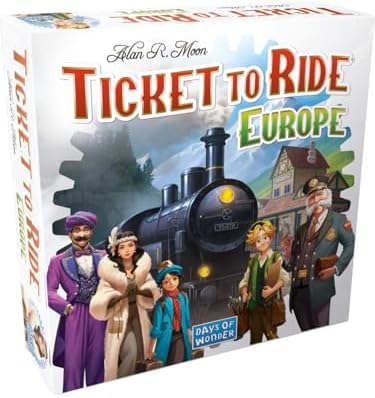
Ticket to Ride: Europe is a different box with its own booklet. It adds train stations, tunnels and ferries, and it deals tickets differently, so do not settle a Europe argument with this page. The various smaller city maps are separate games again.
There is a third category that catches people out entirely: the numbered Map Collection boxes are maps only, and they do nothing without a base game. We sorted out which volume needs which box in our guide to Ticket to Ride Map Collections and the base game each one needs.
Setup
- Board in the middle of the table.
- Each player takes 45 trains and the matching scoring marker, placed on the 0 space of the track around the edge of the board.
- Shuffle the train cards and deal four to each player.
- Put the deck near the board and turn the top five cards face up. If three or more of those five are locomotives, discard all five and turn up five new ones.
- Put the longest path bonus card face up beside the board.
- Shuffle the tickets and deal four to each player. Everyone looks at theirs in secret and keeps at least two. Returned tickets go to the bottom of the deck.
Step six is worth pausing on, because it is the number people most often have wrong. The rulebook Days of Wonder publishes today deals four and asks you to keep at least two. Ticket to Ride has been in print for two decades across a lot of printings, so if the booklet in your box says something else, go with your booklet. It is also worth knowing that this is a common point of disagreement when one person learned the game somewhere else.

Your Turn: Pick One of Three Things
This is the whole game, and it is why it teaches so fast. On your turn you do one of these, and only one.
1. Draw two train cards
Take two cards. Each can come from the five face up beside the board or blind from the top of the deck. Replace a face up card immediately after taking it.
There is one exception, and it is the one worth reading twice.
The rulebook is blunt about the face up locomotives: one of them has to be the first train card you take that turn, and taking it ends your turn there. No second card.
So a face up locomotive costs your entire turn. That wording also settles the case people argue about: because it must be your first draw, you cannot take one as your second card. If you have already drawn anything this turn, the face up locomotives are closed to you, including one that just appeared as a replacement.
The rulebook is equally clear about the other direction: a locomotive that comes off the top of the deck in a blind draw counts as one ordinary card, and you still draw your second.
The face up row refreshes itself
The three locomotive rule is not only a setup rule, and this is the version most tables miss. The rulebook applies it at any point in the game: the moment three of the five face up cards are locomotives, all five are discarded and five new ones are turned up in their place.
At any time. So if replacing a card you just took puts a third locomotive in the row, the whole row is binned and replaced on the spot. Nobody gets to sit on a locomotive-rich display waiting for their turn.
When the deck runs out
Shuffle the discards into a new deck and carry on. The rulebook warns that you should shuffle properly, because most of those cards were discarded in matching sets and will otherwise come back clumped.
There is also a genuine edge case: if there is nothing left to draw and no discard pile either, you simply cannot take the draw train cards action that turn. You must claim a route or draw tickets instead.
There is no hand limit. You may hold any number of cards.
2. Claim one route
Play a set of cards matching the color and length of the route, put one of your trains on each space, discard the cards, and move your marker up the scoring track.
How locomotives actually get used
This is what those fourteen wild cards are for, and it is the part a rules guide cannot leave out. The rulebook describes locomotives as wild cards that can stand in for any color in the set you play to claim a route.
So a five space red route can be paid with five red cards, or four red and one locomotive, or three red and two locomotives, and so on. A locomotive stands in for whatever color you are short of.
Gray routes
Gray routes are claimed with a set of any one color. The freedom is in choosing which color, not in mixing them: four blue works, four orange works, two blue and two orange does not. Locomotives still help, because they join whichever single color you picked.
You must claim the whole route in one turn, and you can only claim one route per turn, no matter how many cards you are holding.
And here is the rule people invent out of nowhere. The rulebook states plainly that you may claim any open route on the board, and that it does not have to connect to anything else you have claimed.
It is an easy assumption to make, because the game looks like it should work that way and because most network-building games do work that way. Roads in Catan must connect. Train routes here do not. You can drop a line on the far side of the continent for no reason other than that somebody else wanted it.
3. Draw three tickets
Draw three from the ticket deck and keep at least one. Note the difference from setup: four dealt and two kept at the start, three drawn and one kept during the game.
You can only discard tickets you just drew. Tickets already in your hand are yours forever, whether you finish them or not.
What Routes Are Worth
| Route length | Points |
|---|---|
| 1 space | 1 |
| 2 spaces | 2 |
| 3 spaces | 4 |
| 4 spaces | 7 |
| 5 spaces | 10 |
| 6 spaces | 15 |
Look at the shape of that. Six one-space routes cost six trains and six cards and score six points, and because you can only claim one route per turn, they also cost you six separate turns. One six-space route costs the same six trains and six cards, scores fifteen, and takes a single turn.
That is the whole strategic argument of the game in one comparison, and it is why a first-time player who spends the evening snapping up short connections can finish with an impressive-looking board and a disappointing score.
Double Routes, and the Two Player Rule Inside Them
Some city pairs are connected by two parallel routes of the same length. One player cannot take both.
The part that gets missed: in two and three player games, the rulebook allows only one of the two parallel routes to be claimed at all. Once someone takes one, the second is closed for everybody.
That single rule is most of what makes Ticket to Ride tighter and meaner with two or three people than with five.
How the Game Ends
When any player finishes their turn with 0, 1 or 2 trains left in their supply, everyone including that player gets exactly one more turn. Then it stops.
This is the timer, and it is under a player’s control rather than the deck’s. Someone burning through trains on short routes can end the game before you finish the long ticket you have been building toward.
Final scoring
- Route points, which you have been tracking all game.
- Everyone reveals their tickets. Completed ones add their value. Incomplete ones subtract it.
- The longest continuous path scores a 10 point bonus.
Two details on that bonus that decide games. The rulebook gives the full 10 points to every player tied for the longest path, so nobody misses out. And a continuous path may loop and pass through the same city more than once, but a given train can never be counted twice in it.
If players tie on points, the winner is whoever completed more tickets. Still tied, it goes to whoever holds the longest path card. Still tied after that, they share the win.

The Rules Most Groups Get Wrong
- Routes do not have to connect to your network. Any open route, anywhere, any time.
- A face up locomotive is your whole turn. One card, and you are done.
- A blind locomotive is not. Off the deck it is a normal card and you still draw a second.
- You cannot take a face up locomotive as your second card. It has to be your first draw or not at all, including one that appears as a replacement mid-turn.
- The three locomotive flush happens at any time. Not just during setup. The moment a third locomotive sits in the face up row, all five go and five new ones come out.
- Locomotives are wilds you spend on routes. They stand in for any color in the set you play to claim a route, which is the entire reason they are worth a whole turn to take.
- Gray routes need one color, not a mixture. You choose which color. You do not get to combine two.
- Setup deals four tickets and you keep at least two in the current rulebook. Check yours.
- Mid-game ticket draws are three, keep one. Different numbers from setup, which is why people muddle them.
- You cannot discard old tickets. Only the ones you just drew.
- Everyone tied for longest path gets the 10. It is not shared or withheld.
- With two or three players, a double route closes once one side is taken. With four or five, both sides stay open, but never to the same player.
- The end triggers at two trains, not zero. And everyone gets a final turn, including the person who triggered it.
Playing With Two
Unlike Catan, Ticket to Ride genuinely supports two players out of the box, and the double route rule above is what makes it work. Closing the second parallel line keeps the map scarce, so two people are still fighting over the same spaces instead of politely building in separate corners.
It plays a little colder at two, because there is less chance somebody blocks you by accident. If two players is your usual table, our guide to quick board games for couples covers boxes designed for exactly that, most of which finish faster than this one.
Frequently Asked Questions
How long does a game take?
Thirty to sixty minutes on the box. A first game runs longer, mostly because everyone stares at the map during setup deciding which tickets to keep.
Do routes have to connect to each other?
No. You may claim any open route on the board regardless of where your other trains are. The rulebook states this explicitly, which is a good sign that the designers expected people to assume otherwise.
Can I draw two face up locomotives in one turn?
No. A face up locomotive is the only card you draw that turn. It also has to be your first draw, so you cannot take one as your second card after drawing something else. Two blind draws that happen to be locomotives are fine, because the restriction only applies to the face up row.
How do you use locomotives in Ticket to Ride?
Locomotives are wild cards. When you claim a route you may play them as part of the set in place of the route’s color, so a five space green route can be paid with five green cards, or four green and a locomotive, or three green and two locomotives.
What happens when the train card deck runs out?
Shuffle the discard pile to make a new deck and keep playing. Shuffle it well, because those cards were discarded in matching sets. If there is somehow nothing to draw and no discard pile either, you cannot take the draw cards action that turn and must claim a route or draw tickets instead.
Can both sides of a double route be claimed?
It depends on the player count. With four or five players both parallel routes can be claimed, but never by the same player. With two or three players only one of the two can ever be claimed, and the other closes permanently as soon as somebody takes the first.
How many tickets do I start with?
The rulebook Days of Wonder publishes today deals four, of which you keep at least two. Then during the game, drawing tickets gives you three and you keep at least one. If the booklet in your box gives different numbers, follow your booklet.
What happens if I do not complete a ticket?
Its value is subtracted from your score at the end. This is why taking extra tickets late in the game is a real gamble rather than free points.
Who wins a tie?
The player who completed more tickets. If that is also tied, whoever holds the longest path card. If nobody breaks it, the victory is shared.
Where to Go From Here
Ticket to Ride is usually somebody’s first modern board game, so the useful question is what comes next.
If it clicked and you want more of that, our top 10 entry-level board games is built for exactly this moment.
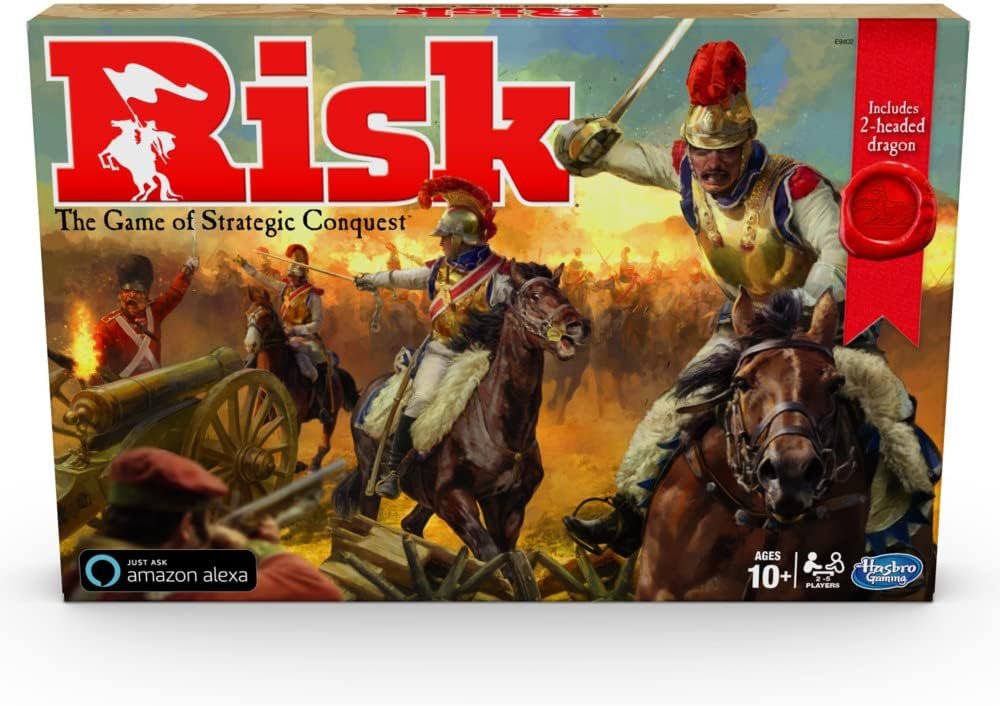
If you want the longer strategic evening, our complete Catan rules guide takes the same approach with the other box that lives in most cupboards, and our Risk rules guide does the same for the one that takes an afternoon.
If you are wondering whether it is still the right first buy, we answered that separately in our Ticket to Ride review.
As an Amazon Associate, BoardGame Journey earns from qualifying purchases. This comes at no additional cost to you and helps support more in-depth board game reviews and guides.
“`

3 thoughts on “How to Play Ticket to Ride: Complete Rules Guide (2026)”
Comments are closed.