
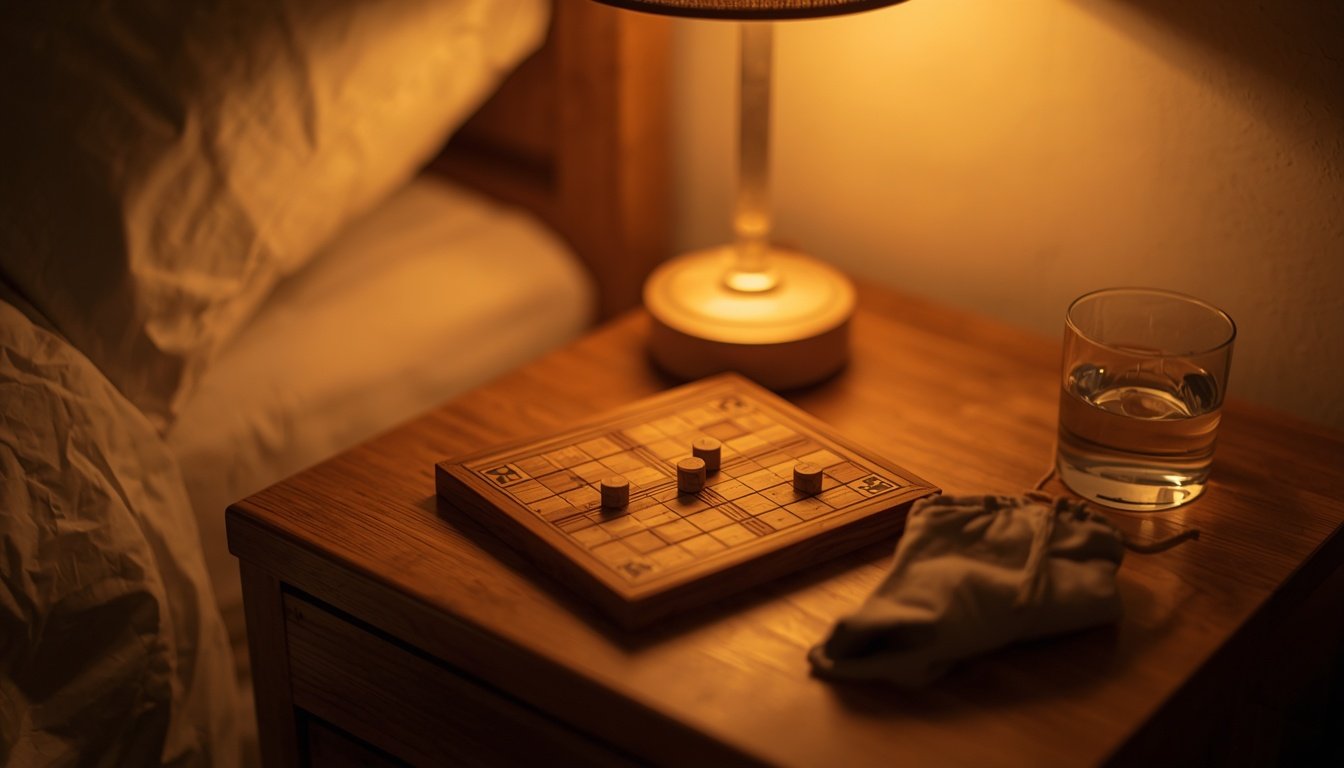
Every list of board games for couples is written for a Saturday.
Date night. A cleared table. A bottle of something. Two people who slept well and have three hours.
That is a real evening and it deserves the lists it gets. But it is not most evenings. Most evenings are a Tuesday, both of you are tired, one of you has already said the word bed, and there are about twenty minutes before that stops being a joke.
Almost nobody writes for that. This is a list for that, sorted by the thing that actually decides whether a box gets opened: how much time is left.
The Cut, and It Is Deliberately Mechanical
Three rules for the first group. A game either passes or it does not, and we are not making exceptions for games we like without saying so out loud.
- Twenty minutes or less on the box. The number the publisher prints, and we take the top of the range rather than the bottom.
- Under two minutes to set up. This is the rule that quietly disqualifies most of the shelf.
- Built for two. Designed as a duel, not a bigger game scaled down.
Six games clear that. Then there is a second group for the nights when you have half an hour rather than twenty minutes, because those are different evenings and pretending otherwise helps nobody.
One of the six below fails a rule. We have left it in and said exactly which rule, rather than quietly bending the cut and hoping you do not check.
Setup Is the Real Enemy, Not Play Time
This is the part the box never tells you.
A game that plays in twenty minutes but takes eight to set up and six to put away is a thirty four minute game on a weeknight. And the putting away is worse than the setting up, because by then you have already had the fun and the reward for finishing is a chore.
That maths is why so many perfectly good two player games sit unplayed on a Tuesday. It is not that they are too long. It is that the total commitment is nothing like the number printed on the box.
It is also why the order below is not a quality ranking. It is a friction ranking.
The Six That Fit Twenty Minutes
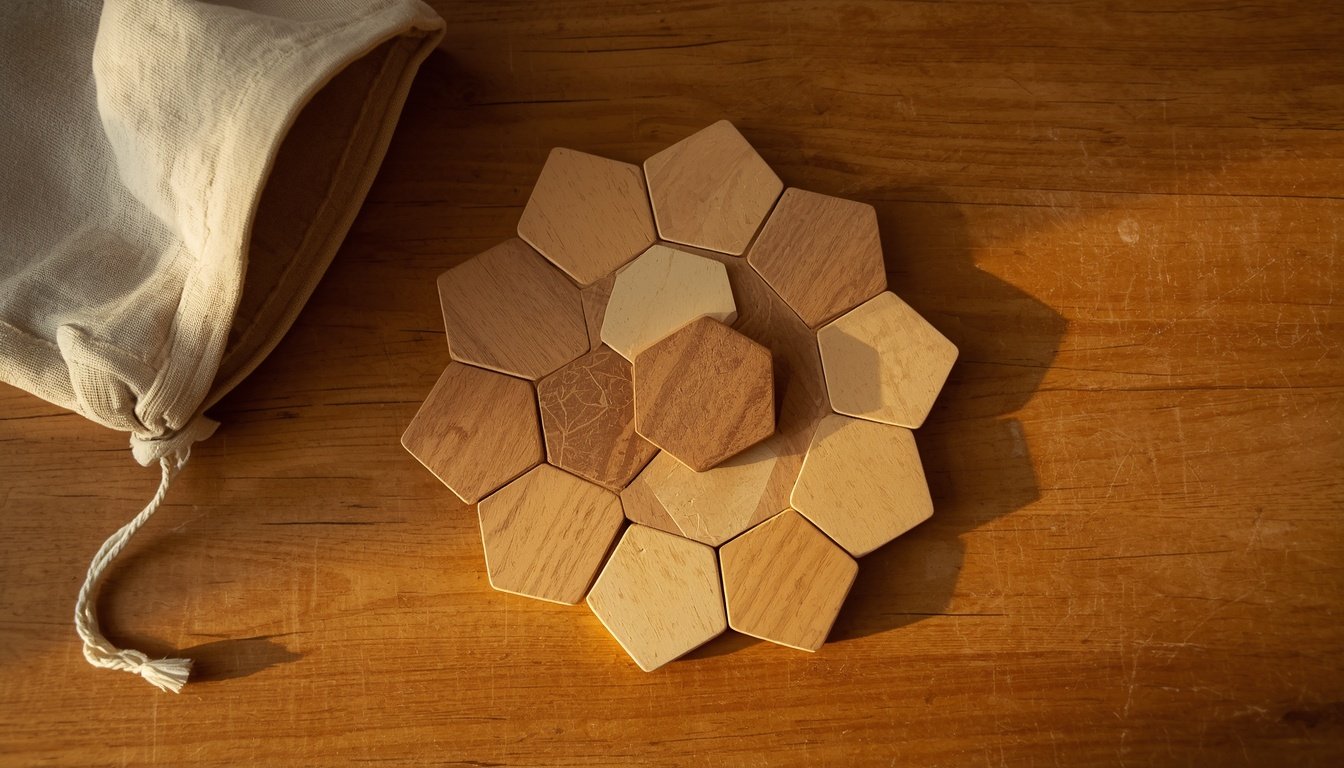
1. Hive Pocket: The One With No Board
2 players | 20 minutes | Ages 8+ | Gen42 Games | John Yianni
Hive has no board. The tiles are the board.
You take turns either placing a new insect tile or moving one you have already placed, building an interlocking mat of bugs on whatever surface you are sitting at. Each insect moves differently, a beetle can climb on top of others, and you win by completely surrounding your opponent’s queen.
The setup is opening a bag. That is the entire ritual. There is nothing to unfold, nothing to shuffle, nothing to sort into piles, and nothing to align. When you are done you sweep the tiles back into the bag with one hand.
The Pocket edition is the same game in smaller tiles and a smaller bag, which matters more than it sounds. It fits on a bedside table, on a train tray, and in a coat pocket.
What you get in exchange for that simplicity is a genuinely sharp abstract game. Surrounding a queen means committing pieces, and every piece you commit is one you cannot use elsewhere. It rewards thinking ahead and punishes autopilot, which is a strange thing to say about a game you can start in four seconds.
Skip it if you want theme. There is none. It is bugs and geometry.

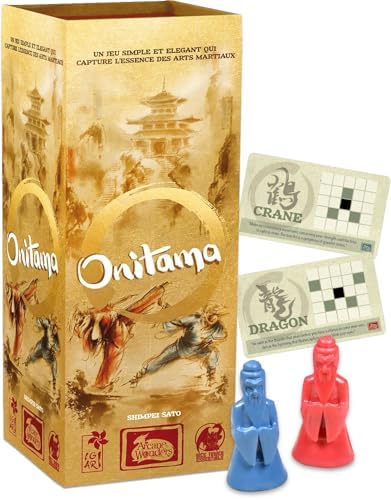
2. Onitama: Chess That Changes Its Own Rules
2 players | 15 to 20 minutes | Ages 8+ on our listing, 10+ elsewhere | Arcane Wonders | Shimpei Sato
A five by five board. Five pieces each, four students and one master. So far this is a very small chess.
The twist is that nobody owns a move. There is a deck of move cards, and only five are in play in any given game: two in front of you, two in front of your opponent, and one waiting in the middle. When you use a card, it does not come back to you. It goes to the middle, and the card that was in the middle comes to your opponent.
So every move you make hands your opponent a new option, and takes one away from yourself. You are not just deciding where to move a piece. You are deciding what your opponent is allowed to do next.
Setup is placing ten pieces on marked squares and dealing five cards. Call it a minute.
The reason it belongs on a weeknight is that the range is narrow and the top of it is twenty. Games end when someone takes the opposing master or reaches the opposing temple, and both happen faster than you expect the first few times.
Skip it if one of you is a much stronger abstract player than the other. There is very little luck to hide behind, and that gap will show up in every single game.
3. Schotten Totten: Nine Small Arguments
2 players | 20 minutes on the IELLO edition | Ages 8+ | IELLO | Reiner Knizia
Nine stones sit in a line between you. You play cards on your side of each stone, trying to build a better three card formation than your opponent built on theirs, and you claim a stone by proving your side wins.
It is one long argument broken into nine small ones, and the tension comes from your hand being too small to fight everywhere. Committing your good cards to one stone means abandoning another.
Setup is shuffling a deck and laying out nine markers. Teardown is picking them up.
A note on the clock, because you may see a different number elsewhere. IELLO prints twenty minutes on this edition, and that is the figure we are using. Some other listings for the game say thirty. If your table plays slowly and talks a lot, expect the higher end.
Skip it if you want components to look at. This is a deck of cards and nine markers, and that is the whole box.

4. Sky Team: The One Where You Are on the Same Side
2 players only | 20 minutes | Ages 12+ | Le Scorpion Masque
Two of you land a plane. One is the pilot, one is the co-pilot, and you place dice onto a cockpit to control the flaps, the engines, the landing gear and the approach.
The rule that makes it work is that you cannot talk about your dice. You can plan before the round, and then you place in silence and find out together whether you read each other correctly.
It is the only cooperative game in this group, and it is here because a lot of tired evenings do not want a fight in them. Losing a competitive game at eleven at night is a different feeling from crashing a plane together and immediately wanting another go.
It also happens to be a genuinely decorated design, and it is strictly two players rather than a bigger co-op scaled down, which is rarer than it sounds.
If working together rather than against each other is the shape you want more often, our cooperative board games for couples guide is built entirely around that.
Skip it if you want to beat your partner. That is not on the menu here.

5. Star Realms: The One That Gets Bigger While You Play It
2 players | 20 minutes | Ages 12+ | Wise Wizard Games | Darwin Kastle and Rob Dougherty
A deckbuilder where you buy ships and bases from a shared row and use them to knock your opponent’s authority down to zero.
You start with ten weak cards and almost no options. Twenty minutes later you are playing chains of ships that trigger each other, and the reason the game ends around then is that both decks have become powerful enough to finish it. The escalation is the whole design.
Setup is shuffling the trade deck and dealing two identical starting decks. Teardown is one pile.
One buying note that matters here. There are two products with this name. The original box, which is the one linked below, is strictly two players. There is also a larger Box Set that seats up to four, and if you specifically want the tight two player version, check which one you are ordering.
Skip it if you dislike the feeling of losing a game you were winning ten cards ago. Turnarounds are common and that is either the appeal or the problem.

6. Santorini: The One That Bends a Rule, and We Are Saying So
2 to 4 players, best at 2 | About 20 minutes | Ages 8+ | Roxley | Gordon Hamilton
This one does not pass the cut cleanly, and it is here anyway with the reason attached.
It seats up to four rather than being built as a duel, and it has the slowest setup on this page: a board, blocks, domes and workers, against a bag of tiles or a deck of cards. Held strictly to our own three rules, Santorini is out.
We kept it because it is the game most likely to get a reluctant partner to the table, and that is worth one visible exception rather than a hidden one.
On your turn you move one of your workers one space, then you build one block next to them. Blocks stack into towers. You win by standing on top of a three level tower. That is the whole rulebook, and you can teach it out loud in about thirty seconds.
What makes it work is that building is not optional. Every turn you both move and build, which means you are constantly handing your opponent new height to climb while trying to reach it first, or sealing a route by capping a tower with a dome. Building is the part people underrate.
It is also the nicest thing here to look at, and on a tired Tuesday the game you actually reach for is often the one that looks inviting.
Worth knowing: the box comes with a stack of god power cards that change what one player can do. Most people play the first game without them and add them once the basic rules are second nature, which is also when the game stops being the same puzzle every time.

The Three for When You Have Thirty
These do not fit the twenty minute rule, and that is the only reason they are down here rather than up there. Two of them are among the best two player games ever made.
7. Lost Cities: The One to Buy Second
2 players | 20 to 30 minutes | Ages 8+ | Kosmos | Reiner Knizia
You are funding expeditions, and the cruel part is that starting one costs you points before it earns any. Every card you play is a bet that you will get far enough down that road to make it worth having set off.
The decision that hurts is discarding, because your opponent can pick it up. Half the game is watching what they take.
This edition includes the sixth expedition, so the board is the newer, slightly longer version. If you only ever buy one thirty minute two player game, most people would tell you to buy this one.

8. Jaipur: The Trading One
2 players | 30 minutes | Ages 10+ | Asmodee | Sebastien Pauchon
You are two traders competing for the Maharaja’s attention. You take goods from a shared market or sell them, and selling more of the same good at once pays better, so the whole game is a nerve game about waiting.
Camels are the clever bit. They are not worth points on their own, but they let you take several goods at once, and taking them all clears the market for your opponent.
It is the most purely fun game in this second group and the one that plays best when you are only half awake, because the decisions are quick and obvious even when they are wrong.

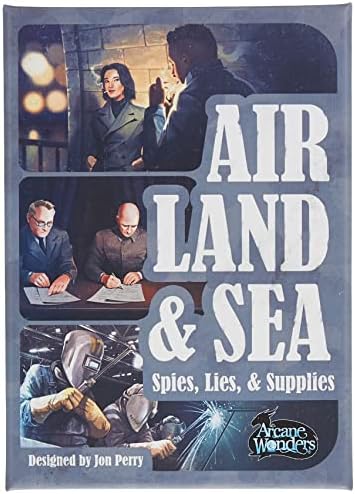
9. Air, Land and Sea: Spies, Lies and Supplies
2 to 4 players | 15 to 30 minutes | Ages 14+ | Arcane Wonders | Jon Perry
Three theatres of war, a small hand of cards, and the option to withdraw from a round rather than lose it badly. Knowing when to fold is the actual game.
It misses the first group on both counts rather than one. The range tops out at thirty minutes, and it seats up to four rather than being built as a duel. It is still an excellent two player game, which is why it is here at all.
One buying note, because the line is confusing on a search page. This is the standalone sequel rather than the original Air, Land and Sea. It plays entirely on its own and it can also be combined with the first box. The original is the strictly two player one, so if that is what you pictured, check the title before you order, because the two look alike.
What Is Missing, and Why
Three obvious two player games are not on this page at all, and it is not because they are weak.
Patchwork, 7 Wonders Duel and Codenames Duet are already the backbone of our top 5 board games for couples. Listing them again here would make this page longer without making it more useful, and you would end up reading the same recommendation twice.
That is an editorial decision rather than a rule from the cut, and it is worth separating the two. The games above failed a clock. These three failed a repetition test.
Where This Sits Against Our Other Couples Guides
We now have four lists for two people, and they answer genuinely different questions.
This one is for a weeknight, when the constraint is time and energy.
Our top 5 board games for couples is for date night, when you have a proper evening and want a proper game.
Our cooperative board games for couples is for the tables where competing against each other is the part that does not appeal.
And our legacy board games for couples is the opposite extreme from this page: campaigns you commit to over months, where the box changes as you play it.
If you are new to modern board games entirely, start before all four. Our top 10 entry-level board games covers picks that teach in five minutes.
Frequently Asked Questions
Which one should we buy first?
Hive Pocket, if the problem is friction. There is no board and no shuffling, so it is the one most likely to get played on the night you are least likely to play anything.
Sky Team, if the problem is that one of you does not enjoy losing. It is the only game here where you both win or both lose.
Are these good if one of us is much better at games?
For most of them, that is the weak spot. Hive has no luck at all once you sit down, and Onitama and Schotten Totten only have it in the deal, so a skill gap shows immediately and keeps showing.
Sky Team sidesteps the problem completely by putting you on the same side, and Jaipur softens it because the market keeps changing under both of you.
Do any of them work for more than two players?
Santorini and Air, Land and Sea: Spies, Lies and Supplies both seat up to four. Everything else on this page is strictly two, which is the point of the list. Star Realms is worth a second look here, because the original box is two players and a separate Box Set goes up to four.
Can we play these away from a table?
Hive Pocket is the easiest, because the tiles are the playing surface. Schotten Totten, Lost Cities, Jaipur and Star Realms are card games and need very little room. Onitama, Santorini and Sky Team all want somewhere stable to sit a board.
Does twenty minutes really mean twenty minutes?
For the first group, close to it once you both know the rules. First plays are always longer because someone is reading a rulebook out loud, and that is true of every game ever made.
Where to Start
If you buy one box from this page, make it Hive Pocket. The reason is not that it is the best game of the nine. It is that it has the lowest barrier between deciding to play and playing, and on a Tuesday that is the quality that decides whether a game gets played at all.
If you buy two, make the second one Sky Team. It is the furthest thing from Hive on this page, it takes the same twenty minutes, and it turns the evening into something you did together rather than something one of you won.
And if the twenty minute constraint is not really your problem, skip straight to Lost Cities. It is the best game here. It just needs ten more minutes than this page is about.
What is the game that actually gets played on a weeknight in your house? Tell us in the comments below.
As an Amazon Associate, BoardGame Journey earns from qualifying purchases. This comes at no additional cost to you and helps support more in-depth board game reviews and guides.
2 thoughts on “Quick Board Games for Couples: 9 Sorted by How Much Time You Actually Have”
Comments are closed.